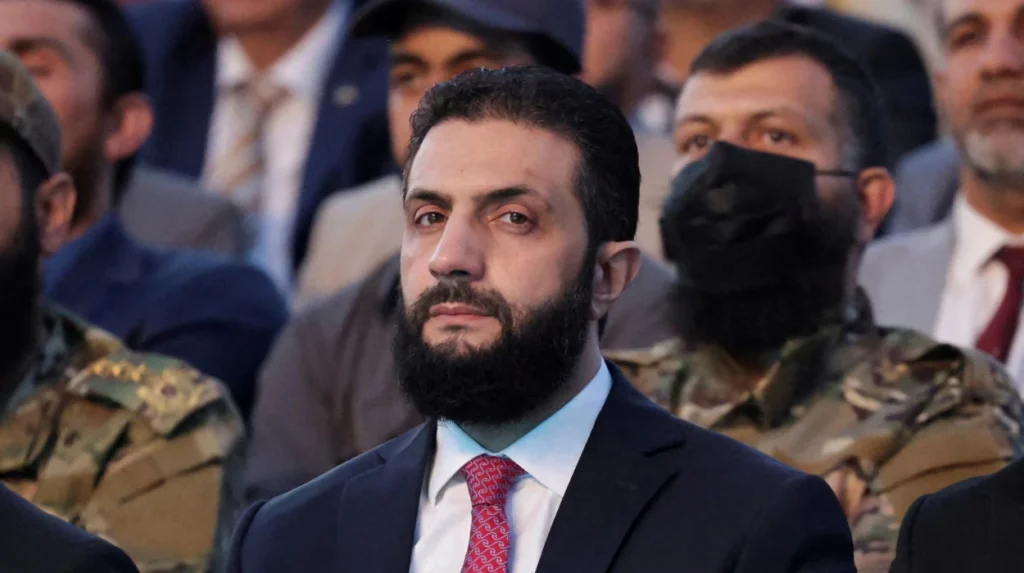
Due to the United States and the United Nations lifting terrorist sanctions imposed on Syrian President Ahmed al-Sharaa at the end of 2025, which signifies a shift in the geopolitical direction of the region. The ruling ends one of the longest periods of the Middle East conflict, the period of the rule of Bashar al-Assad and the subsequent civil war. After the removal of Assad in December 2024, the sanction relief was an expression of a more realistic re-alignment of the foreign policy of Washington and the UN, to face the emerging power structures instead of holding on to the old forms of isolation.
This change does not pass without controversy. The fact that President al-Sharaa started as an insurgent commander and today is a respected head of state is a testament of the internal divisions in Syria as well as the evolving priorities of the world community. Even as a gesture of goodwill toward reintegration, the lifting of sanctions also poses some tough questions regarding the issue of justice, reconciliation, or the trade-offs between peace and accountability.
Background Of Sanction Removal
Since 2017, president Ahmed al-Sharaa had been listed by the U.S. and U.N. over terror in his former association with Hayat Tahrir al-Sham (HTS), an Islamist group that retained its ties to al-Qaeda until it was listed as such earlier in 2025. When the U.S Treasury took al-Sharaa off the Specially Designated Global Terrorist list, it immediately cleared the biggest diplomatic hump. This was immediately followed by the UN Security Council in the context of a wider stabilization plan in Levant.
The action of delisting other senior members of the Syrian government, including the Interior Minister Anas Hasan Khattab also implied coordinated international willingness to open diplomatic and economic avenues. The Senate Foreign Relations Committee used the legislative opinion that there was bipartisan consensus of the necessity to modernize the economy of Syria and its reintegration into the global market. It was a step toward less exoneration than re-calibration which was an appreciation that sanctions, even alone, were no longer the way forward toward peace or reconstruction.
The Strategic Implications For US And UN Policy
The policy of sanction relief is the classical example of realpolitik, the understanding that idealism cannot replace the involvement in the relations with the disintegrated post-conflict states. The U.S. ambassador to the UN, Mike Waltz, observed that such a move was a strong one that showed that Syria had passed into a new era of pragmatic leadership. The method of administration of the U.S. under President Donald Trump is the idea of controlled engagement as a means of influence instead of a concession to the past.
Recalibrating Diplomatic Leverage
Washington wants to rebuild diplomatic power that had been lost through years of the isolationist policy by taking the name al-Sharaa off the blacklist. The administration sees the transition in Syria as a kind of insurance against the expansionism of the Iranian and the entrenchment of the Russians. This policy shift is reflected by the White House invitation that was given to al-Sharaa, the first invitation of a Syrian leader in almost 8 decades.
Pragmatism Over Punishment
Those who criticize the move perceive it as moral compromise though the policymakers perceive it as an awareness of realities on the ground. Following 10 years of conflict and unsuccessful peace negotiation, the U.S. and UN now seem to have decided that utilizing engagement rather than exclusion provides the best opportunity to stabilize the situation in Syria and avoid another extremist revival.
Regional And International Reactions
The global reaction to the lifting of the sanctions has been contradictory in line with how the region is reorganizing in the post-Assad environment.
Support From Western Allies
The European Union and the United Kingdom followed Washington and lifted the restrictions and diplomatic links to Damascus were restored. Brussels officials termed the policy change as a gradual move towards inclusive regional dialogue. The relocation is indicative of a more general Western belief that further isolation will further embolden non-state actors and hurt economic recovery.
Skepticism From Regional Rivals
Israel has not been silent in showing its anxieties and has undertaken new air attacks on Iranian-connected posts in Syria as a warning against possible rearmament. Saudi Arabia and Egypt, in their turn, took the decision with a grain of salt, offering it as a chance to normalize relations in a controlled context.
A Carefully Managed Return
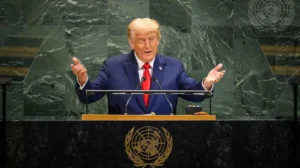
The speech of Al-Sharaa at the UN general assembly in September 2025, marking his first visit to the global organization, was a symbol of Syria returning to international relationships on the fringes. His words resonated with those seeking stability in the region and he said he would not confront but rather collaborate with other states to restore a unified and safe Syria, a message that appealed to those determined states to bring stability in the region but did not satisfy right activists who wanted to see those who committed the atrocities of the war to face justice.
Challenges And Prospects Ahead
Though the lift of sanctions could be a milestone of cooperation between both countries, the situation in Syria is a complicated one on the home front. The history of al-Sharaa with militants and the disintegration of the political structure in Syria make the process of true reconciliation more complicated. The human rights groups have called on the U.S and UN to make sure that such normalization activities are accompanied by accountability measures to deal with what happened in the past.
Governance And Reconstruction
Rebuilding has become the major concern of the Syrian government. In accordance with the 2025 post-conflict assessment carried out by the World Bank, it has been estimated that the rebuilding of the infrastructure was estimated to be more than 400 billion dollars which highlights the extent of international participation needed. Western and Gulf states are holding positions on how to influence the contracting process, both have economic and strategic reasons to influence the course of the Syrian recovery.
Balancing Justice With Stability
Analysts caution that the boundary between engagement and endorsement is very thin indeed. Political legitimacy to a former militant is dangerous because there is a possibility of encouraging other leaders in the same manner. However, lack of involvement may as well trigger conflict. This is a tight road which the U.S and UN have to walk ensuring that diplomatic reintegration is an instrument of peace and not expediency.
The Wider Geopolitical Context
The policy reset of the US and the UN should be considered in the changing Middle Eastern order of 2025. The repositioning of Syria is a potential stabilizing factor with the exit of Assad and limited influence of Iran due to the changing alliance in the region. The policy is also consistent with the re-evaluation of Washington into conflict de-escalation and energy security in the region.
From Isolation To Integration
The shift of the U.S. towards the realpolitik lens of how it views Syria is an indicator that it is no longer following the interventionist principles of the early 2010s. The case of engagement with the administration of the al-Sharaa acts as a proxy on the possibility of post-conflict states with controversial leaders reentering the international legitimacy framework without forgetting their pasts.
Redefining Power Balances
Such practical change would redefine alliances in the Levant. The rebrand resembles a greater strategic recognition that the West has dependent power not in punitive actions but through persistent diplomatic diplomacy. It also shows a new trend in American foreign policy to balance between the moral imperative and geopolitical needs in a world where the multipolar situation is becoming a norm.
The lifting of sanctions on President Ahmed al-Sharaa encapsulates the intersection of idealism, necessity, and control that defines modern foreign policy. Syria’s future will depend on how effectively international engagement can translate into stability and reform rather than renewed fragmentation. Whether this marks a genuine new chapter or merely a pause in a long cycle of conflict remains uncertain but the world’s cautious optimism suggests that, for the first time in over a decade, diplomacy may once again have a seat at Syria’s table.