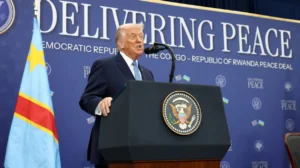
There is no clear information about who wins the US presidential election. The world should prepare for two results. One, if Donald Trump wins the presidential race, then he may bring back his “America First” policy. This strategy could mean lessening the focus on the US role in global leadership. Trump could also make direct deals with China’ Russia and North Korea. Trump believed in immediate benefits rather than long-term international relations. On the other hand, Kamala Harris takes the lead; she follows President Joe Biden’s approach.
Joe Biden believes in strong international relationships and steady communications with other nations to tackle many challenges and overcome complexities. This approach is more realistic and seems to prove beneficial for America’s future.
For many voters and American citizens, some key issues are the priority. It includes the economy at the top. So their choice for the next leaders could change the future of the United States.
Ultimately, what a few thousand voters in Pennsylvania think about their daily lives could significantly impact US relations with Asia and beyond.
The Biden administration, under the leadership of Deputy Secretary of State Kurt Campbell, has been making efforts over the last four years to manage competition with China. Their plan includes building strong partnerships with different nations. It includes AUKUS with Australia and the UK, the Quad with Australia, Japan, and India, and a partnership with Japan and South Korea.
It is expected that Kamala Harris will follow this same strategy. Candidates to replace Secretary of State Antony Blinken include CIA Director Bill Burns and Senator Chris Coons. To keep the US secure and strong, all of these alliances are important.
On the opposite, the former prescient Donald Trump believes that leaders across the world respect him more than current prescient Joe Biden and Harris. He believes that US foreign policy is successful with personal connections. Trump also said that China’s President Xi Jinping would not invade Taiwan. This is because he respects Trump and his opinions.
According to Kamala Harris, the current situation in Taiwan has been the topic of discussion. Taiwan is a self-governing and democratic ally of the United States. According to China, Taiwan is the province that should be reunited with the mainland. However, the US only wants peace. According to this nation, both China and Taiwan should peacefully discuss their matter without any fight.
On October 16, after Chinese military drills near Taiwan, Harris restated her support for the “One China” policy. According to Harris, Taiwan has the right to defend its interests first. While Donald Trump gave a mixed message about Taiwan. Firstly, he said that he talked with the Chinese leader about not enforcing Taiwan and later on opposed Taiwan’s leaders in a recent podcast. He linked Taiwan’s situation to Ukraine, noting both were safe when he was president.
Trump also opposed Taiwan’s progress in the chip industry. He claimed that they wanted US protection without paying for it. This statement made Chinese officials doubtful about the US commitment to support Taiwan.
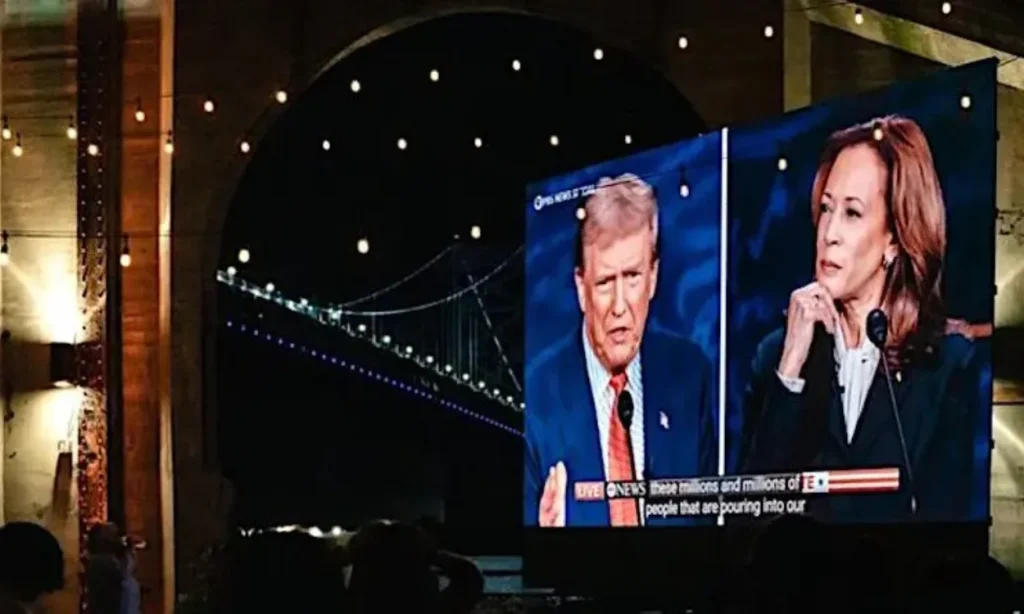
Trump and Harris talked about their varying stances on tariffs on Chinese senses during their discussion, with an accent on the potential effects of these measures on the American economy. Trump suggested a 60% increase in varies on all imports from China.
Harris retorted that the recovery of the American economy would bear such high tariffs because Chinese vendors would raise their prices to pay the costs. Instead, she preferred more focused and limited levies.
In response to worries about the increase, Trump contends that the United States might earn a sizable amount of money that could be utilized for tax breaks and that Chinese foreigners would foot the bill.
He claimed that only China and other nations that have exploited the United States would be affected, adding that American consumers would not be affected by higher costs.
Harris backed the tariffs the Biden administration imposed to help American businesses compete with China’s lower-priced exports, particularly in the solar panel and electric car industries.
Both candidates believe that a strategic approach to trade with China is necessary, as American voters are beginning to consider trade’s geopolitical implications in addition to its economic ones.