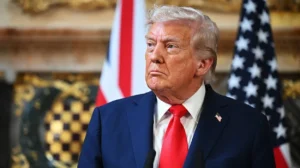
With the second inauguration of the president Donald Trump in January 2025, the United States has entered a new era of immigration governance. The initial moves of the administration are indicative of a resolute foray into restrictive models, which is exonerated in the mantras of sovereignty, security and economic nationalism. Even the legal immigrants, regardless of the fact that they are legal, are being swept up by the largeness of these new policy directives.
The executive orders issued in the first half of 2025 are intended to make entry processes more difficult, increase removal processes, and reorganize the process of naturalization. One of the policymaking aspirations is the aspiration to carry out the entire operation control over all borders of the U.S. especially the southern frontier. To that extent, the Department of Homeland Security has given the new physical barriers, advancement of surveillance technology, and deployment of additional Border Patrol officers.
At the same time, some of the protections to be enacted between 2021 and 2024, such as the humanitarian parole pathways and regional crisis-adjusted refugee quotas, are revoked by the administration. The moves indicate a transition to flexiveness in cases to uniform enforcement, and many legal immigrants are left operating in a state of increased insecurity.
How Policy Changes Affect Legal Immigrants
Legal immigrants who may be assumed to be above the enforcement crackdowns are gaining more and more influence due to policy re-convergence to the overall immigration construct.
Employment Visas And Skilled Labor Access
The U.S. Citizenship and Immigration Services (USCIS) proposed a one hundred thousand dollar application fee of H-1B skilled worker visas in March 2025 due to administrative expenses and anti-fraud measures. Combined with high standards of prevailing wages, the new terms discourage job seekers and employers. The medical industry and technology, which have long been depending on foreign talent, note lagging in recruitment and retention.
The increased attention of the Trump administration to the first American jobs has resulted in tighter annual quotas and country quotas as well. These restrictions also compound legal means of accessing professionals who would want to spend a long time in the United States in terms of residence and even employment.
Family Reunification And Processing Delays
There has been a long time of waiting in family-sponsored immigration classes which are now averaging more than 30 months to immediate family members. These delays are majorly caused by enhanced background verification procedures and biometric documentation.
Those legal residents who sponsor spouses or children report a rise in the denials due to minor procedural discrepancies. The officials of USCIS claim that such questioning is essential to curb fraudulent petitions, but the opponents state that it causes unnecessary suffering to law-abiding families.
Naturalization, Citizenship, And Legal Permanence
The criteria of naturalization have been revised substantially, with a civics test with 100 questions and financial self-sufficiency conditions being added. There are new highs in the moral character tests requirement, where applicants are required to demonstrate compliance with tax, clean criminal records, and recorded contributions to the community.
Also, the administration has renewed debates on a possible limitation of birthright citizenship by the re-interpretation of the Fourteenth Amendment. The debate creates an additional instability to the long-term immigrant families with U.S. born children, although the courts have not made a decisive ruling.
Diverse Stakeholder Views On Immigration Changes
The reaction of policies to the 2025 immigration strategy of the Trump administration has been diverse, based on the sharp divisions in American political and civic environments.
Civil Society And Advocacy Perspectives
Such organizations as American Immigration Council or UnidosUS alert that there are more and more obstacles in the way of legal immigrants that go against the traditional American principles. Their focus is on the social and economic integration issues that are raised by restrictive actions and promote reforms based on equity, dignity and due process.
According to Miriam Gonzalez, who is the legal director at the National Immigration Forum, policy changes undermine the role of immigrants and bring punitive actions where clarity and compassion should prevail.
Federal Government Position
The administration officials divide the actions into the necessary fixings of decades of laxity and bureaucratic inefficiency. In April 2025, the immigration coordinator of the White House, John Fleming, declared that; to bring integrity to the system, one will need more than rhetoric, they will need operational changes, accountability and a focus on American citizens.
The administration argues that the legal immigrants will be enjoying smooth operations in the long run since fraud detection and modernization of the systems will lower the risks of abuse and backlog.
Business And Economic Concerns
The business executives are becoming increasingly concerned about the shortage of talents and the impact of visa restrictions on their operations. The National Association of Manufacturers and U.S. Chamber of Commerce have been calling on the administration to offer specific exemptions to industries that are experiencing severe labor shortages.
According to a June 2025 report by the Congressional Research Service, there exists an uncertain climate to workforce planning due to policy volatility and administrative burdens, and likely long-term effects on productivity and global competitiveness.
Legal And Judicial Pushback
The federal courts have become one of the most important venues through which the aspects of the Trump administration immigration agenda can be challenged.
Constitutional Challenges To Executive Orders
Several court cases have been mounted against the actions of the administration to curtail birthright citizenship and restrict asylum programs. In May 2025, the Court of Appeals in the Ninth Circuit temporarily halted the implementation of Executive Order 13988 that tried to deny the automatic citizenship of children born in the U.S. to temporary visa holders.
The judges have always underscored the constitutional guarantees provided to the immigrants in the Due Process and Equal Protection Clause. Although the consequences are still waiting in a number of jurisdictions, legal uncertainty further adds to the pressure of the immigrant communities.
Statutory Interpretation And Agency Oversight
Courts are also considering whether federal agencies went beyond their mandate in making some amendments to the rules and without the support of legislation. There has been a question of the use of interim final rules to circumvent the routine notice and comment procedures, which critics have branded as an abuse of power.
These legal dynamics highlight the balance aspect of the courts in the middle between the desire of the executive to achieve goals and the intent of the legislature to do so, particularly regarding the situations where personal freedoms and civil rights are involved.
Broader Societal And Economic Impacts
The consequences of the policy of legal immigration are not limited to the individuals but also to the national unity and economic well being.
Labor Market And Demographic Realities
The U.S. economy is depending more on immigrant workers to support major industries as birth rates are falling and the population gets older. In healthcare, logistics, and high-tech manufacturing, there is shortage of workforce and the number of new entrants into the country using legal immigration is decreasing.
Skilled visa and family based entry restrictions will tend to reduce the labor pipeline with ripple effects on the local economies, tax collections and service provisions. According to immigration economists, long-term growth is also linked to demographic replenishment, which is traditionally the activity of legal immigrants.
Social Cohesion And Integration
Legal immigrants frequently have been cultural intermediaries, civic actors and economic contributors. The restrictive policies will serve to put the group off, creating feelings of being pushed out and being considered a second-class group. There are reports of increasing cases of legal residents postponing the naturalization process by community organizations as a result of fear of rejection or unforeseen enforcing the same.
Social cohesion relies on the assimilation of newcomers by educating, providing care, housing and participation in civic activities. Policies that perceive the legal immigrants as a liability to the country instead of assets threaten to destabilize these fundamental bonds in the society.
As U.S. immigration policy continues to evolve under a more assertive federal approach, the line between enforcement and exclusion becomes increasingly contested. Legal immigrants who once saw their status as secure now face a shifting landscape shaped by regulatory complexity, political volatility, and public debate. The stakes extend far beyond policy documents, touching lives, families, and the nation’s identity. What emerges from this ongoing transformation will define the future contours of American immigration and its role in a rapidly changing world.