China has firmly opposed the designation by the United States that Min Zin is wrongfully detained. China has maintained that his case is being tried based on its domestic laws and he is believed to be involved in actions that can jeopardize national security. The conflict arose when the United States designated the Myanmar political analyst as a wrongfully detained person on August 20 after his detention in China on June 7. The move was immediately opposed by China, stating that he had violated Chinese laws. The conflicting moves have created yet another diplomatic spat between the two nations amid ongoing tension in various areas such as trade, technology, security, and detention of citizens.
Chinese Foreign Ministry spokesman Lin Jian rejected the US description during a briefing on August 21.
“China is a country governed by the rule of law, and there is no such thing as so-called wrongful detention,”
Lin said.
He added that the American citizen was suspected of
“engaging in activities that endanger China’s national security, thereby violating Chinese law.”
According to Lin,
“the Chinese judicial authorities are handling the case in accordance with the law.”
Beijing has not publicly released detailed evidence explaining the alleged conduct or identifying the specific information that led authorities to suspect Min Zin of espionage. That absence of publicly available evidence has become central to criticism from Washington, rights organisations and Min Zin’s colleagues.
Who is Min Zin?
Min Zin is a Myanmar political analyst, researcher and US citizen who heads the Institute for Strategy and Policy-Myanmar, commonly known as ISP-Myanmar. The organisation conducts research on Myanmar’s politics, armed conflict, governance, economic conditions and relations with neighbouring countries, including China. He has been associated with Myanmar’s pro-democracy movement since the 1988 uprising against military rule. He later studied political science at the University of California, Berkeley, and became a naturalised American citizen.
ISP-Myanmar was co-founded by Min Zin in 2016. After the military coup took place in February 2021, he left Myanmar along with his family members and sought asylum in Thailand. From abroad, his organization has been able to release reports regarding the political and security issues in Myanmar.
Some of the topics of his professional writing include analysis of Myanmar’s various armed factions, the ruling military government, ethnic conflicts, and China’s influence in regions near to the Chinese border. Such topics are sensitive from a political standpoint due to Myanmar’s strategic importance to China and potential ramifications of such instabilities on Chinese interests. According to the information at hand, there is no proof that Min Zin participated in any espionage activities. The think tank run by him claimed that he visited China on an academic visit following an invitation from a Chinese academic institution. Reuters has reported that he went to Kunming, the capital city of Yunnan Province.
Detention followed academic visit
Min Zin was detained on June 3 in Kunming, according to reports. Chinese authorities later confirmed that a US citizen and Myanmar-focused scholar had been arrested on suspicion of espionage and activities endangering national security.
The arrest was not immediately identified publicly as involving Min Zin. His identity was later reported by international media and confirmed through information from his organisation and other sources.
The circumstances have raised questions because his visit was apparently connected to academic exchanges. Kunming is a major centre for China’s engagement with Myanmar because of its geographical proximity, commercial links and strategic importance. The city lies in Yunnan, a province connected to Myanmar by border crossings, roads, trade corridors and longstanding social and economic relationships.
China’s confirmation of the arrest marked a significant escalation from an unexplained disappearance to a formal national-security case. The authorities have not disclosed whether Min Zin has been formally charged, which exact legal provision applies, whether a trial has been scheduled or what evidence prosecutors may present.
His detention has continued since early June. As of August 21, he had not been publicly reported as released or convicted.
Washington calls detention wrongful
On August 20, the US Department of State designated Min Zin as wrongfully detained. This came after an internal review of the circumstances of his arrest and determined that Washington believes that his detention had no legitimate reason or was purely political in nature. Assistant Secretary of State Dylan Johnson said Secretary of State Marco Rubio made the designation after a thorough review of the issue. The US has called for Min Zin’s release and will continue to press for him to be released from custody.
His designation is one among a number of cases that the US believes are serious. It is not a judgment from an international court, but it is an official statement by the US government regarding the wrongful detention of a US citizen. The US has also called for access to Min Zin to ensure his treatment. According to reports, US officials have visited Min Zin, but it is not clear whether he has access to legal representation. This case of Min Zin is part of the larger issue of Americans detained in China. Reportedly, Min Zin is the second US citizen who is detained in China to be designated by the US State Department as wrongfully detained. The first one is Youlin Chen, a seismologist who was detained on accusations of espionage since 2024.
Family rejects espionage allegation
Min Zin’s family has denied that he was engaged in anti-China activity. His brother, Aung Maw Zin, said Min Zin’s work focused on Myanmar and that he had hoped China could play a constructive role in helping resolve the country’s crisis.
The family has described his research as analytical rather than hostile to China. Aung Maw Zin said his brother was not “anti-China” and had viewed China as an important actor capable of influencing developments in Myanmar.
The family has also expressed concern about his detention conditions. According to available reports, US officials have been able to meet Min Zin, but his wife, daughter and brother have reportedly not been able to communicate with him directly. His brother said he believed Min Zin had been held in solitary confinement, although that claim has not been independently confirmed by Chinese authorities.
The family’s account has intensified pressure on Washington to seek his release, particularly because Min Zin entered China for what was described as an academic engagement rather than a clandestine operation.
China’s national-security argument
China’s response demonstrates one of the key aspects of the Chinese policy in cases related to citizens of other countries: national security is always prioritised over personal status of the individual, his/her occupation, nationality and even the declared purpose of visiting the country. In recent years, Chinese authorities have often referred to national security and anti-espionage legislation in cases of foreign businessmen, academics, consultants and researchers. Beijing argues that such measures become necessary in order to protect the interests of the state from espionage, foreign intervention and illegal gathering of confidential information. According to the representatives of the Chinese authorities, foreigners working in China should adhere to local legislation, irrespective of whether their activities are defined as academic, journalistic or commercial. As far as Beijing is concerned, the status of the scholar does not interfere with the right of authorities to investigate the case.
However, the official stance of the Chinese side in the Min Zin case lacks clarity. China has provided a general description of the alleged actions but there is no concrete evidence available in public. Words “espionage” and “endangering national security” have significant political meaning in China but their practical meaning can be very broad. It undermines China’s position in the international community as far as this case is concerned.
Concerns over academic freedom
Human Rights Watch criticised Min Zin’s arrest, describing it as evidence of increasing pressure on independent voices and researchers whose work does not align with Beijing’s preferences.
The organisation said political research should not be treated as espionage simply because it examines sensitive issues. Its position reflects a wider concern among scholars, journalists and rights groups that China’s national-security laws can make ordinary research appear suspicious when it involves foreign contacts, political analysis or information related to border regions.
The dispute illustrates the difficult environment faced by researchers working on China’s neighbours. Myanmar is particularly sensitive because its internal conflict has direct consequences for China’s border security, trade routes, energy projects and diplomatic influence.
An analyst studying Myanmar may inevitably examine Chinese policy, Chinese-backed infrastructure, border trade, armed groups operating near China and Beijing’s contacts with Myanmar’s military authorities and ethnic organisations. Such research could be considered legitimate academic analysis outside China but viewed through a national-security lens by Chinese authorities.
The case therefore raises a broader question: where does China draw the line between independent research and espionage? Washington and rights organisations argue that the line has become too broad and unpredictable. Beijing insists that foreign actors cannot use academic or research activities as a cover for conduct that threatens national security.
Myanmar connection adds sensitivity
China’s relationship with Myanmar gives the case additional strategic significance. Beijing has historically maintained ties with successive Myanmar governments, including the military authorities that seized power in 2021. At the same time, China has maintained contacts with ethnic armed organisations and other actors near its border. China has sought to protect its border from conflict, maintain trade routes and safeguard infrastructure and investment projects. Yunnan serves as a major gateway for economic and political engagement with Myanmar.
The activities of ISP-Myanmar are in line with the very nature of political and security issues which would directly impact China’s interest in the region.
ISP-Myanmar’s research projects have examined issues such as armed conflict in Myanmar, the military government of Myanmar, ethnic politics, and the role of China in Myanmar. It cannot be considered proof of any violation of Chinese laws committed by Min Zin but it can be used as an explanation of why Beijing could see a foreign researcher examining the issues of Myanmar as being of more strategic importance than another academic writing about a totally different issue. This is due to the increased significance of the country’s politics given the opposition which the military government has been facing in Myanmar.
Wider US-China tensions
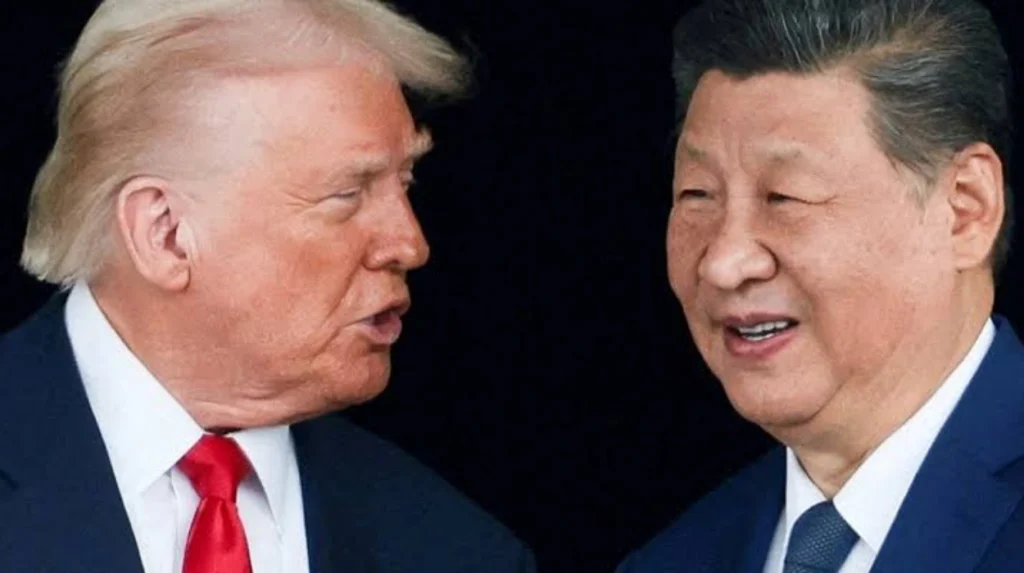
The timing of the wrongful-detention designation is politically important. The decision came shortly before a planned meeting between US President Donald Trump and Chinese President Xi Jinping, giving the case potential relevance in high-level negotiations.
The detention could become part of a wider discussion involving consular access, detained citizens, trade disputes, technology controls and security issues. Washington may use the designation to increase diplomatic pressure, while Beijing may resist what it sees as interference in its judicial affairs.
Cases involving detained Americans have repeatedly complicated US-China relations. Washington argues that China uses broad legal provisions to detain foreign nationals without sufficient transparency. Beijing responds that the United States politicises legal cases and interferes in China’s sovereignty.
Min Zin’s case is particularly sensitive because it combines several contentious issues: nationality, academic freedom, Myanmar’s political crisis, espionage accusations and US-China rivalry.
For the United States, failing to press the case could weaken confidence among American researchers and citizens travelling to China. For China, releasing him without legal proceedings could be interpreted domestically as yielding to US pressure. These competing pressures may make a quick resolution difficult.