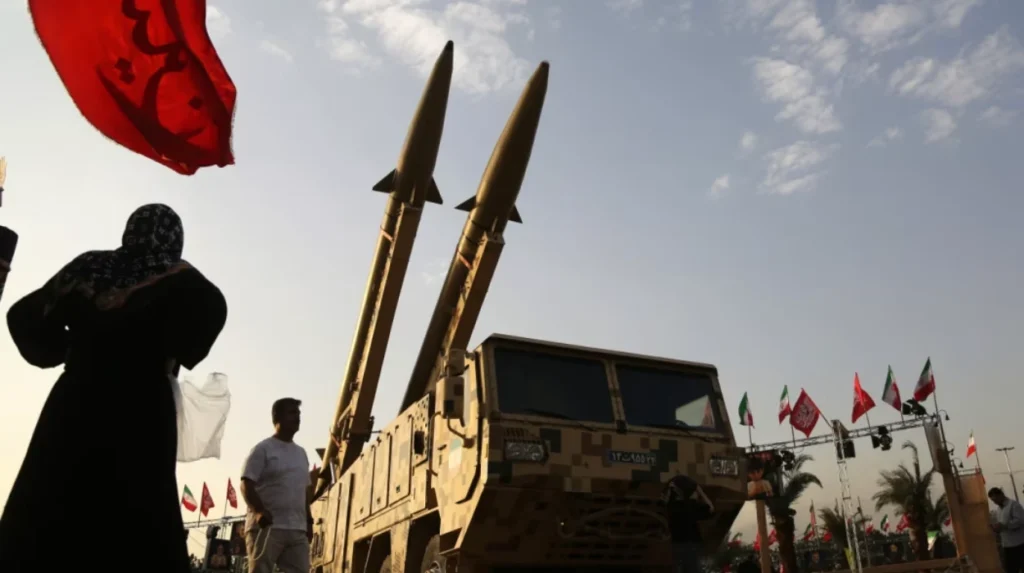
Iran’s reported missile strike on U.S. forces in the Middle East has added a fresh layer of volatility to an already explosive regional confrontation, coming at the exact moment Donald Trump was hosting Benjamin Netanyahu in Washington. According to U.S. Central Command, multiple ballistic missiles launched by Iran’s Islamic Revolutionary Guard Corps were intercepted, and no immediate U.S. casualties were reported.
When and how is as important as why. At the time when Trump and Netanyahu were holding talks about Iran and Gaza at the White House, the United States had a choice of whether to increase pressure or engage in negotiations with Iran. The Iranian attack was seen by the Americans as a reminder that the situation is not solved even after back-channel discussions took place. According to CENTCOM, the attack started at 5:45 p.m. ET and the Iranian rockets represented an “attempted surprise attack” of the U.S. forces that operate in the Middle East.
“All Iranian missiles were successfully intercepted,”
noted CENTCOM.
“U.S. forces remain vigilant and at a high state of readiness.”
What happened
The sequence of events that was made public is fairly simple to grasp, despite a more complex strategic picture. The Iranian IRGC launched several missiles in the direction of a U.S. post in the region, the U.S. military intercepted the missiles, and the event was spun by the U.S. government as yet another case of testing deterrence. In one report, the attack was directed at a U.S. military base in Jordan, and in another piece of coverage, it was described as a missile strike on U.S. troops in the Middle East. But this difference in coverage is important only because of the degree of cautiousness shown in the official narrative, while the actual events remain the same.
There were no immediate reports of U.S. casualties from the missile incident itself. That said, the wider conflict was already producing secondary military action, including U.S. and Saudi strikes on sites in eastern Iraq used by Iran-aligned groups to launch drones and attacks across the region.
Trump and Netanyahu angle
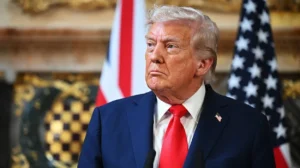
The attack occurred during the time when the two men were talking in Washington, thus further adding to the symbolism of this attack. According to Fox News reports, Trump and Netanyahu met as there was an “Iran war raging” with the American president considering the possibility of launching large-scale attacks on Iran again. Netanyahu was supposed to give Trump information about the Iranian development of its nuclear program and about Iran’s unwillingness to negotiate over this matter in good faith. On the other hand, Trump claimed that the United States was having “good talks” with Iran but would attack again if negotiations were to fail.
One quoted assessment from Nitsana Darshan-Leitner of Shurat HaDin Law Center captured the stakes in stark terms. She said,
“The decisions made by these two leaders in Washington will have far-reaching repercussions and will determine not only the next chapter in confronting Iran, but whether the region moves toward lasting stability or slips back into dangerous and chaotic escalation.”
That framing is useful because it shows how the meeting was not merely bilateral diplomacy; it was part of a wider security calculation. The attack on U.S. forces, arriving during that meeting, gave both leaders a live example of the consequences of stalled diplomacy and military brinkmanship.
CENTCOM’s warning
The most important official statement came from CENTCOM, which sought to communicate both control and readiness. Its wording was direct:
“At 5:45 p.m. ET today, Islamic Revolutionary Guard Corps forces launched multiple ballistic missiles from Iran in an attempted surprise attack on U.S. forces based in the Middle East. All Iranian missiles were successfully intercepted. U.S. forces remain vigilant and at a high state of readiness,”
the command said on X.
That statement does several things at once. It confirms the origin of the attack, asserts the success of U.S. interception systems, and sends a deterrence message by stressing readiness. In conflict reporting, this kind of language is significant because it signals that Washington wants the public and its allies to read the episode as an Iranian failure rather than a tactical breakthrough.
Regional backdrop
Missile attack must be viewed in the context of the larger war being waged in the region. With respect to the attack, the news reports indicated that the attack was triggered by a 13-day long series of attacks on both the U.S. and Iran, following which both seemed to stop attacking each other. This ceasefire was very delicate and fragile and was demonstrated when Iran launched the missile attack, thus showing how easily the truce could crumble. Another important factor that should be kept in mind in connection with this attack is the Strait of Hormuz. CGTN reported that the U.S. Navy diverted 18 merchant vessels through the Strait of Hormuz, disabled two and boarded two other vessels as part of its naval blockade on the Iranian ports.
According to the same report, Iranian Deputy Foreign Minister Kazem Gharibabadi said Tehran would not allow the Strait to return to its pre-war status, adding that if the situation reverted,
“our success in the war will not be complete.”
He also said,
“we are ready for the war’s resumption”
if Oman did not accept Tehran’s proposal over control of the waterway.
That is a remarkable stance because it ties maritime pressure directly to military victory narratives. In practical terms, it means Tehran is not treating the Strait only as a shipping issue but as leverage in the broader war architecture.
What this means
The immediate significance of the attack is the continued instability of deterrence. The United States says it has intercepted the missiles, but Iran, at least based on the reporting considered in this analysis, has not yet reacted to this claim. Even in the absence of an Iranian response, however, the event has moved the crisis forward because it requires a reaction from Washington when Trump is working to balance the diplomacy and coercion tracks. The political significance of this event is even more complicated. Trump announced he was calling off strikes on Iran to allow for another round of talks, but he also indicated that new strikes would follow if negotiations broke down.
This is what is known as a “dual track” policy, one where the United States is publicly leaving the option of diplomacy open while at the same time maintaining the credible threat of force. Netanyahu has gained from this incident the proof he needs that Iran continues to be aggressive and cannot be expected to delay its nuclear and military activities through diplomacy. It will test Trump whether his White House talks with Netanyahu have resulted in a coherent strategy of deterrence, diplomacy and alliance management.