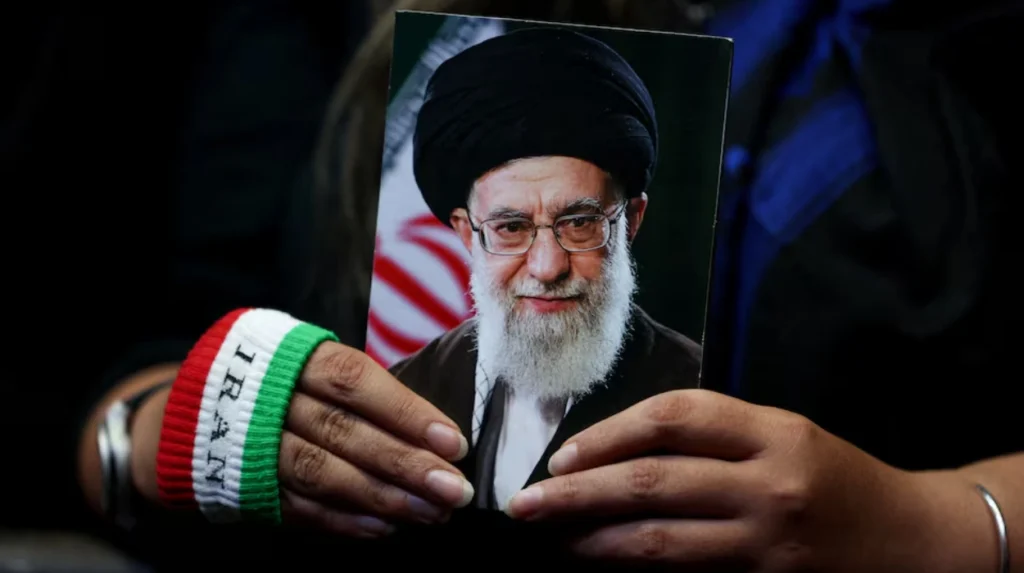
In a sharp escalation of rhetoric, Iran has issued a formal and public warning to the United States and Israel against launching any military attacks on Iranian soil during the multi-day funeral processions for the late Supreme Leader Ayatollah Ali Khamenei.
The warning issued by high-ranking military and political officials highlights the readiness of Tehran to regard this period as the red line, crossing which implies harsh and immediate consequences. This statement is issued within the scope of an ongoing months-long war between the U.S.-Israeli alliance and Iran in the course of which Ali Khamenei had been killed during the joint airstrike on the first day of the war. In connection with the upcoming mourning ceremony for the deceased supreme leader of Iran, the country’s authorities try to make the point that Iran is still united, resilient, and willing to retaliate in case of any threats.
A High-Stakes Moment for Iran, the Region and the World
The timing of Iran’s warning is not incidental. The funeral processions for Khamenei are scheduled to begin on July 4, 2026, in Tehran and conclude on July 9, 2026, with his burial in Mashhad, his hometown. Along the route, ceremonies are planned in major cities such as Qom, and possibly in Iraq, turning the week into a nationwide—and potentially transnational—moment of mourning, political mobilization, and symbolic resistance.
Given the estimates by the Iranian authorities that the number of people who will participate in the funerals in Iran and adjacent states is 15-20 million, the probability of mass casualties in case of any outside attack is exceedingly high. In this situation, the Iranian leadership tries to emphasize the “sensitivity” of the funerals as “a sensitive national and religious time” which must not be “miscalculated” by any foe, as the Air Force and ground commanders have repeatedly emphasized. This warning has wider regional implications as well. If Iran considers any attack during the funeral a provocation on its part, this can start a series of retaliation activities leading to involvement of other regional actors and, thus, destabilization of the region (Gulf, Levant), as well as energy channels.
The Military Warning: Who Said What and What It Means
The most direct and forceful warning came from Ali Abdollahi, commander of Iran’s Khatam al-Anbiya Central Headquarters, the joint command structure of the Iranian armed forces. Speaking on behalf of the military establishment, Abdollahi made clear that Iran’s armed forces are prepared to respond decisively to any threat during the funeral period.
He stated:
“We warn the enemies of Iran, especially the U.S. and the Zionist regime (Israel), to avoid any miscalculation and to think about the harsh retaliation our armed forces would make to any threat and aggression against our country.”
It is crucial to note that Abdollahi also stressed that the enemies of Iran were expected to avoid “any misjudgment in this time,” which would result in “severe and remorseful consequences” for them, since it would come from the “sons of the Iranian nation within the Armed Forces.” These phrases are not only meant rhetorically but rather serve as a part of deterrence strategy that tries to make American and Israeli officials think that the cost of such an attack would be much higher than they expect. The usage of phrases “enemies of Iran” and “Zionist regime” clearly shows Tehran’s consistent policy regarding its confrontation with the United States and Israel. By addressing them directly and mentioning their actions, Iran makes it clear who is being warned and about what actions.
Political Backing: The Foreign Minister’s Complementary Message
Iran’s military warning was reinforced by a parallel statement from the country’s top diplomat, Foreign Minister Abbas Araghchi, who delivered a similar message on July 1, 2026, just one day before the military’s public warning. Araghchi’s statement links the funeral to broader concerns about the survival of Iran’s leadership and the future of the Islamic Republic.
Araghchi said:
“Iran would deliver an ‘immediate and powerful response’ to any threat against its people or leadership, especially after Israel’s explicit threat to target Mojtaba Khamenei.”
This statement ties the funeral warning directly to earlier Israeli threats. In March 2026, Israeli Defence Minister Israel Katz declared that any new Supreme Leader appointed by Iran’s regime
“will face certain assassination, regardless of their identity or location,”
explicitly naming Mojtaba Khamenei as a “target for death.” Iran’s current warnings are therefore a direct response to that prior declaration, positioning the funeral as both a moment of mourning and a moment of political assertion.
By bringing the foreign ministry into the warning, Iran signals that the issue is not just military but also diplomatic and strategic. The message is clear: any attack during the funeral would not only be a military act but also a political escalation that Tehran would respond to at multiple levels.
Why the Funeral Period Is a Red Line for Tehran
The decision to issue such a strong warning ahead of the funeral is rooted in several key factors. First, the funeral is a national symbol. Khamenei served as Iran’s Supreme Leader for decades, and his death marks a historic turning point. Attacking Iran during his funeral would be seen domestically as a direct insult to the nation’s grief and a provocation against the Islamic Republic itself.
Second, the scale of the gatherings heightens the risk. With 15–20 million people expected to attend, any strike—whether on airspace, cities, or processions—could cause massive civilian casualties. For Iranian leaders, this magnifies the moral and political weight of any retaliation. They can argue that an attack during the funeral is not just aggression but a crime against millions of mourners.
Thirdly, the funeral represents an opportunity for consolidating the political front. Given the emergence of a new Supreme Leader, Mojtaba Khamenei, the Islamic Republic should demonstrate its unity and strength. The demonstration of a strong message against the U.S. and Israel will serve as an attempt to strengthen the domestic support, consolidate the new leadership, and emphasize that Iran is not scared of any confrontation. Lastly, there is a regional aspect to consider. Iran considers itself as a regional power and a leader of the network of allied forces in the Middle East. Therefore, any aggression during the funeral ceremony may be perceived by Iran’s allies as a test of Iran’s capabilities.
The Broader Context: War, Assassination, and a New Leadership
The warning is not happening in isolation. It is embedded in a larger narrative of conflict that began with U.S.–Israel airstrikes on the first day of the war, during which Ali Khamenei was killed. That event transformed the funeral from a routine religious ceremony into a highly charged political moment, symbolizing both mourning and resistance.
Iran’s story sees the war as an effort to weaken the Islamic Republic regime and its leadership. In the current situation, the funeral is a place where “a nation calls for vengeance,” according to the parliament speaker. There were calls to attend it en masse to prove that the people would not submit but be determined after the death of their leader. The fact that Khamenei appointed his son Mojtaba as the new Supreme Leader increased the importance of the event even more. The Israeli officials threatened him openly, proving that he was a direct continuation of the line of his father ideologically and strategically. The Iranian threats in connection with the funeral can be seen as a signal to the Israelis and Americans that the new leaders are not weaker or more negotiable.
Security Measures and Operational Precautions
Iran has already begun implementing concrete security and logistical measures to prepare for the funeral week. Civil aviation authorities have announced temporary airspace restrictions over several key cities, including Tehran and Mashhad, during the funeral days. These restrictions are designed to prevent unauthorized flights and to ensure that any aerial activity can be closely monitored and, if necessary, intercepted.
Large number of security personnel will be mobilized in Tehran, Qom, Mashhad, and elsewhere, wherever there are going to be any ceremonies. According to the Irish and international media, preparations by the Iranian government for increased security have been reported. Such preparations may include crowd control, surveillance, air defenses, fast reaction troops, etc. It is clear that Iran is not only making threats but also taking practical action. The threat as well as action taken by the government is meant to dissuade any attack on the country, at the same time making the Iranian population feel secure about their safety.
What the Warning Signifies for Future Escalation
Iran’s warning to the U.S. and Israel ahead of Khamenei’s funeral is a critical indicator of the country’s strategic posture. It signals that Tehran sees the funeral as a red line, and that it is prepared to escalate its response if that line is crossed. This does not necessarily mean that an attack will happen, but it does raise the stakes significantly.
For Washington and Tel Aviv, the challenge is to avoid actions that could be interpreted as provocation during the funeral week. Any strike, even a limited one, could be framed by Iran as an attack on mourning civilians and could trigger a broader confrontation. The warning thus serves as a form of pre-emptive diplomacy: it is an attempt to shape the behavior of adversaries by making the costs of aggression clear.
At the same time, Iran’s rhetoric also reflects confidence in its military capabilities and its willingness to use them. By stating that it will respond with “harsh and immediate” retaliation, Tehran is signaling that it is not seeking to avoid conflict but is instead preparing for it if necessary. This stance is consistent with Iran’s long-term doctrine of deterrence through the threat of disproportionate response.
A Nation on Edge, a Region at Risk
As Iran prepares for the funeral of Ayatollah Ali Khamenei, the country is simultaneously mourning and mobilizing. The stern warnings to the U.S. and Israel highlight the high stakes of the coming days, where a single miscalculation could ignite a wider war. With millions of people expected to gather, the human cost of any attack would be enormous, and the political fallout could reshape the regional order.
Iran’s message is clear:
“We warn the enemies of Iran, especially the U.S. and the Zionist regime (Israel), to avoid any miscalculation and to think about the harsh retaliation our armed forces would make to any threat and aggression against our country.”
The world