One of the significant arrests related to Minnesota’s largest fraud case in the era of coronavirus was made this week in Somalia where Abdikerm Eidleh was arrested by U.S. officials through their collaboration with the Somali intelligence. The case is significant not only for the magnitude of the claimed fraud, which is $250 million, but also for the extent of the investigation into this case outside the boundaries of Minnesota. The arrest is said to be one of the steps in the ongoing case of “Feeding Our Future” where arrests and pleas are numerous.
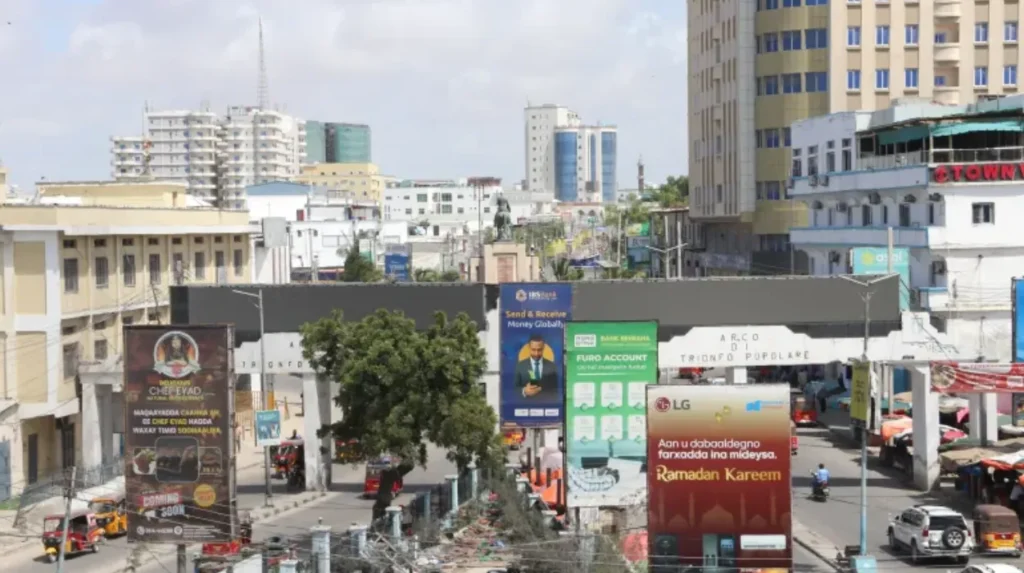
Not only does the arrest have implications for the fugitive himself, but it demonstrates that American prosecutors are continuing to pursue defendants that have escaped abroad. It also reveals how cooperation from the foreign country’s intelligence service may play an important role in major cases involving international financial crimes. In this particular case, it is said that the intelligence agency of Somalia cooperated with the FBI to apprehend Eidleh in daylight during a raid in Mogadishu.
What the arrest means
Eidleh, 42, has been cited as an important player in the “Feeding our future” scam and as the supposed second-in-command to Aimee Bock, the head of the nonprofit organization accused of perpetrating the scheme. Based on reports, he has been considered by the American authorities to be among those who facilitated the recruitment of firms, submission of fake claims, and transfer of funds to ensure that federal reimbursement for child nutrition was funneled through the system amid the coronavirus outbreak. This arrest thus is not simply a reduction in number of suspects but also a possible route to more information about the scheme.
This case has always been described by prosecutors as one of the biggest frauds associated with the pandemic that occurred in the nation. The reason why this particular arrest becomes particularly interesting is the fact that Eidleh was a fugitive for more than four years. For the law enforcers, arresting a fugitive after such a period indicates both persistence and improvement in cooperation across borders. From the perspective of the society at large, it proves that big fraud cases may span out of the state in which they originated.
Inside the Feeding Our Future scandal
Feeding Our Future began as a nonprofit that participated in federally funded child nutrition programs. Prosecutors allege it became a vehicle for fraud during the pandemic, when emergency conditions made oversight harder and aid flows more vulnerable. The government says the organization and its network used fake meal counts, inflated reimbursements, and shell-fronted business structures to siphon money meant for vulnerable children.
The scale is still huge. According to the officials, about $250 million has been taken through the central plan, whereas other claims in Minnesota might eventually raise the total amount. As the United States Attorney Daniel Rosen says, the Minnesota fraudulent world could be valued at more than $1 billion, including all the cases associated with it. The figure is crucial since it will help place Feeding Our Future in a much larger context of corruption associated with the use of public benefit programs.
The arrest of Eidleh matters because prosecutors portray him not as a peripheral participant but as an organizer embedded in the operational side of the fraud. That makes him valuable as both a defendant and a possible source of information about money trails, recruitment, and internal decision-making. In major fraud conspiracies, the arrest of a central figure can help investigators connect people, transactions, and false documentation that might otherwise remain fragmented across multiple jurisdictions.
What officials are saying
U.S. authorities have framed the arrest as a sign of reach and persistence. FBI Special Agent in Charge Christopher Dotson said,
“Somalia is not the safe haven you may think it is,”
emphasizing that fugitives can be found and detained even after crossing borders. That statement is more than a soundbite; it reflects the Bureau’s message that international flight does not guarantee protection, particularly in cases where foreign partners are willing to cooperate.
The U.S. Attorney Daniel Rosen used very strong language in describing the activities of Eidleh. According to him, “big fish” referred to the suspect, implying that the prosecutors consider Eidleh to be a principal rather than a peripheral character in the case. The language used by Daniel Rosen is in line with the general attitude of the government toward the case. This implies that there is more to the case than opportunistic crimes.
The FBI and U.S. prosecutors also credited Somali intelligence for assisting in the arrest. That cooperation is notable because it suggests a practical alignment of interests: Somalia gains credit for helping capture a high-profile suspect, while the U.S. benefits from local intelligence and operational support. Even without a detailed public explanation of the arrest process, the joint operation itself shows how transnational law enforcement can work when both sides see value in cooperation.
Why Somali cooperation matters
The participation of Somali intelligence in this arrest adds an extra layer of geopolitical significance to the whole affair. The inclusion of the participation of the city of Mogadishu means that Somalia is not just a place where this fugitive ended up by accident, but also an actor that contributed actively to the process of arresting him. This particular instance of state capacity in a part of the world that is usually represented as a site of conflict and instability shows another dimension of its capability.
For Washington, such cooperation will be helpful not only in this particular case but will help to foster relations with Somalian institutions, indicate that the United States is concerned about anti-corruption and cross-border crime enforcement, and facilitate future cooperation regarding financial crimes, terrorism-related issues, and fugitive cases. For Somalia, assistance in a highly visible arrest may prove to be a diplomatic achievement and show that the country is willing to cooperate with U.S. authorities and prosecute individuals accused of serious crimes.
The arrest also has an important symbolic layer. Because the alleged scheme involves money intended for nutrition support during the pandemic, it has emotional resonance well beyond legal circles. Public outrage in Minnesota has been fueled by the idea that funds meant for children and vulnerable communities were diverted for personal enrichment. An arrest in Somalia makes the story even more striking, reinforcing the impression that the scandal spread far beyond a local nonprofit failure and became a global manhunt.
The scope of the prosecutions
The larger case itself is well under way. It has been reported that 79 individuals have been indicted for the offense linked to the Feeding Our Future case, and 66 have either been found guilty or pled guilty. These numbers illustrate the wide range of the alleged network and the reason why this remains a priority for the authorities. In large-scale fraud cases, the large number of convictions and pleas usually implies solid documentation, witnesses, and pressure on defendants not to go to trial.
The direct financial involvement of Eidleh himself is also important. According to the prosecutors, he obtained some $5 million from the bribe and kickback scheme, which goes some way towards explaining why they consider him one of the key players. If the prosecutors’ assertions are true, it appears that he was more than a marginal facilitator of the conspiracy, but had been directly benefiting from its inner workings. Such a role always has serious repercussions in sentencing considerations.
The case also continues to evolve politically. Minnesota has become a focal point for broader debates over public-benefit oversight, immigration narratives, and state fraud prevention. The issue has been amplified by commentators and policymakers who point to the scandal as evidence of weak controls. At the same time, prosecutors are focused on the legal facts: who participated, how money moved, which claims were false, and where the proceeds ended up.
Why it matters now
This arrest arrives at a moment when accountability in pandemic-related spending remains a major public issue. Citizens want to know whether the systems built to protect emergency aid actually worked, and whether those who exploited them are being brought to justice. The Eidleh case answers that question only partly, but it does show active enforcement and a willingness to pursue suspects internationally.
Moreover, it has added to the political and legal importance of the fraud scandal in Minnesota. It started as an affair involving non-profit organizations at a state level, but has turned into something that will be remembered as an example of the issues of oversight and organizational inefficiency in relation to the emergency spending laws. The participation of Somali intelligence in arresting one of the accused has made it even more complicated.
The result is a story that is both local and global, financial and political, legal and symbolic. A suspect tied to a $250 million fraud scheme has been captured in Mogadishu, and U.S. authorities are signaling that the investigation is still far from over. That is why this arrest matters: it is not only a win for investigators, but also a reminder that major fraud cases can reshape reputations, policies, and international cooperation long after the original crimes are discovered.