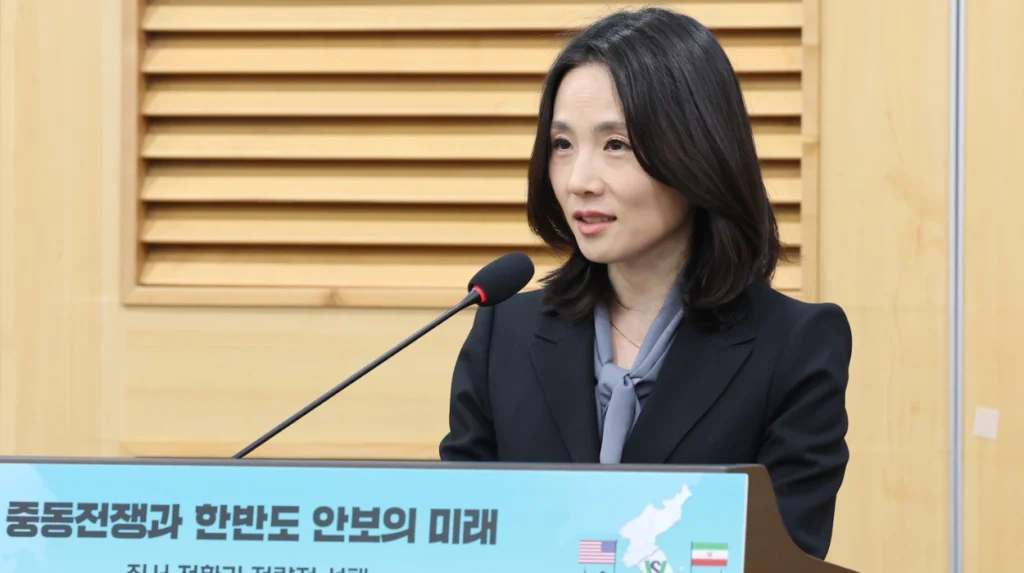
South Korea’s Foreign Minister Cho Hyun affirmed his country’s continuing support for its treaty obligations with the United States and identified the US-South Korean alliance as the central tenet of South Korea’s foreign policy and security policy. Cho’s remarks were made during a keynote speech by South Korea’s Second Vice Minister of Foreign Affairs, Kim Jina, at a National Assembly policy forum in Seoul.
This intervention by Cho is timely, as current geopolitical tensions around the world, particularly as a result of President Trump’s re-election and associated political changes in other countries, have resulted in decreased confidence in US alliances and alliances that were previously taken for granted.
Cho’s comments represent a more visible effort to counter the perception that South Korea and the United States are not as close as they were in the past; however, some of this perception has arisen primarily from US tariffs levied on imported steel and aluminum, operational control transfer from the United States to South Korea, and/or North Korean provocations. “There are concerns because people in South Korea are very concerned and very attached to the alliance,” Cho Hyun stated.
The minister’s statements also took place against the backdrop of additional changes to US foreign policy since President Trump took office in January 2025. For example, other important trends in US foreign policy-making since President Trump took office that may create differences in relations with South Korea are the US emphasis on equitable trade relationships.
Reassurance Amid Evolving US Foreign Policy Dynamics
The context of Cho’s speech is inextricably linked to the vicissitudes of US foreign policy, which has pivoted sharply under Trump toward transactionalism and America First imperatives. South Korea, a linchpin in containing North Korea and countering China’s regional assertiveness, finds itself navigating these shifts with heightened urgency. Recent US demands for increased defense contributions, coupled with tariffs on South Korean exports, have fueled domestic debates about alliance equity. Yet, Cho framed these challenges as opportunities for maturation, committing to transform the partnership into a
“future-oriented comprehensive strategic alliance”
by operationalizing leader-level agreements across security, economy, strategic industries, and advanced technologies.
From the vantage of US foreign policy scrutiny, this episode reveals the alliance’s resilience but also its frictions. Trump’s administration has prioritized alliances that align with economic nationalism, prompting Seoul to recalibrate its posture. Cho’s speech implicitly acknowledges these pressures, positioning South Korea as a model ally willing to shoulder more while preserving mutual benefits. The absence of specific troop numbers or budget figures in the address—unlike past disclosures—suggests a deliberate focus on qualitative strengthening over quantitative metrics, allowing flexibility amid ongoing negotiations.
Strategic Commitments and Peninsula Defense Focus
Delving deeper into the policy forum’s substance, Cho outlined a roadmap for alliance enhancement that directly interfaces with US strategic priorities in the Indo-Pacific. South Korea intends to play a leading role in Korean Peninsula defense, investing in cutting-edge assets to complement US forces. This includes accelerating OPCON transition, a long-standing goal now intertwined with US demands for fiscal equity.
“We will further strengthen trust and friendship,”
the foreign minister affirmed, linking diplomatic finesse to tangible security upgrades.
The speech also nodded to economic dimensions, where US tariffs have strained South Korean industries like semiconductors and automobiles. Cho vowed to implement prior agreements in strategic sectors, fostering joint ventures in advanced tech that serve mutual interests. This pragmatic stance aligns with Trump’s emphasis on supply chain resilience against China, positioning the alliance as a counterweight in a multipolar order. Trilateral frameworks with Japan, bolstered by recent defense pacts, further embed South Korea in US-led architectures, mitigating risks from North Korean nuclear advances.
US foreign policy under Trump has consistently stressed deterrence through strength, and Cho’s reassurances echo this by recommitting to extended deterrence mechanisms. The nuclear umbrella’s robustness, troop commitments, and joint exercises remain non-negotiable, even as burden-sharing talks intensify. This dynamic illustrates how allies like South Korea are compelled to evolve, absorbing US policy shifts without destabilizing core security guarantees.
Broader Implications for US-South Korea Ties
The timing of Cho’s intervention, just days before May 8, 2026, amplifies its significance amid ongoing US policy reviews. Speculations of a rift—fueled by media reports on tariff escalations and OPCON delays—have tested public confidence in Seoul. By attributing concerns to
“a deep sense of concern and attachment,”
Cho reframed narrative, transforming anxiety into alliance affirmation. This rhetorical pivot is masterful, sustaining domestic support while signaling to Washington Seoul’s reliability.
In the grander scheme of US foreign policy, South Korea exemplifies the challenges of maintaining alliances in an era of retrenchment. Trump’s reelection has accelerated demands for allies to contribute proportionally, with South Korea facing calls for higher host-nation support payments. Yet, reciprocal US commitments—nuclear assurances and forward-deployed forces—underscore the alliance’s asymmetry in Washington’s favor. Cho’s vision of a comprehensive strategic alliance seeks to balance this, integrating economic and tech cooperation to offset security costs.
Historical precedents abound: post-Cold War adjustments saw similar reassurances, but today’s context is amplified by China’s rise and Russia’s opportunism. South Korea’s overtures to Beijing and Tokyo, while maintaining US primacy, navigate this tightrope adeptly. The minister’s call for
“accommodate diverse views in a balanced manner”
hints at internal debates, where progressive voices question over-reliance on America. Nonetheless, bipartisan consensus in Seoul affirms the US alliance core policy as irreplaceable.
Future Trajectory and Global Repercussions
Looking ahead, Cho’s pledges set the stage for intensified bilateral engagements. Implementation of 2025 summit outcomes—on nuclear tech and submarines—will test resolve, particularly if US tariffs persist. The alliance’s modernization, as articulated, promises a more equal footing, potentially serving as a template for other US partners like Japan and NATO states.
“Developing the alliance into a future-oriented comprehensive strategic alliance,”
Cho envisioned, encapsulates this ambition.
For US foreign policy, South Korea remains a strategic asset: a technologically advanced economy with formidable military prowess, anchoring Indo-Pacific stability. Trump’s transactional lens demands reciprocity, but Cho’s proactive stance mitigates risks of drift. Trilateralism with Japan enhances collective deterrence, while economic alignments counter China without provocation.
Challenges persist. North Korean provocations could strain resources, and domestic politics in both nations add volatility. Yet, the foreign minister’s forum speech reaffirms foundational trust. By embedding quotes like
“manage pending issues through close and frequent communication,”
Cho Hyun has woven reassurance into policy continuity, ensuring the US alliance core policy endures as South Korea’s lodestar.
This development merits close watching, as it reflects broader US foreign policy tensions with allies. South Korea’s adaptability bolsters Washington’s leverage, but sustained investment is key to averting fissures. In a world of flux, such reassurances fortify deterrence, economics, and diplomacy against authoritarian rivals.