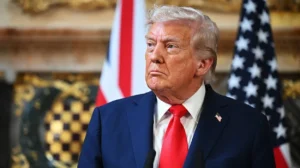
President Donald Trump appears convinced that Venezuela’s vast oil reserves could soon fuel a revival of American energy dominance. Following the removal of President Nicolás Maduro, Trump has spoken enthusiastically about US oil companies returning to Venezuela and reclaiming access to the world’s largest proven crude reserves.
But inside the oil industry, enthusiasm is in short supply. Energy executives and analysts warn that Trump may be badly misreading both market realities and corporate risk tolerance.
Why does Trump believe Venezuelan oil is America’s next opportunity?
Venezuela sits atop more proven oil reserves than any other country in the world — surpassing Iraq, Russia and even the United States combined, according to federal estimates. For Trump, this sheer scale represents a strategic prize: a chance to revive production, weaken rivals, and position US firms at the center of a restructured Venezuelan economy.
The White House insists American companies are eager to help rebuild what it describes as an oil industry “destroyed by the illegitimate Maduro regime.” Officials say Energy Secretary Chris Wright and Secretary of State Marco Rubio are already engaging with oil executives to explore restarting drilling operations.
Yet industry insiders say the administration’s confidence is misplaced.
Why are US oil companies reluctant to return?
Despite Venezuela’s geological riches, oil executives see a landscape filled with uncertainty. The political transition remains fragile, governance structures are unclear, and the risk of future policy reversals looms large.
“The appetite for jumping into Venezuela right now is pretty low,” one industry source told CNN. “We have no idea what the government there will look like.”
For oil companies planning investments that take decades to pay off, uncertainty measured in weeks — not years — is a dealbreaker.
Is political instability the biggest red flag?
For multinational energy firms, political stability is often more important than resource size. Executives need confidence that contracts will be honored, assets protected, and rules enforced consistently over time.
“Just because there are oil reserves — even the largest in the world — doesn’t mean you’re necessarily going to produce there,” another industry source said. “This isn’t like standing up a food truck operation.”
Several executives privately argue that the Trump administration prioritized political messaging over economic reality, pushing rhetoric before addressing the long-term institutional risks that govern investment decisions.
How damaged is Venezuela’s oil industry?
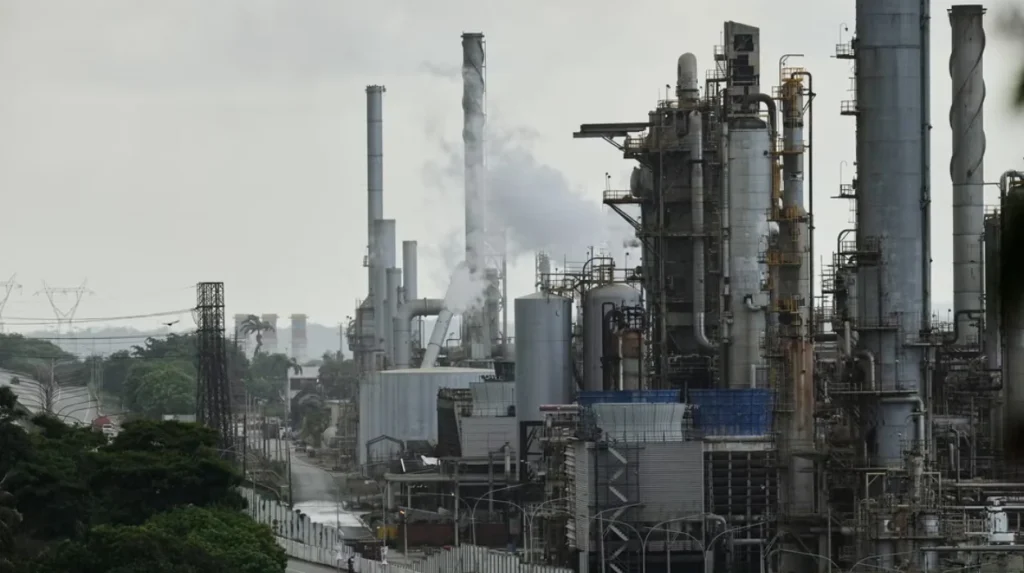
Years of mismanagement, underinvestment, sanctions and economic collapse have left Venezuela’s oil sector in dire condition.
“Venezuela is broke,” said Luisa Palacios, a former Citgo chairwoman. “The national oil company is in disarray. It can barely feed its people.”
Even to sustain current production volumes of around 1.1 million barrels per day, similar to North Dakota’s levels of production, an estimated outlay of $53 billion would be required over the next 15 years, Rystad Energy stated. In excess of that would be required in order to see a return to peak production levels in the late 1990s of 3 million barrels of oil equivalent per day for an outlay of $183 billion by 2040.
Why is Venezuelan oil especially expensive to produce?
A lot of Venezuelan oil is categorized as “heavy oil,” meaning that its extraction, refining, and transportation are more complex compared to shale oil, which is produced in areas such as the Permian Basin inside the US.
This technical challenge contributes to the rise in production costs at a time when the upstream sector is experiencing the kind of pressure from oil companies to manage costs, maximize shareholder returns, and steer clear of projects with high upfront costs and uncertain returns.
Why do low oil prices change everything?
Oil prices fell roughly 20% last year, marking their worst annual decline since 2020. While cheaper oil benefits consumers, it sharply reduces the incentive for companies to invest in risky, long-term projects.
“At $60 oil, this just doesn’t inspire investment,” said Doug Leggate of Wolfe Research. “The idea of an overnight restart of the Venezuelan oil industry is unrealistic.”
Without significantly higher prices or strong government guarantees, most oil executives see Venezuela as a financial gamble rather than an opportunity.
Could US government guarantees change industry minds?
In theory, Washington could try to offset these risks through incentives, guarantees or special legal protections for American firms. But it remains unclear whether such measures would be sufficient — or politically viable — given the enormous sums involved.
For now, executives say discussions remain preliminary and noncommittal.
Which US oil companies might actually benefit?
Among US firms, Chevron stands out as the most likely beneficiary. The company maintained a presence in Venezuela even during years of sanctions and turmoil and currently produces about 150,000 barrels per day under a special license.
“Chevron is the best positioned — by far,” said Francisco Monaldi of Rice University.
Chevron, however, has declined to comment on whether it plans to expand operations following Maduro’s removal.
Why are Exxon and Conoco still wary?
Other US giants like ExxonMobil and ConocoPhillips have long memories of Venezuela.
In the mid-2000s, then-President Hugo Chávez nationalized their assets, forcing both companies out of the country. Conoco is still seeking roughly $12 billion in compensation, while Exxon is pursuing nearly $2 billion.
“Venezuela has seen more expropriation cases than any other country,” Palacios said.
“The starting risk premium there is very high.”
Exxon, meanwhile, is focused on booming production in neighboring Guyana — a country that has rapidly overtaken Venezuela as a regional energy success story.
Is Venezuela still worth the risk?
For many in the oil industry, Venezuela is no longer the only — or even the most attractive — option in Latin America. With safer investments available elsewhere, executives question why they should return to a country with a long record of asset seizures, policy reversals and institutional collapse. “Venezuela is not the only game in town,” Palacios said. For now, Trump’s vision of restoring Venezuelan oil through American muscle remains far more appealing in Washington than in corporate boardrooms.