Fresh waves of protests across Iran in the last week have put increasing pressure on a government already battling to restrain an economic collapse that is worsening by the day. What began as outrage over the plummeting value of the national currency turned quickly into a broader display of public ire at corruption, mismanagement, and repression.
Initially, the peaceful demonstrations by the merchants escalated. According to the USA-based Human Rights Activists News Agency (HRANA), unrest is reported in at least 88 cities in 27 out of Iran’s 31 provinces. The magnitude of the demonstrations is a source of concern among human rights groups, especially where the security forces used brute force.
At least 29 protesters have been killed, while 1,200 protesters have been arrested, according to HRANA, following nine days of protests. Police are also believed to have raided hospitals in a move that is known to violate international laws, as was opposed by human rights organizations.
Is Iran facing mounting pressure from Washington after Venezuela?
While Iran faces challenges from its domestic unrest, developments thousands of miles away have introduced yet another element of concern for Iranians. Over the weekend, US troops conducted an undercut nighttime raid in Caracas, detaining Venezuelan President Nicolás Maduro, an ally of the Iranian government, and handing over custody to the US.
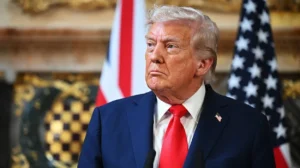
The dramatic intervention has caused tremors within the Iranian government, underscoring concerns that Washington could be willing to resort to direct military intervention in order to displace host governments. The operation came amid renewed threats from US President Donald Trump, who warned Iran for the second time in a week that any killing of protesters would trigger a response from Washington.
“If they start killing people like they have in the past, I think they’re going to get hit very hard by the United States,” Trump said aboard Air Force One.
Are US threats hardening Tehran’s response to protests?
Rather than tempering its response, Iran’s leadership appears to have doubled down. The government deployed the Basij paramilitary force to suppress demonstrations, escalating the crackdown as Trump’s warnings grew more explicit.
Iranian officials have long argued that protests are exploited by foreign powers seeking regime change. That narrative has intensified in recent days, with authorities branding some demonstrators as “rioters,” “mercenaries,” or agents linked to hostile governments.
Supreme Leader Ayatollah Ali Khamenei acknowledged the legitimacy of protest in principle but drew a sharp distinction between dissent and disorder. “Protesting is legitimate, but protesting is different from rioting,” he said in a post on X. “Rioters must be put in their place.”
Protesting is legitimate, but protesting is different from rioting. We talk with protesters. The officials must talk with the protesters. But, there’s no point in talking with a rioter. Rioters must be put in their place.
— Khamenei.ir (@khamenei_ir) January 3, 2026
Is Israel’s stance amplifying Tehran’s sense of siege?
Adding to the Iranian paranoia, the Iranian opposition received some unlikely sympathy from the Israeli Prime Minister, Benjamin Netanyahu, who expressed solidarity with the Iranian protesters. Iranian leaders are known to have often cited Israel as one of the destabilizing forces in the region, especially in the wake of the conflict in the summer.
The disclosure of the extent to which the Israeli intelligence had penetrated inside Iran came with the revelations that weapons had been smuggled into the country and used in the targeted strikes. Dozens were subsequently arrested by the Iranian authorities, accused of espionage, and at least 10 were executed; on Monday, state media announced another arrest in Tehran of a suspect reportedly linked to Israel’s Mossad intelligence agency.
Does Iran now see US intentions as “maximalist”?
Analysts say the combination of domestic unrest, US military action in Venezuela, and Israeli pressure has reshaped Tehran’s threat perception.
“To Tehran, American intentions now are clearly maximalist and hostile,” said Vali Nasr of Johns Hopkins University. He cautioned, however, that it remains unclear whether the Venezuela operation marks the beginning of a broader campaign targeting Iran.
Sanam Vakil of Chatham House described Iran as facing a “triple crisis” — economic collapse, political instability, and escalating external pressure — with the risk of another military confrontation looming.
How similar is Iran’s situation to Venezuela’s collapse?
The downfall of Venezuela’s leadership has inevitably drawn comparisons with Iran. For years, Caracas and Tehran were bound by shared isolation, extensive sanctions, and deep economic and military cooperation. Iran helped Venezuela transport oil, repair refineries, and maintain energy exports under US pressure.
Both countries possess vast energy reserves and positioned themselves as anti-imperialist adversaries of Washington. Both also suffered economic collapse under sanctions and political isolation.
Yet key differences remain. Iran’s theocratic system is rooted in religious ideology, while Venezuela’s governance is secular and socialist. More importantly, Iran has spent decades preparing for external threats.
Is Iran better equipped to resist foreign intervention?
In contrast to Venezuela, Iran has developed a range of regional proxy regimes, missiles systems, and drone programs aimed at pooling a deterrence of military strikes from foreign states. The Iranian leadership has indicated that the repercussions of military attack will not be limited to Iran.
“All American centers and forces across the entire region will be legitimate targets for us,” warned parliamentary speaker Mohammad Bagher Ghalibaf.
At the same time, opposition to foreign intervention runs deep within Iranian society. Even during last summer’s war with Israel, rival political factions united in condemning external attacks on the country.
Has confrontation replaced diplomacy in Tehran’s worldview?
For Iran’s leadership, recent events reinforce long-standing claims that engagement with Washington is futile. Khamenei has argued that negotiations merely provide cover for US efforts to weaken and ultimately overthrow the Islamic Republic.
“Those who argued that the solution was negotiating with the US have seen what happened,” he wrote recently. “We will not give in to the enemy.”
As protests continue and international pressure mounts, Iran now stands at a volatile crossroads — caught between internal demands for change, an intensifying human rights crisis, and the growing risk of external confrontation.