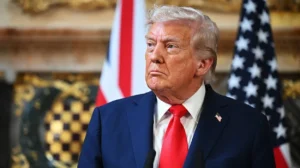
One of the major revelations of recent diplomacy is the disclosure by an official in the White House that the Chinese President Xi Jinping showed great enthusiasm for buying American oil because he wants China to be less dependent on the oil imported from the Middle East through the vulnerable Strait of Hormuz. This was revealed after the discussion between the two leaders, Xi Jinping and President Donald Trump on May 13, 2026 in Beijing.
The
“US says China wants more of its oil to cut Middle East reliance”
statement captures the essence of this shift, driven by Beijing’s strategic calculus to safeguard its energy security against chokepoints like the Strait, through which roughly half of China’s crude imports flow.
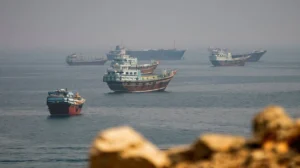
These developments occur amid growing concerns of China as the world’s largest importer of oil, due to regional unrest in the Middle East, sanctions imposed by the US against hostile suppliers, and increasing domestic demand up to 17 million barrels daily. These talks, which were not mentioned in the Chinese summary but according to American sources, are about the refusal of President Xi Jinping to consider the idea of imposing a “toll fee” to ships traveling through the Strait, an extremely vital point of passage for oil shipments by countries such as Saudi Arabia, Iraq, and the United Arab Emirates.
Giovanni Staunovo, commodity analyst, in a post on X, highlighted remarks from a White House official regarding discussions on Iran and the strategic importance of the Strait of Hormuz. According to the official, both sides agreed that the Strait must remain open to ensure the free flow of global energy supplies.
The Beijing Summit: Key Revelations from Xi-Trump Talks
The Xi-Trump meeting on May 13 was a significant milestone in bilateral ties, encompassing both trade talks and energy security concerns. As per the White House, President Xi Jinping clearly stated his intention of buying more US crude oil as a strategy to avoid the vulnerability of Middle Eastern sources.
This aligns with broader conversations on Middle East stability, where Xi Jinping
“specifically opposed proposals to impose tolls on ships navigating the Strait,”
as per the official account. Such tolls, floated amid ongoing conflicts, could exacerbate shipping costs and delays for the 52% of China’s 2025 crude imports—equivalent to 1.9 billion tons out of 3.6 billion total—that originated from Gulf states.
The importance that President Trump placed upon energy exports was also evident during these discussions. Specifically, in April 2026, he made public comments about how China gets its oil “nearly 90% from the Strait.” This comment, although questionable with regard to its accuracy, clearly highlights the need of the United States to emphasize the reliability of their energy supplies. Although China has acted preemptively by increasing their oil reserves to 1.3 billion barrels, which covers almost four months of imports, Xi’s initiative suggests otherwise.
The lack of information about energy in the Beijing communiqué, despite emphasizing the need for dialogue in the Middle East, shows the real progress made by the Americans. In this delicate game of diplomacy, energy has emerged as a key issue in Sino-US relations.
China’s Deepening Middle East Oil Dependence: Stats and Vulnerabilities
The Chinese energy balance sheet shows a reliance on the Middle East, which makes it not only possible for America to say that China desires more oil but a necessity. By 2025, about 50-52% of the country’s crude oil had originated from six Gulf states, all transported via the Strait of Hormuz, a narrow water body that is vulnerable to any disruption arising from war between Iran, the Houthis in Yemen, or any other escalation. With a daily requirement of about 17 million barrels, an oil pipeline blockage would result in shortages right away, although its stockpile is enough for 200 days for the US Strategic Petroleum Reserve.
The weakness was exposed much earlier in 2026 after the United States attacked Iran, resulting in re-routed ships and increased global costs. China sought to compensate for the losses by increasing imports from Russia and using their reserves; however, the experts say that risks will remain if the current situation is not resolved. This issue was addressed in April when President Trump emphasized US exports as the solution amid sanctions. In numbers, we see how Iran’s oil, accounting for more than 80 percent of its export supplies to China, has become one of the main targets.
Geopolitical Backdrop: From Iran Sanctions to US Pressure
The background of Xi’s olive branch has many layers, including those related to American endeavors to reduce Chinese purchases from the sanctioned regimes. On February 1, 2026, according to Axios, Trump and Israeli Prime Minister Benjamin Netanyahu decided to step up the pressure on Iran to decrease the sale of its oil to China. This came after US Treasury Secretary Scott Bessent thought about telling China to switch from agreements with Iran and Russia to US companies as a part of new trade deals.
Post-strikes on Iran, China’s dilemma intensified: Politico’s charts from March 2 illustrated how US actions created supply gaps, filled temporarily by Russia but at higher costs and risks. Reuters noted in late February that
“US and China hold the keys to containing a Mideast oil shock,”
emphasizing coordinated release of reserves. By April, as Fox Business detailed, Bessent weighed direct appeals amid Trump’s challenge to decades-old US commitments in the region. These moves reflect a broader strategy where energy leverage bolsters America’s position against both Tehran and Moscow.
China’s adaptations—plugging gaps via Russia as per a Reuters April 14 analysis—demonstrate resilience, yet the pull of US oil grows stronger. With Middle East war updates from the Financial Times showing oil price jumps by March 15, Beijing’s calculus favors diversification.
Key Statistics and Trends Shaping the Shift
Delving into the numbers, China’s 2025 Middle East imports hovered at 50-52% of its total crude, per multiple analyses, translating to billions of tons vulnerable to Hormuz disruptions. Trump’s 90% Strait reliance figure, while hyperbolic, captures the essence of exposure for Gulf flows. Iranian volumes to China exceeded 80% of Tehran’s exports, fueling sanctions battles.
Stockpiles offer a buffer: China’s 1.3 billion barrels equate to four months, against the US’s 200-day net crude capacity. Consumption at 17 million bpd underscores the scale, with Reuters highlighting US-China reserve coordination as a stabilizer. These metrics, drawn from Bloomberg Law, Politico, and Reuters, frame Xi’s interest as data-driven pragmatism.
| Metric | Details (2025-2026) |
| ME Import Share | 50-52% of total crude politico+1 |
| Strait Reliance (Trump) | Nearly 90% |
| Iran to China | >80% of Iran’s exports |
| Stockpiles | 1.3B barrels (~4 months) |
| Daily Consumption | ~17M bpd |
This table distills the pressures propelling change.
Implications for Global Energy Markets and US-China Ties
The US says China wants more oil development, which portends ripple effects. For markets, increased US exports could temper prices, countering Middle East volatility—evident in post-strike surges. Trump’s February-February pact with Netanyahu and Bessent’s overtures signal a multipronged US strategy, blending sanctions with inducements.
For bilateral relations, it fosters interdependence: China gains security, the US markets its bounty. Yet challenges loom—sanctions compliance, pricing, and logistics. As Facebook posts from RFDTV and TechTimes noted in March-April, Trump’s queries on China’s reliance elicited affirmations of cooperation potential.
Opportunities and Risks Ahead
From a journalistic vantage with over a decade tracking energy geopolitics, this pivot is transformative. Xi’s move dilutes Middle East leverage by rivals like Iran, aligning with US goals sans confrontation. Risks persist: If tolls or blockades materialize, short-term spikes loom, but US volumes—ample post-shale boom—offer salvation.
Trump’s rhetoric, from
“fundamentally challenged the decades-old US commitment”
per social media, frames this assertively. China’s omissions suggest caution, yet actions speak: Post-April YouTube buzz on US “cutting off” Middle East supply underscored the narrative.
Long-term, expect contracts ballooning US exports to China, stabilizing alliances. As Reuters posited in February, mutual restraint contains shocks. This saga reaffirms energy’s role in great-power chess—pragmatism trumps ideology.