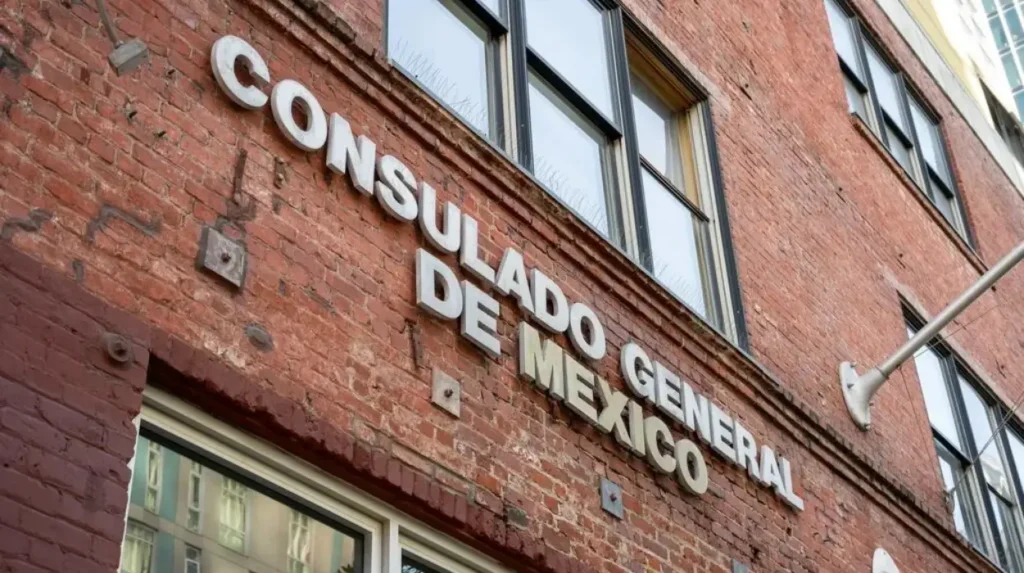
In response to increasing tensions between the U.S. and Mexico, the State Department has begun reviewing all 53 Mexican consulates in the U.S. This announcement was made on May 6, 2026, and comes after two CIA agents were killed in Chihuahua and due to allegations that the U.S. was operating without permission on Mexican soil.
Marco Rubio, the Secretary of State, has signalled that some of the consulates could be closed in line with the “America First” doctrine that positions national security ahead of extensive diplomatic representation in other countries. This development represents a dramatic shift in the U.S. policy toward Mexico, wherein the consular network, which has historically played an important role for immigrants, is being examined.
The entire network of Mexican consulates, from the key locations in California, Texas, and Arizona, as well as smaller consulates elsewhere in the U.S. serve many millions of Mexicans who utilize them for services such as renewing passports and receiving help with legal matters.
In light of recent acts of violence, the State Department is investigating the degree to which these consulates enhance U.S. interests, or present a security risk, much like the closure of the Houston, Texas, consulate in 2020 over espionage concerns.
Roots of the Crisis: CIA Deaths Spark Sovereignty Firestorm
The catalyst for this consular scrutiny traces back to late April 2026, when two CIA officers and two Mexican investigators perished in a vehicle crash during a counter-narcotics raid in Chihuahua. The operation targeted cartel drug labs, but Mexican authorities were blindsided, claiming no prior knowledge of US involvement. President Claudia Sheinbaum swiftly demanded accountability, questioning the agents’ federal authorization and asserting Mexico’s constitutional sovereignty.
“We insist on constitutional compliance,”
Sheinbaum stated, emphasizing that US personnel must secure accreditation through Mexico’s Foreign Ministry and submit monthly activity reports.
This incident exposed fault lines in security cooperation, long a cornerstone of US-Mexico relations under frameworks like the Mérida Initiative. Sheinbaum reached out directly to the US ambassador, urging transparency while ruling out outright conflict.
“There will be no conflict with the US over the two CIA agents killed,”
she declared, positioning Mexico as committed to partnership yet firm on territorial integrity. From the US side, the State Department framed the review as a routine evaluation to protect national interests, with the embassy highlighting mutual anti-corruption goals. However, Trump’s administration has escalated rhetoric, filing drug trafficking and weapons charges against top Mexican figures, including an extradition request for Sinaloa Governor Rubén Rocha Moya, who temporarily stepped down while denying all allegations.
These deaths were not isolated. Reports indicate intensified CIA drone surveillance over Mexican territory, part of broader Trump-era pushes for unilateral action against cartels. Veiled threats from US officials have strained security ties further, as detailed in recent analyses of bilateral dynamics. Mexico’s response has been measured but resolute, with Sheinbaum calling for a full investigation and explanations of any unauthorized operations. This clash reflects a broader US foreign policy pivot under Trump, reelected in 2024 and now in his second term, which views Mexico less as a partner and more as a frontline in the war on drugs and migration.
Consular Network Under the Microscope: Scope and Significance
Mexican consulates dot the US landscape with 53 locations, concentrated in border states where they handle surging demand. Through April 2025, appointments rose 21 percent, with civil registry services up a staggering 179 percent, alongside over 6,800 legal consultations and 43,000 protection cases, 75 percent tied to immigration issues. These posts provide essential assistance, from birth certificates to voting support, continually protecting the rights of Mexican communities abroad. Yet, the State Department’s review probes their role in an era of heightened tensions, questioning if they inadvertently facilitate cartel influence or evade oversight.
The potential for closures carries weighty precedents. Historical US actions against foreign consulates often signal irreparable diplomatic rifts, as seen with China’s Houston shutdown amid intellectual property theft allegations. Rubio, a vocal critic of Mexican cartel leniency, has framed the review as essential for reciprocity, especially after Mexico paused relations with the US embassy in 2024 over similar clashes. With Trump’s inauguration fresh in January 2025, this fits a pattern of aggressive diplomacy, including Rubio’s September 2025 trip to Mexico for security talks under presidential pressure.
Mexican officials defend their network vigorously.
“Mexico’s consulates in the US provide assistance and continually protect the rights of our nationals,”
reads a consular statement, underscoring their humanitarian mandate. Sheinbaum has echoed this, insisting on bilateral cooperation without concessions on sovereignty. Meanwhile, US charges against Rocha Moya, including arms trafficking ties, amplify the stakes, with the governor proclaiming innocence and vowing to fight extradition. This legal salvo, coupled with CIA operational expansions, positions consulates as potential leverage points in Washington’s strategy.
US Foreign Policy Calculus: Trump Era Reckoning
Under Trump’s leadership, US-Mexico policy has hardened into a security-first doctrine, departing from the collaborative tone of prior administrations. The State Department’s consular review embodies this, treating Mexico’s vast network not as an asset for people-to-people ties but as a vulnerability in the fight against fentanyl flows and border chaos. Rubio’s involvement adds ideological edge; his congressional testimony and joint press events with Mexican counterparts reveal a push for accountability, even at the risk of escalation.
Sheinbaum, inaugurated in 2024 as Mexico’s first female president, navigates this delicately. Her outreach to the US ambassador and demands for operational transparency aim to de-escalate while safeguarding autonomy.
“Mexican President Sheinbaum demands US explain unauthorized operations,”
international reports noted, capturing her blend of diplomacy and defiance. Yet, Trump’s hints at military strikes on cartels, absent full Mexican buy-in, loom large, potentially rendering consulates collateral in a proxy escalation.
Broader context reveals a “special relationship” under siege. Quincy Institute analyses highlight intertwined economies and security needs, yet persistent cartel violence—exacerbated by US weapons flows—erodes trust. The Chihuahua incident, killing US embassy staff in a cartel raid per some accounts, underscores operational perils. As Rubio’s review progresses, it tests the limits of US leverage, where closing consulates could cripple services for millions but signal unyielding resolve.
Implications for Bilateral Ties and Beyond
This consular standoff risks cascading effects. Reduced Mexican consular presence would strain migrant communities, already facing deportation pressures under Trump policies. Legally, Rocha Moya’s case could drag through courts, mirroring past extraditions like that of Joaquín “El Chapo” Guzmán. Security-wise, Sheinbaum’s insistence on accredited operations may curb CIA flexibility, prompting more unilateral US moves.
From a US foreign policy lens, the review critiques Mexico’s cartel combat effectiveness, aligning with Trump’s narrative of a neighbor failing its duties. Rubio’s rhetoric in hearings emphasized reciprocity, warning that unchecked consulates undermine American sovereignty. Sheinbaum counters with cooperation pledges, as in her post-incident statements prioritizing joint anti-corruption efforts.
As May 2026 unfolds, the world watches this flashpoint. Will Rubio shutter posts, forcing Mexico to recalibrate? Or will diplomacy prevail, preserving a network vital to 37 million Mexican-Americans? The State Department’s actions, rooted in Chihuahua’s tragedy, expose raw fault lines in a partnership long defined by proximity and interdependence. For Trump’s America First agenda, it’s a high-stakes bet on deterrence over dialogue, with Mexican consulates review as the opening gambit.