Under the leadership of President Donald Trump, the US continues to refine foreign policy and strengthen bilateral relationships with major neutral nations such as Switzerland. On May 6 2023 in Washington DE, State Secretary of the Federal Department of Foreign Affairs (FDFA), Alexandre Faxe, engaged in political consultations with Deputy Secretary of State Christopher Landau as part of the annual strategic partnership dialogue.
The dialogue is a result of the Trump administration’s focus on pragmatic alliances that generate economic advantages and allow for diplomatic leverage without the need to incur wider multilateral commitment. The dialogue (commenced 2021) was established by a memorandum of understanding in 2022, to allow for ongoing engagement between Swiss experts of the Federal Department of Foreign Affairs and State Secretariat for Economic Affairs with their US counterparts in order to address mutual global challenges.
A wide range of topics were addressed in these consultations demonstrating the depth of coordination between both countries. Geopolitical discussions included various trouble spots including the Middle East with a particular focus on Iran, where Switzerland has retained its role as the protecting power for US diplomats. Both sides restated this mandate and expressed the value of this role in reference to the transactional diplomacy of Donald Trump and the preference of indirect channels to direct confrontation between both countries.
Economic Pillars Bolster Bilateral Resilience
Economic interdependence stands as the bedrock of the SwitzerlandUS strategic partnership with the US serving as Switzerlands largest nonEuropean trading partner. Bilateral trade thrives in highvalue sectors driving mutual prosperity and job creation. Swiss firms have pledged at least USD 200 billion in US investments over five years with one third slated by the end of 2026. This commitment announced within recent frameworks signals strong confidence in the American market even amid global economic headwinds.
Historical data reinforces this dynamic. In 2021 Switzerland ranked seventh among foreign direct investors in the US with over USD 300 billion in stocks sustaining more than 400000 jobs. Companies like Nestle Roche and ABB exemplify this presence spanning food healthcare and industrial automation. From a USA foreign policy lens these inflows counter trade imbalances elsewhere and align with Trumps America First agenda by enhancing domestic employment without fiscal outlays. The partnership extends to taxation science and cultural initiatives where Switzerlands financial stability positions it as a reliable European hub for US enterprises.
This economic framework evolved through successive dialogues building on the 2021 launch that tackled Ukraine climate and human rights. Subsequent rounds including a 2025 session expanded to anti money laundering and multilateral cooperation. The current fourth iteration under the 2022 memorandum integrates SECO expertise ensuring policy coherence across trade innovation and security. Critically for Trump era diplomacy this model yields high returns: substantial investments diplomatic backchannels and market access with minimal US concessions.
Innovation Frontiers Shape Future Cooperation
The dialogues structure complements other bilateral forums like economic working groups allowing iterative progress. Swiss participation enhances its global voice particularly in Geneva institutions despite nonNATO status. For the US it diversifies European engagement sidestepping EU bureaucratic delays for s
The United States continues to refine its foreign policy approach under President Donald Trump by strengthening bilateral ties with key neutral players like Switzerland. On May 6 2026 in Washington DC FDFA State Secretary Alexandre Fasel held political consultations with US Deputy Secretary of State Christopher Landau as part of the fourth annual strategic partnership dialogue.
This engagement reflects the Trump administrations emphasis on pragmatic alliances that deliver economic benefits and diplomatic leverage without the burdens of broader multilateral commitments. Launched in 2021 and formalized through a 2022 memorandum of understanding the dialogue brings together Swiss experts from the Federal Department of Foreign Affairs and the State Secretariat for Economic Affairs with their US counterparts to address shared global challenges. In a period marked by conflicts in Ukraine and the Middle East alongside technological rivalries these talks exemplify how USA foreign policy prioritizes targeted partnerships to safeguard national interests.
Economic Pillars Bolster Bilateral Resilience
Economic interdependence stands as the bedrock of the SwitzerlandUS strategic partnership with the US serving as Switzerlands largest nonEuropean trading partner. Bilateral trade thrives in highvalue sectors driving mutual prosperity and job creation. Swiss firms have pledged at least USD 200 billion in US investments over five years with one third slated by the end of 2026. This commitment announced within recent frameworks signals strong confidence in the American market even amid global economic headwinds.
Historical data reinforces this dynamic. In 2021 Switzerland ranked seventh among foreign direct investors in the US with over USD 300 billion in stocks sustaining more than 400000 jobs. Companies like Nestle Roche and ABB exemplify this presence spanning food healthcare and industrial automation. From a USA foreign policy lens these inflows counter trade imbalances elsewhere and align with Trumps America First agenda by enhancing domestic employment without fiscal outlays. The partnership extends to taxation science and cultural initiatives where Switzerlands financial stability positions it as a reliable European hub for US enterprises.
This economic framework evolved through successive dialogues building on the 2021 launch that tackled Ukraine climate and human rights. Subsequent rounds including a 2025 session expanded to anti money laundering and multilateral cooperation. The current fourth iteration under the 2022 memorandum integrates SECO expertise ensuring policy coherence across trade innovation and security. Critically for Trump era diplomacy this model yields high returns: substantial investments diplomatic backchannels and market access with minimal US concessions.
Innovation Frontiers Shape Future Cooperation
Emerging technologies dominated forwardlooking portions of the May 6 talks positioning AI and quantum computing as strategic priorities. The US leveraging DARPA and tech leaders like Google and IBM seeks to maintain dominance while Switzerland contributes through institutions such as ETH Zurich and CERN. Collaborative ventures promise advancements in defense healthcare and climate solutions areas central to countering Chinese technological ascent.
Research security discussions addressed espionage threats and talent flows balancing openness with protection. Export controls safeguard dual use goods ensuring Swiss manufacturing adheres to US guidelines. These steps mark a maturation from mere trade facilitation to resilient ecosystems capable of withstanding geopolitical shocks. In Trumps foreign policy calculus such pacts amplify US competitiveness without alliance expansion costs.
The dialogues structure complements other bilateral forums like economic working groups allowing iterative progress. Swiss participation enhances its global voice particularly in Geneva institutions despite nonNATO status. For the US it diversifies European engagement sidestepping EU bureaucratic delays for swift outcomes.
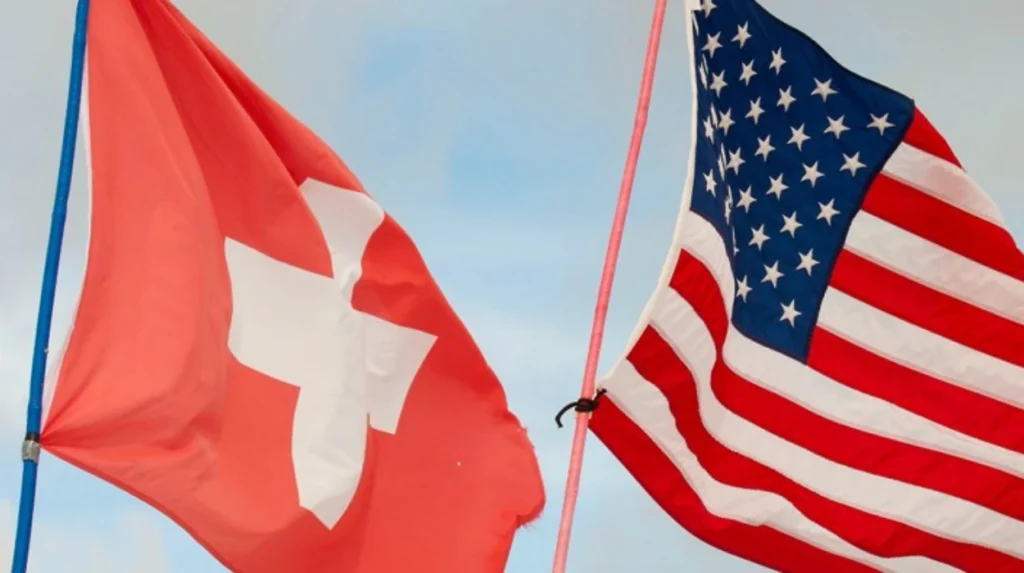
The intertwined American and Swiss flags symbolize a partnership of shared values and practical collaboration enduring through global uncertainties.
Navigating Neutrality in USLed Initiatives
Switzerlands neutrality occasionally tests the partnerships boundaries particularly on China where US hawkishness contrasts with Berns more balanced trade approach. Yet the May 6 consultations navigated these tensions productively reaffirming commitments to a rules based order. The US benefits from Swiss financial expertise in sanctions enforcement and asset freezes amplifying pressure on Russia and Iran.
Trumps second term following 2024 reelection and 2025 inauguration intensifies demands for measurable diplomatic gains. This dialogue delivers on multiple fronts: protecting power services for Iran economic pledges timed for midterm optics and coordinated messaging on Balkans and Venezuela stability. It counters isolationist narratives by showcasing proactive bilateralism.
Broader context frames these talks amid US recalibrations post Ukraine aid debates. With nuclear deadlines looming in Iran Swiss mediation gains urgency. Sustained Ukraine sanctions coordination advances Trumps negotiation preferences while economic ties project stability to global investors.
Policy Blueprint for Trump Diplomacy
The SwitzerlandUS strategic partnership serves as a blueprint for USA foreign policy under Trump favoring bespoke deals over expansive commitments. By elevating Switzerland a financial powerhouse with diplomatic agility the US broadens its European toolkit. Quick wins in jobs investments and intelligence sharing contrast with protracted NATO or EU processes.
Challenges persist including neutrality frictions and domestic Swiss debates over Western alignment. Future rounds will test sustainability but current momentum suggests durability. For Switzerland gains include US market access amid EU immigration disputes and amplified UN influence.
As Fasel and Landau wrapped discussions their alignment on geopolitics economy and innovation cements a fifth year of productive ties. This partnership exemplifies targeted diplomacy yielding coherence and benefits in a fractured world. USA foreign policy through such engagements leverages allies strengths securing American priorities effectively.