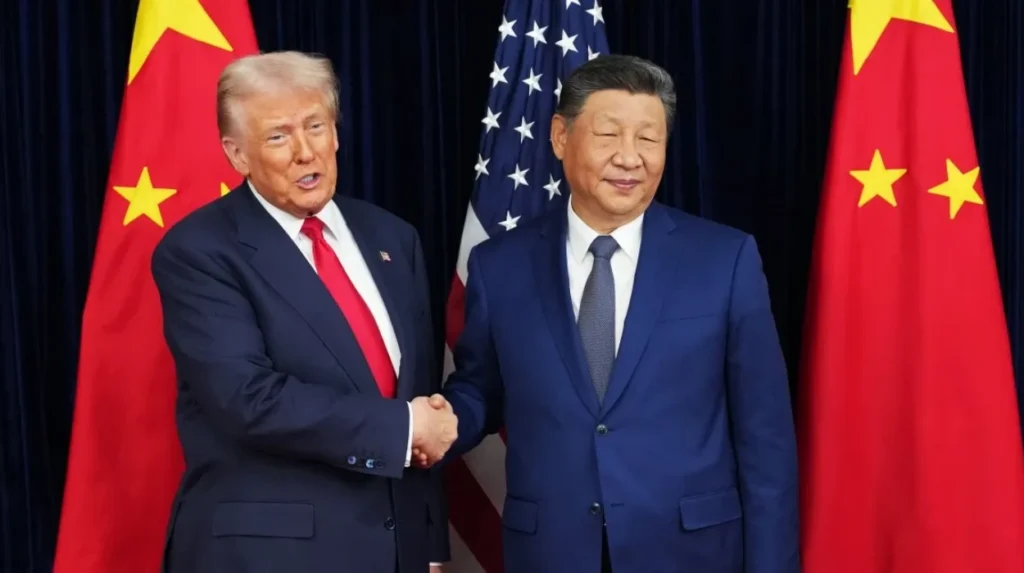
A series of important global stages are being established for the single biggest diplomatic meeting of the decade in May 2026 as U.S. and Chinese officials communicate through an intensive, last-minute series of both high-level and virtual means as an immediate precursor to a scheduled State visit by President Donald Trump to Beijing.
The summit will occur on May 14th and 15th, 2026, and represents the culmination of months of strained diplomacy between the two countries aimed at managing the structural tensions that have defined their bilateral relations during this administration.
While both Washington and Beijing have characterized these meetings as “candid,” there remains a complex and challenging dynamic as Chinese officials frequently use the phrase “healthy, stable and sustainable” relationship but are simultaneously under significant pressure as a result of several global crises.
The Architecture of Diplomatic Preparation
The road to the Beijing summit has not been an easy journey. In the early parts of 2026, diplomats are travelling to various countries including Paris to try and work out their differences over the trade and technology competition between them.
U.S. Treasury Secretary Scott Bessent and Chinese Vice Premier He Lifeng have been leading the way in these meetings and have covered a variety of issues related to the economy, including how to control exports of high technology materials and how to structure tariffs. The fact that these meetings were necessary suggests that while they are both competing for the president’s attention at the summit, they are also both entrenched in a cycle of competition with each other.
In addition to discussing economic issues, these discussions have included high level security discussions including those between U.S. Secretary of State Marco Rubio and Chinese Foreign Minister Wang Yi.
These two people often discuss security issues in addition to economic issues while they are at the same time competing against each other. Diplomatic officials have been forced to spend a lot of time discussing the impact of conflicting regional conflicts on how they conduct their diplomatic engagements and how the instability of U.S. foreign policy has added to tensions in China as they prepare for their new relationship with the United States after having had an adversarial relationship with the United States for the last twenty years.
The Strategic Agenda: Trade, Taiwan, and Security
At the heart of the forthcoming Trump-Xi summit lies an agenda that seeks to balance urgent economic grievances with the deeply sensitive security questions that dictate the long-term trajectory of the relationship. For the United States, the focus remains on securing tangible trade concessions, including fair access for American farmers and manufacturers, alongside stringent controls over emerging technologies. These issues are not merely economic; they are framed within a national security lens that has been consistently advanced by the U.S. Congress, which continues to exert significant pressure on the executive branch to adopt a hardline stance.
For China, the narrative is distinctly different, with Beijing prioritizing the stabilization of its external environment to foster domestic growth. The Taiwan question, which has seen varying levels of prominence in past bilateral summits, is once again at the forefront of the Chinese agenda.
While the previous encounter between the two leaders in South Korea saw the issue deliberately moved to the periphery, reports from Reuters indicate that Chinese leadership is now emphasizing its centrality. This shift indicates that Beijing is seeking to establish firm red lines, asserting that any future stability in the bilateral relationship is contingent upon American restraint regarding regional security alliances that threaten China’s perceived core interests.
Geopolitical Turbulence and Global Pressures
The summit’s complexity is exacerbated by the broader global geopolitical context, which has fundamentally altered the parameters of U.S.-China engagement in 2026. The U.S. military involvement in the Middle East has introduced an unforeseen layer of tension, forcing both leaders to calculate how their meeting might be perceived by allies and rivals alike. Developing countries, caught in the wake of the rivalry between the two superpowers, are looking toward Beijing with a mix of apprehension and expectation, hoping that the summit might produce a moderation in the intensity of the competition that threatens the global economic order.
This apprehension is reflected in the internal deliberations within both capitals. In Washington, there is skepticism regarding the efficacy of these grand summits, with some policy analysts suggesting that the planning has been fragmented, leading to concerns about weak outcomes. In Beijing, the focus has been on ensuring that the summit serves to legitimate China’s status as a peer competitor, a goal that periodically clashes with the administration’s strategy of containment. As the two sides navigate these hurdles, the summit serves as a litmus test for whether the two powers can transition from a state of total friction to one of managed, albeit intense, competition.
Critical Analysis of the Policy Pivot
From a critical standpoint, the focus on high-level summits as a vehicle for stabilizing the U.S.-China relationship reflects a reliance on personal diplomacy that often overlooks the entrenched structural differences between the two governance models. While President Trump and President Xi have maintained frequent contact, the actual movement on substantive issues—whether it be the trade deficit, the technology divide, or regional maritime disputes—remains incremental at best. This raises the question of whether the pursuit of a landmark year for bilateral relations is, in fact, an attempt to disguise the absence of a long-term strategic framework.
The administration’s “America First” approach has consistently prioritized short-term, transactional results. While this has occasionally yielded concessions in trade negotiations, it has also contributed to a environment of high unpredictability that makes sustained cooperation difficult to achieve. By treating each summit as a separate event that requires intensive, and often frantic, preparatory work, the two sides may be missing the opportunity to build the institutional trust necessary for preventing a deeper, more disastrous conflict.
Prospects for the Beijing Encounter
As the days count down to May 14, the focus will intensify on what specific deliverables can emerge from the Beijing summit. The expectation, according to briefings from various diplomatic sources, is that the two leaders will focus on low-hanging fruit—such as improved communication protocols and perhaps minor trade adjustments—while avoiding a comprehensive reset of the relationship. This narrow scope is a strategic choice, designed to minimize the risk of a public breakdown in negotiations that could further destabilize financial markets and regional security.
Ultimately, the Trump-Xi summit in Beijing will be measured not by the rhetoric of “mutual respect and peaceful coexistence,” but by its ability to provide a temporary ceiling for the current level of antagonism. Whether it succeeds in this modest aim remains a point of deep debate among experts.
For the international community, the meeting represents a crucial moment to gauge whether the world’s two most powerful nations can establish a modus vivendi, or whether the current path of intensifying competition will inevitably lead to a more fragmented and dangerous international system. Regardless of the immediate outcomes, the summit reaffirms that the U.S.-China relationship will remain the defining feature of the global geopolitical landscape for the foreseeable future.