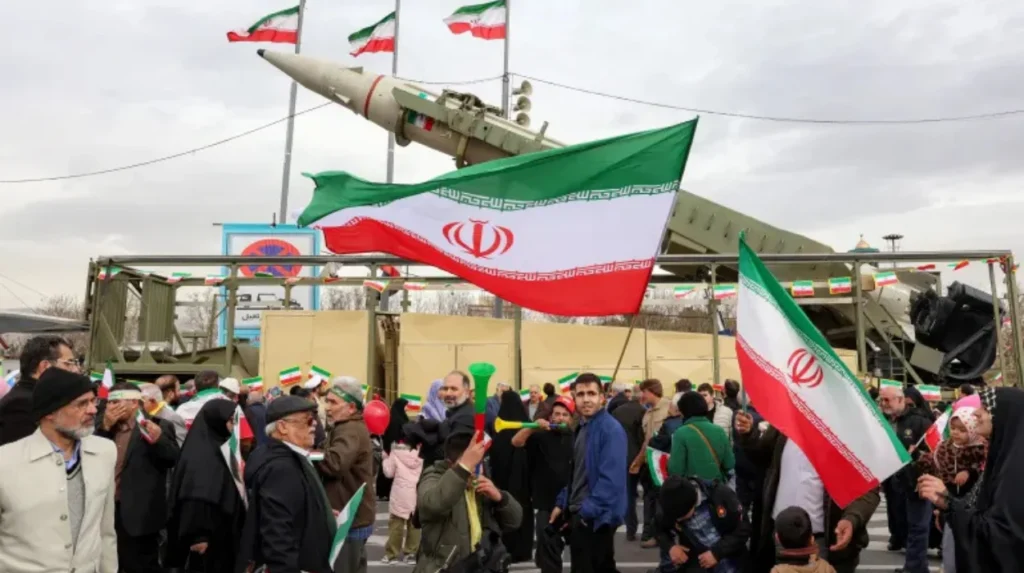
From the opening strikes of the US–Iran war, Tehran has conveyed that its primary objective is survival, not decisive battlefield victory. U.S. and Israeli forces initially emphasized precision airstrikes and missile operations rather than deploying large ground contingents, signaling an intent to degrade Iran’s capabilities quickly while avoiding a drawn-out occupation. Iranian leaders, however, framed the conflict as an endurance contest, aiming to test Washington’s willingness to sustain a politically costly campaign over weeks and months. Iran’s approach combines vertical escalation raising the intensity of attacks and horizontal escalation extending the geographic scope of operations to maintain continuous pressure on adversaries.
This approach draws on historical precedent. The Iran–Iraq War of the 1980s and decades of sanctions have ingrained a doctrine of patience and resilience in Tehran’s strategic culture. Officials argue that by presenting the war as existential, the United States faces a choice: either accept open-ended costs or negotiate from a position of growing political constraint. “Iran does not need to outfight the U.S.; it only needs to outlast it politically and economically,” one 2025 report from the Center for Strategic and International Studies noted, reflecting long-standing analysis of Tehran’s strategic calculus.
Vertical and horizontal escalation as leverage
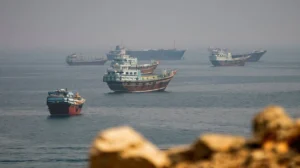
In the opening weeks, vertical escalation became evident through missile strikes and drone attacks targeting U.S. and Israeli bases in Saudi Arabia and the UAE. These strikes inflicted casualties, disrupted operations, and challenged assumptions of invulnerability in the Gulf. Parallel attacks by Iranian-backed proxies against shipping lanes and energy infrastructure further increased the economic and political costs for Washington and its regional partners. The Atlantic Council observed in early 2025 that Tehran’s intent is to amplify the perception of risk without provoking an all-out ground invasion, forcing adversaries to consider the political and financial implications of sustained conflict.
Horizontal escalation has expanded the war into a regional theater. Shia militias in Iraq, Hezbollah in Lebanon, and affiliated networks have engaged in asymmetric operations, compelling U.S. and Israeli forces to spread defensive measures across multiple fronts. This multidirectional pressure complicates intelligence collection and force deployment, creating operational friction that slows rapid decision-making and increases the risk of miscalculation. Analysts suggest that the cumulative effect is designed to erode U.S. resolve incrementally, rather than achieve a singular tactical breakthrough.
The asymmetry of goals
The conflict is defined by asymmetric objectives. For the United States, success involves degrading Iran’s missile infrastructure, limiting regional influence, and securing a politically acceptable negotiated settlement. These goals, however, are vaguely bounded in time and increasingly difficult to demonstrate amidst civilian casualties, energy-market disruptions, and diplomatic friction. Every additional week of conflict amplifies these challenges, constraining Washington’s ability to press decisively.
Iran’s definition of success is far narrower. The regime measures victory by survival: maintaining internal control, preserving core military capabilities, and retaining leverage over regional proxies. Tactical losses—destruction of infrastructure or temporary leadership setbacks are considered acceptable as long as strategic sovereignty remains intact. This asymmetry allows Tehran to tolerate attritional pressures while forcing the United States to demonstrate tangible, measurable results under the glare of global scrutiny.
Strategic patience over tactical brilliance
Tehran’s doctrine prioritizes political and economic endurance over battlefield innovation. Past crises, including covert engagements in Syria and Iraq, demonstrate a pattern of calculated patience: Iran has historically absorbed limited tactical losses while allowing adversaries’ political and financial endurance to wane. Analysts in the Middle East Institute highlighted in late 2025 that Iranian strategic culture emphasizes calculated risk, domestic resilience, and the psychological dimension of warfare, shaping conflict into a test of opponent stamina rather than a pure measure of military capability.
Senior Iranian security planners reportedly consider the preservation of core infrastructure, including oil facilities and missile production sites, a long-term priority, even if temporary operational degradation occurs. Public statements and state media have framed the conflict as a contest of resilience, with Tehran signaling that escalation carries enduring costs for the U.S. and its partners. This framing bolsters domestic cohesion while complicating adversary calculations, particularly in capitals sensitive to energy-market volatility and public opinion.
The risk of a prolonged quagmire
For U.S. planners, Tehran’s endurance-focused strategy increases the risk of a protracted quagmire. Military analysts warn that deeper engagement through limited incursions or territorial occupations would mirror historical open-ended campaigns such as Iraq in 2003, requiring sustained troop deployments, stabilization efforts, and a high tolerance for casualties and domestic political scrutiny. Each of these variables complicates the administration’s attempt to present the conflict as measured, decisive, and aligned with the “America First” narrative that emphasizes restraint and selective engagement.
A strategy that stops short of regime change risks leaving Iran’s political and military infrastructure largely intact. From Tehran’s perspective, merely surviving an extended U.S.-led campaign constitutes a form of strategic success. Even if the United States achieves measurable operational gains, Iran’s endurance strategy may ensure that Washington bears the political and economic costs for months or years without achieving a clearly defined victory.
The endurance test and broader implications
The conflict increasingly hinges on the relative political stamina of each side. Iran’s endurance game assumes that Washington, despite superior firepower, is more sensitive to incremental costs—rising energy prices, public scrutiny, and allied pressure—than to abstract notions of decisive battlefield victory. The International Energy Agency reported in early 2025 that potential disruptions to Gulf oil flows could reduce global supply by several million barrels per day, heightening domestic and allied pressure for de-escalation. Each week of ongoing conflict amplifies the strategic weight of patience over combat outcomes.
Observers note that this type of asymmetric conflict demonstrates a persistent principle: in endurance-based warfare, the side willing to tolerate incremental costs while maintaining core capabilities can exert disproportionate influence over an opponent’s political calculus. Tehran’s approach transforms the contest from a military duel into a multidimensional struggle, where perception, patience, and the ability to absorb pressure become as decisive as bombs or missiles.
What comes after the endurance test?
Ultimately, the U.S.–Iran war will be judged less by immediate battlefield metrics than by which side can sustain its strategic posture longer. The conflict serves as a live demonstration of how endurance, as a deliberate strategy, can offset conventional power imbalances. Analysts suggest that the implications extend beyond the Gulf: nations observing Tehran’s approach may recalibrate their calculations regarding asymmetric strategies and the limits of U.S. military commitment in complex regional contexts. As the campaign unfolds, the test of resilience promises to reshape the understanding of modern conflict, emphasizing strategic patience as a central component of contemporary statecraft.