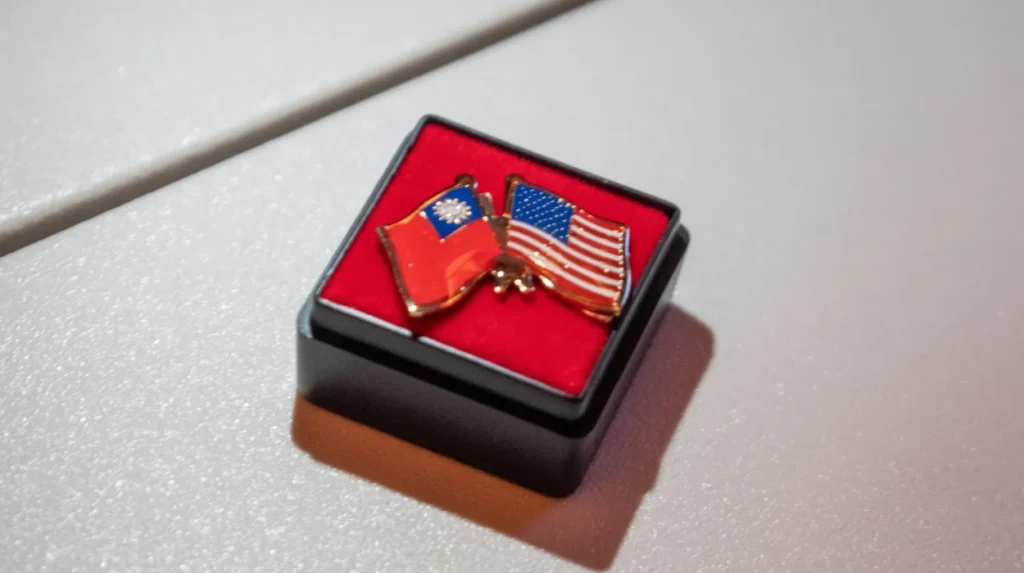
Over the decades, stability in the Taiwan Strait has been based on a well-balanced principle that can be said to be strategic ambiguity. Within this framework, the United States recognizes the One China policy of the People’s Republic of China without accepting the sovereignty of Beijing over Taiwan. This difference has enabled Washington to have non official relations with Taiwan and discouraged moves that would lead either to forced reunification or formal independence.
Legal backgrounds are still pegged on unresolved arrangements after the war. The 1951 San Francisco Peace Treaty obligated Japan to renounce its sovereignty over Taiwan although it omitted a recipient. U.S. policy since 1979 normalization of relations with Beijing has focused on peaceful resolving and arms sales under the Taiwan Relations Act. This stance formed the framework upon which dual deterrence works.
Historical Legal Ambiguity
Purchases made during the early Cold War display calculated malleability. The U.S. regimes did not directly acknowledge that Taiwan was an internal issue of the PRC thus maintaining leverage. By not agreeing with Beijing but admitting that he recognizes it, Washington maintained a letter of discouragement of coercion without being categorical on the matter by making formal security commitments.
Such ambiguity has not allowed either party to take the automatic intervention or the automatic abandonment. This is the calculated uncertainty which is the basis of deterrence.
Deterrence Through Uncertainty
Dual deterrence works along two lines. First, U.S abilities and presence in the region discourages Beijing to force unification. Second, Taiwan is developing its self-defense capabilities that decrease the motivation of provocative political changes. All of these factors have contributed to relative peace over the last fifty years even though tension persisted.
Trump Era Diplomacy and Renewed Strategic Pressures
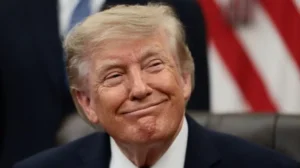
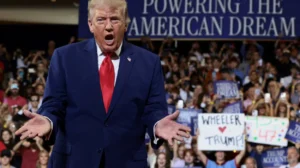
As the high-level interactions between President Donald Trump and President Xi Jinping have resumed, Taiwan has become a point of bilateral tensions once again. It is scheduled to hold a summit in Beijing in 2026 after negotiations in February where Xi allegedly called Taiwan the most sensitive subject in the relationship.
Washington gave the green light to Taipei in 2025 to acquire an extra two billion dollars of more arms packages such as the missile systems, upgrades of the aircraft among others. Beijing in turn retaliated with heightened military signalling that involved widening of air defense identification zone incursions. These changes demonstrate how dual deterrence is subject to change in case of increased great-power rivalry.
Phone Diplomacy and Summit Preparation
In early 2026 messages, the Chinese officials called on the U.S. to restrain its arms shipments. Washington was an indicator of continuity, not intensification, with a defensive nature and the obligation to the law. It was recommended by analysts at places like Brookings Institution that no concessions should be made to undermine the ambiguity since the perceived changes could disrupt the deterrence equilibrium.
The preparation of summits has thus taken the form of balancing. The administration has to balance trade, regional security and competition of technology without making any indication that it will change its policy towards Taiwan.
Trade Linkages and Strategic Signaling
Security policy is being more and more involved in economic negotiations. Other leverage discussions include tariff adjustments and semiconductor export controls that are planned in 2025. The centralization of Taiwan in chip supply networks around the world makes diplomacy more difficult, especially since Taiwan is currently a market leader with firms like Taiwan Semiconductor Manufacturing Company.
The interdependence of economies and the military deterrence coincide to highlight how the concept of cross-Strait stability is changing.
Taiwan’s Expanding Defense Posture
Taiwan has also continued to increase its defense expenditures with an estimated spending of about 2.5 percent of its GDP in 2026 as compared to 2.3 percent the previous year. The focus of investments is placed on asymmetric capabilities that should neutralize the numerical advantage of the People’s Liberation Army. The key points of this strategy are mobile anti-ship missiles, drone systems, and improved cyber defenses.
In 2025, reforms made on reserve mobilization arrangements increased rapid-response capacity. Training periods were increased and the civil defense preparedness was given a new impetus. These actions are an indication that Taiwan wants not only the U.S. support, but plausible autonomy as well.
Asymmetric Modernization
The development of the indigenous submarine also achieved sea trial levels in late 2025, which represents the long-term investments in the development of sea denial capabilities. High Mobility Artillery Rocket Systems and coastal missile batteries are to be procured in complement.
It aims at developing a deterrent calculus where invasion costs exceed possible payoff. Taiwan enhances the dual deterrent model by making it harder to plan operations in Beijing.
Democratic Resilience
In 2025, regular surveys of public opinion were repeatedly performed in favor of the status quo instead of declaring independence or accepting unification. The resilience of democracy has become an indefinable but important element of deterrence. Political unity of a society leads to less chances of coercion based on influence operations.
Educational campaigns and transparency have also been used to enhance resistance towards disinformation campaigns which has reinforced internal cohesion.
Escalating Gray-Zone Tactics
The policy of Beijing is increasingly based on gray-zone politics, which does not involve hostilities. It has been reported in 2025 that over 1,200 flights were reported in the air defense identification zone of Taiwan. Massive sea training and blockade training all indicated capability to operate without entering into open hostilities.
Military activities were accompanied with economic pressure. Agricultural and industrial exports were limited through specific trade controls that were a test of the Taiwanese economy. These are measured moves aiming at demotivation and an indication of determination without creating open conflict.
U.S. Reassurance Measures
The US reacted by frequent transit of the Taiwan Strait by its naval vessels and by legislative strengthening of defense alliances. Stagnant shipments of arms estimated at $19 billion in earlier orders enhanced faster in 2025 with an expansion in production lines.
Military-military liaison systems were enhanced in order to enhance coordination. There has been no official diplomatic recognition, but there has been an increased functional cooperation.
Regional Alignment
Basing arrangements and contingency planning was improved by regional players such as Japan and Philippines. Taiwan is slowly becoming a part of wider Indo-Pacific calculations in multilateral structures like AUKUS and Quad deliberation, not explicitly.
This tiered network enhances deterrence to levels that are not bilateral and presents the security of Taiwan in a regional framework.
Diplomatic Calculus Ahead of the Beijing Summit
With summit diplomacy on the verge, strategic ambiguity is once again put to the test. Beijing wants reiteration that Washington is against independence and U.S. officials want to maintain the statement that discourages coercion without commitment change. Even some minor changes in rhetoric can affect perceptions.
Advisors warn that blatant compromise on the part of concession may embolden more demands. On the other hand, over-signalling would stiffen the stances and make diplomacy less flexible. The balance is achieved between sound credible deterrence and the possibility to engage in dialogue.
Dual deterrence has taken a new more complicated form of interaction between military modernization, economic leverage, democracy and great-power negotiation. The Taiwanese agency has grown to the place of not being an active recipient of external guarantees, but a contributor of the strategic outcomes.
The future of cross-Strait relations will depend not just on balance between the military but also on how to deal with ambiguity itself. In case uncertainty used to retain peace, its cautious judging within the next few years might be the difference between stability being sustainable or going into a more unstable period depending on the developing power realities.