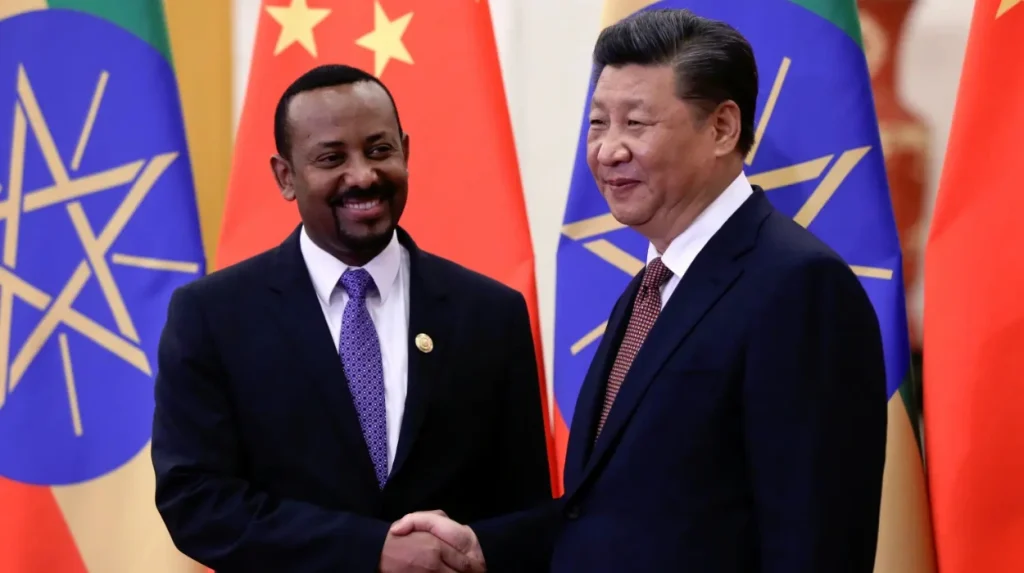
The 10.2% GDP forecast under July 2026 in Ethiopia will be one of the most monitored macroeconomic transformations in the African region. The policy change in Addis Ababa to currency liberalization after years of contraction conflict, shortage of foreign exchange, and distress of debts has placed the country at a new position in the global financial discourse.
The reform program, which was initiated in mid-2024 and was later increased in 2025, was set to destroy decades of administrative restrictions that limited trade and deterred investment. Authorities claim that the recovery is not only cyclical, but structural.
Foreign Exchange Liberalization Measures
The National Bank of Ethiopia abolished the compulsory exporter surrender requirements where a firm is able to retain a good amount of their foreign currency earnings. Local companies now have the opportunity to open accounts in foreign currencies with less restrictions, whereas strategic investors have the pleasure to have offshore retention services.
In 2025 bi-weekly foreign exchange auctions were introduced which made discovery of rates more transparent. The revaluation of the birr against its overvalued position reduced malpractices between the official and parallel markets, but spreads remain.
Leadership of the central bank has continued to assert that export revenues as well as inflows in the form of remittances have been on the increase since these changes and it is aiding the reserves to recover steadily after attaining record low percentages in coverage.
Currency Realignment And Market Confidence
The birr’s devaluation was sharp, but policymakers framed it as necessary correction rather than instability. This was then accompanied by inflationary pressure but the authorities claim that the short-term price shocks are less than gains in competitiveness.
In January 2026, the International monetary fund in its review recognized it was making progress under the arrangement of Extended credit facility, citing the improvement of fiscal coordination and monetary discipline. The IMF has remained involved and this has opened up staged financing to bolster credibility in reforms.
The diversions of investors in 2025 were optimism with fear. Approvals of foreign direct investment, especially in manufacturing and services, which were likely to experience the advantages of a more predictable currency regime, increased.
Geopolitical Undercurrents In The Horn Of Africa
The process of Ethiopian economic recalibration occurs in an environment of increasingly competitive geopolitical rivalry. The Horn of Africa is still strategically important as it connects Red Sea shipping routes with land trade routes. Even as Addis Ababa balances its macroeconomic system, Washington and Beijing are also re-evaluating their approaches to engagement.
United States Security Expansion
In 2025, the United States increased its presence in West Africa in the form of troop presence in Nigeria to train against terrorism. These actions, although being geographically separate to Ethiopia, reflect a wider continental stance of stability and extremist threat counter.
Security involvement cuts across indirectly with the outlook of Ethiopia. Export logistics are affected by trade routes and regional peace, especially of the landlocked economies that depend on cross-border infrastructure.
China’s Expanding Trade Architecture
The opening of zero-tariff entry to 53 African diplomatic partners which China has announced to be opening in May 2026 is a significant change in terms of trade. The expansion is based on the earlier preferential frameworks to expand imports of Africa with the aim of curbing the imbalances in trade.
In the case of Ethiopia, where export-oriented growth is the objective of the industrial parks, access to the Chinese market is an opportunity. But structures of reliance on the export of commodities in the continent are of concern. To prevent strengthening the dependence on raw materials, policy-makers aim at diversification into processed products and light industry.
Balancing Reform With Strategic Autonomy
The problem of sustaining the drive of the reform without appearing affiliated to any single world power bloc is the challenge of Addis Ababa. Non-aligned diplomacy has traditionally been the policy of Ethiopia, where rivalry brings advantageous financing and infrastructure deals.
Investment Competition And Infrastructure Finance
The long-term Chinese financing has been in support of Ethiopian railways, industrial parks and telecommunications. In the meantime, the U.S efforts are more focused on standards of governance, transparency and partnership with the private sector.
The liberalization of foreign exchange in Ethiopia enhances its suitability to the Western financial institutions without losing room in its integration into Chinese trade. This two-track engagement policy will need to be signaled with precision.
Trade Diversification Imperatives
The advantage of zero-tariff access to China can be used to spur exports, but the policy-makers are aware of the threats of over-concentration. The expansion towards European and Gulf markets is also part of the larger plans of Ethiopia.
Meanwhile, the re-entry into the U.S. trade preferences in the changing frameworks of 2025 may affect the export composition. It requires constant regulatory change and investment into logistics to balance these channels.
Macroeconomic Sustainability Questions
Structural weaknesses remain in spite of positive forecasts. Current foreign reserve coverage is less than the commonly known three months import standard, which restricts buffer capacity in the event of external shocks.
Inflation And Monetary Coordination
The adjustment of currency also added to imported inflation and the reform was put to the test by the people. The tightening of the monetary policy by the National Bank is meant to fix the expectations, but there are limitations in the transmission mechanism in a partially liberalized financial system.
In 2025, the debt restructuring arrangements reduced the short-term debt repayment strains; however, the medium-term fiscal tightening is vital. Sustainability will be determined by the efficiency of public investment and the growth of the tax base.
Political Economy Constraints
Political stability within a country has a similar impact on investor perception as macroeconomic indicators. In 2025, parliamentary discussions were on oversight mechanisms of foreign exchange auctions and protection of volatility by speculation.
Liberalization has been packaged as the necessary modernization by Prime Minister Abiy Ahmed. Nevertheless, balancing economic openness and social stability is a frail issue especially in post-conflict areas, which need to incur reconstruction expenditures.
Strategic Outlook For 2026 And Beyond
The growth rate of 10.2% projected by Ethiopia is ambitious when compared to the rest of the region. On the assumption that it is accomplished, it would make the country one of the fastest-growing major economies in Africa. However, growth sustainability is conditional on the structural export expansion, the clarity of the regulations, and the geopolitical equilibrium.
The U.S.-China competition comes with an opportunity and risk. The leverage of Ethiopia could be improved with the help of competing infrastructure financing, incentives to achieve access to the market, and security cooperation. On the other hand, excessive exposure to external political forces can put domestic reform sequencing at a disadvantage.
The economic history of the Horn of Africa is changing to be more about the way in which states negotiate currency reform, as well as pressures to align their strategies. The reforms of Ethiopia have been closely linked to institutionalization, but not the short-term stimulus, which seems to be the desire of Ethiopia policymakers. The extent to which reserve buffers will get stronger, inflation will be tamed, and export diversification rates will increase will tell how deep the transformation will be.
The course of the 10.2 percent Boom in Ethiopia will be determined not only by how well the country recalibrates its macroeconomics but also by whether it is able to put the flexibility of foreign exchange into productive capacity. With the major forces in the world rising to seek dominance in Africa, the experience of introducing market-driven adjustments in Ethiopia will represent a study on how middle economies will establish their agency in the face of changing geopolitical winds.