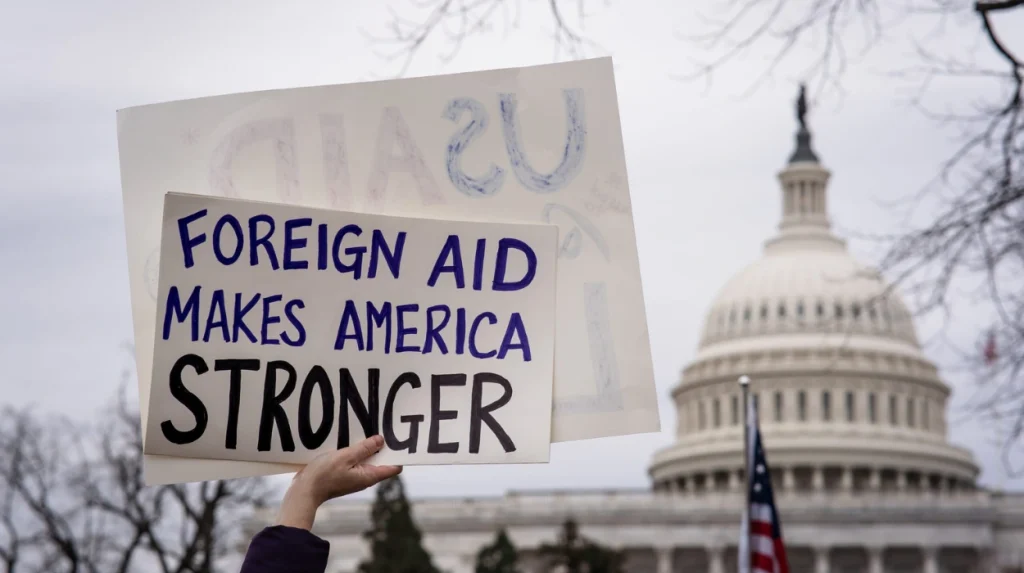
The congress wields power of foreign aid using the constitutional power of the purse. This control helps lawmakers not only to influence the amount of help but also to direct it and condition it. This has been reflected in the fiscal year 2025 budget discussions, with major disagreements in the form of budget allocations to partners in Eastern Europe and Indo-Pacific. Detailed reporting requirements and periodic certifications have also become tools of keeping an eye on executive branch implementation by legislative committees.
County-specific instructions and restrictions have become the usual elements of appropriations bills that mirror legislative priorities. An example is the National Defense Authorization Act of 2025 that had seventeen distinct provisions that touch on security cooperation programs. These ranged between human rights vetting policies up to technology transfer controls, showing the way congressional influence is spread into the finer details of operations. This careful legislation writing would make the delivery of aid to be in tandem with other grander strategic plans as envisaged by law makers.
Committee Structures and Policy Formulation
The committee system is the main tool that is used to polish the foreign aid policies before they are subject to the full legislative scrutiny. The specialized committees such as the Senate Foreign Relations Committee and House Armed Services Committee gain expertise that influences the substantive policy outcomes. Their hearings in the first half of 2025 included heavy witnessing by regional and administration representatives, which led to changed help strategies to some of the major regions.
Authorization committees collaborate with appropriations panels to formulate in-depth structures of foreign policies. This bi-track process will enable policy direction and allocation of funds to be aligned. The 2025 process has shown how committee chairs use their posts to pursue specific interests of a given region, as some regions are given more priority as compared to others depending on the interest of committee leadership. Through this institutional framework, various levels of congressional participation are guaranteed prior to aid getting to the implementation stages.
Regional Security Implications of Legislative Decisions
Congress maintained its support to Ukraine up until 2025 with changing terms to security support. Legislative packages comprised stronger monitoring terms as well as allied burden-sharing terms. Both parties stressed the strategic importance of fighting off the aggression of the Russians and demanded responsibility mechanisms of transferred equipment. Such conditions found congressional reservations about unfocused commitments without definite goals.
NATO strengthening continued to be a bipartisan issue and there were explicit legislative terms requiring minimum funding for programs of the European Deterrence Initiative. The 2025 act had also established new coordination mechanisms on the co-ordination of the industrial base between the United States and European allies. Congressional staffers observed that these provisions were to institutionalize security cooperation in the domain of long-term competition other than the crisis response.
Indo-Pacific Strategic Competition
In 2025, the congress made significant improvements to the Pacific Deterrence Initiative because legislators agreed that China was a pacing challenge. Funding goes up to concentration in undersea warfare capabilities, missile defence networks, and partner capacity building. The language of the legislative reports in which the funding was accompanied noted that integrated deterrence is necessary in all three areas of military, economic and diplomatic spheres, with Congress influencing not only the funding amounts but also the ideas.
The congress made significant changes in security aid to Taiwan, and there was a new focus on asymmetric-focused defense power and collaboration in cybersecurity. The legislative directives demanded an increased number of occasions when the defense department would report on the balance of forces across the Taiwan Strait and also evaluate the self-defense capabilities of Taiwan. These clauses revealed congress interest in making sure that the aid is translated into actual security gains as opposed to merely sustaining the current programs.
Middle East Stability Operations
The congressional approaches to assistance to Middle East security have changed dramatically in 2025 appropriation discussions. The Bipartisan majorities endorsed the refocusing of the counterterrorism partnership to partner nation responsibility. There were conditions in the legislation that stated some certifications concerning the human rights practices and the steps in the direction of the security sector reform before some funds could be free. This was a more cautious method as compared to past blanket authorizations.
The defense policy bill of 2008 also carried with it clauses that promoted regional air defense incorporation among the partners in the Gulf region, and these partners were required to report on what had been achieved. The Congressional defense committee personnel clarified that this was in a bid to generate more sustainable security design that cut down on long-term commitment of U.S. forces. At the same time, legislative limitations on some of the military sales were indicative of issues of stability in the region, proliferation threats, and balancing of various security interests was evidenced in Congress.
Emerging Trends in Aid Conditionality
The legislation of foreign assistance is becoming more and more conditional on the democratic criterion, 2025 bills include many provisions in the field of governance. These regulations mandate the executive branch to report on the recipient country’s achievements on political reforms, anti-corruption, and the protection of civil liberties. The trend denotes the agreement of the congress that security alliances on a long-term basis demand consistent democratic bases but not military collaboration.
The 2025 process of appropriations was especially keen on seeing that security aid does not cripple democratic growth. A number of country-specific provisions required that the transfer of equipment should involve human rights training and civilian checks and balances. Legislative staff involved in drafting these requirements described them as necessary safeguards against short-term security gains undermining long-term stability interests.
Economic Security Dimensions
Congress has increasingly viewed foreign assistance through economic security frameworks, with 2025 legislation creating new linkages between aid programs and supply chain resilience. Several provisions required assessments of how security cooperation could support critical mineral access and high-tech manufacturing cooperation. This reflected legislative recognition that economic competitiveness and security are increasingly intertwined in great power competition.
The integration of development finance tools with traditional security assistance represented another 2025 innovation. Legislative language encouraged coordinated use of export credit facilities, investment funds, and military grant programs to create comprehensive partnership packages. Congressional committees viewed this approach as necessary for competing with state-directed economic initiatives from strategic competitors, showing how aid concepts continue evolving beyond traditional boundaries.
The interplay between legislative priorities and executive implementation will continue shaping international security landscapes through coming budget cycles. The fine work of authorization and appropriation committees might become more important in shaping the American influence on global matters as the issue of global challenges becomes more complex. The dilemma of short-term security needs versus long-term strategic positioning will continue to plague future congressional debates especially with the emergence of technological changes which generate new spheres of competition. These deliberations have institutional structures which have evolved over the last few years but their efficacy may only be seen to be effective with congressional participation in changing global realities.