The strategy is being laid down by tariffs, truce negotiations and quick wins in the second term foreign policy of Trump which focuses on quick visible results rather than the long term management of the coalition. The administration puts this in the context of a reassertion of American power without long-term military investments, based on the economic coercion and high-profile diplomatic interactions to create momentum. The model focuses on quick executive response, direct leader-to-leader bargaining and media ready products that demonstrate strong governance.
This trend has been growing stronger in 2025. A steady beat of summits, tariff announcements, critical-minerals partnerships and ceasefire initiatives demonstrates a preference of short-run leverage over long-run diplomacy. It is seen by supporters as an efficient statecraft that is tuned to a rough international environment. Critics claim it brings about uncertainty particularly where major policies change suddenly and where key partners are not adequately consulted.
Tariffs as first-line foreign policy tools
Trade instruments have transformed into the main geopolitical stick by the administration in the form of tariffs. They are implemented in industries like steel and autos, pharmaceuticals and critical minerals as 2025 develops, regularly with the legitimization of themes of industrial revival, national security and fairness.
The white house has been increasingly associating the changes of tariffs with the larger strategic objectives. New obligations to partners deemed as non-aligned in case of Russia sanctions, such as sit, as well as exemptions to countries that join US led supply-chain efforts, are imposed. Though the administration points to this as a sign of a well-timed pressure-reward system, the swiftness of such changes has taken a toll on a number of allied capitals.
Expanding tariff pressure to close partners
The prominent distinguishing characteristic of 2025 is the application of tariffs to long-term allies to gain collaboration on migration, and burden-sharing security or even trade imbalances. Mexico has had to deal with threats of tariffs related to the enforcement and control of narcotics and Japan and European economies have received threats of the potential of details of duties associated with their alignment of strategies on China. These actions provide leverage and also disrupt allies to hedge and diversify trade routes to minimize vulnerability.
Domestic framing of economic resilience
At home, tariff policy is packaged as one of the main pillars of economic revival. The administration often boasts of job-creation indicators and investment commitments in the companies shifting the manufacturing to the United States. The fact sheets make clear that the flexibility of tariffs relies on strategic collaboration, and the story about economic integration being the precondition of deeper security relations is solidified.
Managing allies under tariff pressure
The governments of allies have adjusted to such an environment in mixed measures. Some of them build sector-specific deals to evade punitive tariffs but others escalate the intensity of national resilience. The partners in North America, especially, are in a fine tightrope position in which they have to remain integrated supply chains and react to the unilateral U.S. actions, which make the production flows across the borders complex.
Recalibrating alliance dynamics in 2025
A number of partners have embraced the dual-track approach. They intensify collaboration in high values like semiconductors, rare earths and defense and in the process hasten other alternative sources of energy, technology and manufacturing. This is indicative of the awareness of the fact that as much as Washington cannot be done away with in the strategic fronts, the unpredictability of tariff application brings in new risk evaluation.
Negotiating under uncertainty
It is said that negotiators in Europe and Asia are calling 2025 as a year of rolling recalculations; trade projections are intermittently being updated on the potential of new U.S. directives. The need to be fast and executive based, gives little room to predictability of the institution, and creates a new era of alliance management.
Linking economic and security bargains
Foreign policy by the administration is a combination of both economic and security assurances. These sort of investment deals with Gulf states, the critical-minerals deals with Indo-Pacific countries and energy agreements with allied producers all point to the pattern whereby commercial and strategic compromises are closely integrated.
Middle East investment-security corridor
This trend is supported by massive investment commitments of Gulf governments in 2025. The U.S technology transfer agreements, arms deals, and investment in infrastructure are structured to put partners into an extended strategic orbit. As much as these arrangements increase the bilateral leverage, they also cast doubts on their sustainability when they are closely associated with certain political leaders.
Strategic industries as diplomatic foundations
Advanced manufacturing (maritime manufacturing), energy infrastructure, and shipbuilding partnerships are being constructed as security insurance both domestically and internationally to maintain the stability of global supply chains. Such arrangements cannot pass for ordinary diplomatic pacts, and the intention is to have what amounts to economic interdependence as an insurance against geopolitical waywardness.
Truce talks and the pursuit of fast peace
Similarly to tariff diplomacy, the second-term plan of Trump puts a great deal of emphasis on truce-based negotiations. The ceasefire structures are shown as a testimony to the fact that unconventional diplomacy may resolve the stalemates in protracted wars. One such agreement is the Armenia-Azerbaijan accord brokered in Washington that was celebrated by the administration as an indication that the art of making deals can override the art of mediation.
Implementing fragile ceasefires
Analysts emphasize how these agreements cut the violence in the short-run, yet leave the major issues unsolved. The issue of border demarcation, displaced populations and security assurances are still burning issues in some of the arrangements of 2025. This reveals the conflict between the stabilization in the short term and conflict transformation in the long term.
Pace versus durability in conflict diplomacy
The emphasis of the administration on quick announcements often squeezes the negotiation schedules. Although this heightens the pressure on parties to compromise it also poses a risk of coming up with agreements which can be easily reversed in time when political circumstances change or when one party feels that he/she can renegotiate given more favorable terms.
Ukraine file and territorial bargaining
Ukraine has had the most heated truce diplomacy. The 2025 ceasefire plan aimed at stopping the hostilities by incorporating the territorial concessions into a bigger security system. The Americans positioned the proposal as an expedient trial of Russian motives as an actual offer would explain whether or not Moscow was ready to talk more than talk.
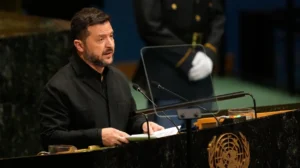
Kyiv did not accept the framework, and its focus on sovereignty and the need to undermine long-term security was a threat against the provision of any treaty formalizing occupation. President Zelenskyy demanded that Ukraine could not agree to the practices that would turn U.S. assistance into debt or barter land with financial assurances. Moscow took advantage of the proposal, claiming it to be the acceptance of the reality, which increased the Ukrainian doubt even more.
Public perceptions of a “reckless peacemaker”
A study published in November 2025 termed Trump a careless peacemaker, which encapsulated the domestic ambivalence to the combination of strong rhetoric and sudden peace plans in the administration. Critics believe that the strategy gives too much power to the presidency to make decisions on foreign policies without involving the diplomatic institutions. Its proponents respond that it does not entangle the military in expensive military engagements and yields quantifiable results.
The interpretation of these efforts is informed by polarization in the U.S. The proponents of retrenchment celebrate the focus on leverage and small deployments, whereas people are concerned that haste agreements may solidify aggressive players and disrupt established systems of alliances.
Quick wins and the logic of political spectacle
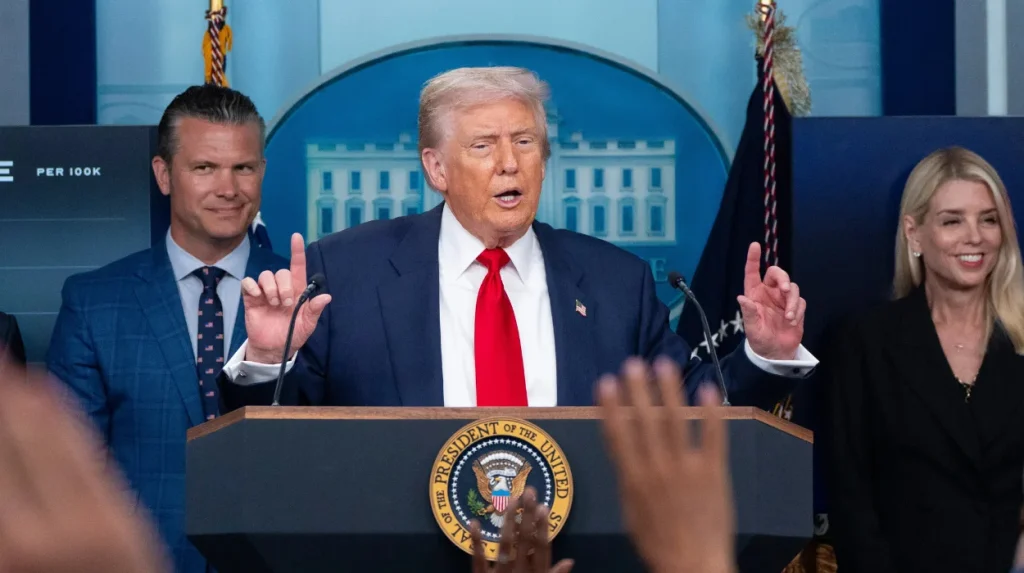
Quick wins remain essential to the administration’s narrative. These include major arms sales, investment-linked tariff suspensions, and conflict-ending declarations unveiled after brief negotiations. Trump’s own branding reinforces this dynamic, exemplified by his claim that “tariff is the most beautiful word in the dictionary,” connecting political identity to policy instruments.
Think-tank assessments highlight both progress and gaps. While increased engagement has raised Washington’s profile in several regions, unresolved challenges from Iran’s regional posture to instability in Ukraine underscore limitations in a strategy dominated by speed and visibility.
As 2025 advances, tariffs, truce talks and quick wins in Trump’s second term foreign policy are coalescing into a foreign-policy doctrine defined by leverage, spectacle and compressed negotiation cycles. The durability of this model will depend on how these agreements withstand tests from shifting political winds, alliance expectations and strategic competitors prepared to exploit any openings left by fragile or fast-tracked deals.