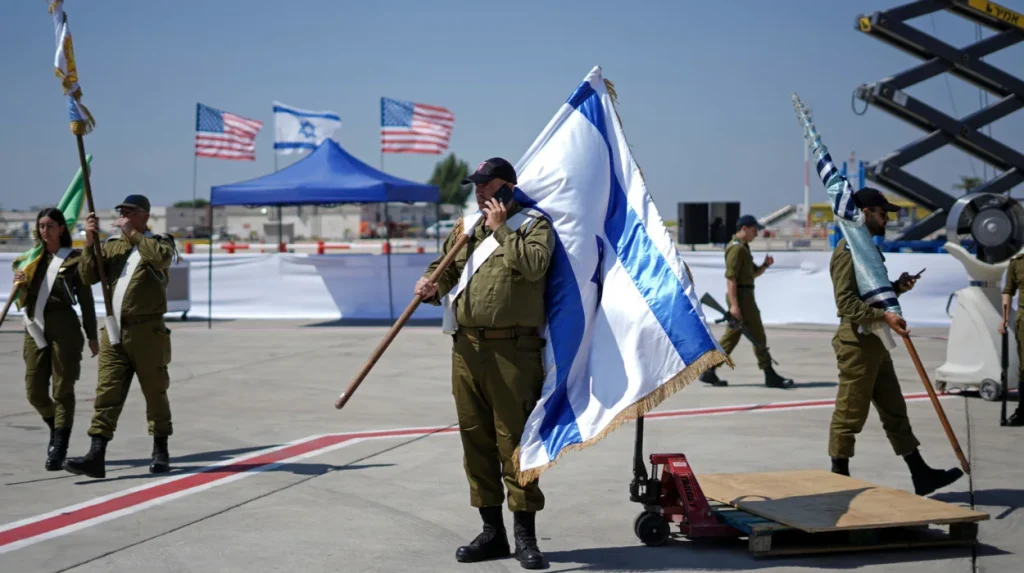
Israel is going into 2025 with one of the most complicated and unstable regional environments in recent history. The Middle East is still disintegrated with the continuous wars, poor governance, and proliferation of non-state militants that defy boundaries. The states that border it like Syria, Lebanon, Iraq, and Yemen remain victims of divided authority, and military factions and ideological movements exercise power that in many cases surpasses the authority of states. The need to protect its security is further aggravated by the situation in Gaza, and the West Bank, where occasional outbreaks of intense situations conserve humanitarian crises and international investigation.
The Regional Impact of the Israel-Iran Confrontation
The most striking event of the year concerning the security of the region is the Israel-Iran conflict in June of 2025. Israel used preemptive air and cyber attacks on Iranian nuclear sites to cut off uranium enrichment and hit major Revolutionary Guard targets. Although such operations in the short term undermined the nuclear ambitions of Iran, Tehran responded by launching missiles against Israeli targets and attacking the infrastructure of the country as well as its proxies in Syria and Lebanon made the region on high alert.
Although Israel has been successful in tactics, it is yet to be seen in the long-term. The future action of Iran flaunting the IAEA inspection procedure and its increasing stock of missiles is a source of constant danger. According to analysts, the military superiority of Israel, however impressive, cannot sustain long deterrence without the long-term support of the U.S. diplomacy and military.
The Role of Non-State Actors in Regional Instability
Non-state actors: Hamas, Hezbollah and the Houthis and pro-Iranian militia in Iraq are influential in the strategic consideration of Israel. Their geographic coverage and capacity to conduct asymmetric war are problematic to the conventional theories of deterrence. The counter strategy of Israel, a combination of the covert attack and cyber activity, has succeeded in curbing the threats but not eradicating them. The acceleration of drone warfare and precision missile development highlights the effect of technological equality between these players in making the former military superiority of Israel questionable.
US Strategic Alignment and Policy Responses
The United States is still the strategic ally of Israel, and the two countries have been cooperating on the level of military, intelligence and defense technologies. The military aid package of $3.8 billion per year, co-operation in missile defense and intelligence exchange mechanisms by Washington demonstrate this alliance once again. The right of Israel to self-defense has remained a Dogma during both Democratic and Republican administrations since the 1970s Camp David Accords.
Also supported by the Biden administration was the aid to Israel in the 2025 war with Iran such as logistical support, satellite intelligence, and naval coordination in the Persian Gulf. Nonetheless, there was also diplomatic prudence that was demanded to counter the involvement of Washington whereby there was restraint in order to prevent a broader war in the region.
Shifts in the U.S. Domestic Discourse and Public Opinion
There is a significant change in domestic politics in the United States. According to polls in mid-2025, increasing polarization is emerging regarding U.S. support of Israel, especially among younger voters and the progressive wing of Congress. Humanitarian impact of long-term blockades and the publicity of casualties of civilians in Gaza has increased the pressure on conditional assistance.
Such internal disputes will not necessarily result in an instant change of U.S. policy; nevertheless, they affect its future direction. The rise of new advocacy groups, congressional investigations and campus activism poses a possibility of increased pressure on American policy makers to ensure a balance between strategic necessities and human rights responsibility.
Regional Dynamics Shaping Israel-U.S. Cooperation
U.S. support also enables Israel to exude power in the region yet it does not give the country space to play diplomacy. Washington brokered ceasefires, notably the November 2024 ceasefire with Gaza, with a series of secret commitments, allegedly a side letter, giving Israel a green light in case of preemptive action in the case of particular threats. Although these are effective in the short term in terms of deterrence, they complicate the American diplomatic agenda since they isolate Arab allies and weaken the work of mediation.
This delicate coordination was put to the test when the September 2025 Israeli missile attack on Qatar, aimed at Hamas negotiators at U.S. brokered negotiations, occurred. Washington justified the right of Israel to defend herself, but in an internal memo to the State Department, it was reported that these unilateral measures destroy the confidence in U.S. directed regional diplomacy.
The Evolving Gulf and Arab World Responses
According to Arab, normalized relations with Israel under the Abraham Accords are subjected to new internal pressure with Israel still operating in Gaza and Lebanon. Bahrain, the UAE and Morocco have expressed an alarm at the humanitarian cost, but remain wary of security collaboration. The Gulf Cooperation council (GCC), which previously was divided as to whether to engage with Israel, is now seen to be more united in its de-escalation advocacy, which shows a pragmatic approach to the region, where national interests are weighed against the populace.
The Ongoing Challenges of Achieving Regional Stability and Peace
The strategic approach of Israel is still focused on destroying the so-called Rings of Fire- a chain of Iranian-supported organizations that surround its borders. The continued activities in Syria, Lebanon, and Gaza are to prevent the formation of new threats before they become consolidated. However, this cycle of confrontation caused by this continuous preemptive pose keeps the region in the cycle of political confrontation, which is unwelcoming to long-term political resolve.
The threat is further added by Iran strengthening its security relationships with Russia and China. The use of Chinese surveillance systems and Russian air defense systems in some areas of Iran and Syria pose challenges to the air campaign strategy of Israel and also to the containment policy of Washington.
Turkey’s Role and the New Strategic Rivalry
Turkey has once again taken a position of a counterpoint in the region, leveraging its membership in NATO and economic relations with the Gulf states to control the discourse on Palestinian matters. The outspoken criticism of the Israel President Recep Tayyip Erdogan, and his promotion of actions and programs that are sponsored by Qatar undermines the legitimacy of Israel in the international arenas. The activism of Ankara is not an isolated ideological variance, but it also represents a leadership ambition in the Muslim world, which makes it more difficult to have the alignment of Israel with the U.S. and NATO in its southern flank.
Implications for Future U.S. Foreign Policy
The security dilemmas that Israel faces in the region in 2025 are now entirely intertwined with the strategic calculus in Washington. The U.S. is torn between its undeterred dedication to defending Israel and the importance of maintaining credibility with its Arab and other partner states that are dominated by the Muslims. The 2026 presidential election in the United States may also influence this balance as the foreign policy will become an issue of controversy during inside-the-country debates.
The sustainability of the American assistance can rely more and more on the capacity of Israel to exercise restraint, humanitarian consciousness, and long-range strategic vision, beyond the military approach. In the case of Washington, it is still a fine task to re-calibrate this relationship without compromising deterrence or losing allies.
The posture of Israel concerning regional security and its association with the United States remains to delineate the perimeters of Middle East geopolitics in 2025. The partnership, which was formed on decades of mutual strategic interest, is now being put to the test of adapting to the new form of stability-building rather than as the crisis management tool. The relationship of Washington and Jerusalem to align their military policies with the occurrence of the new political realities will dictate how the region will survive to the next phase of conflicts, politics, and change.