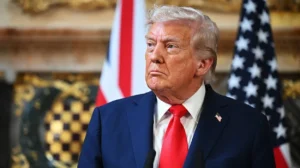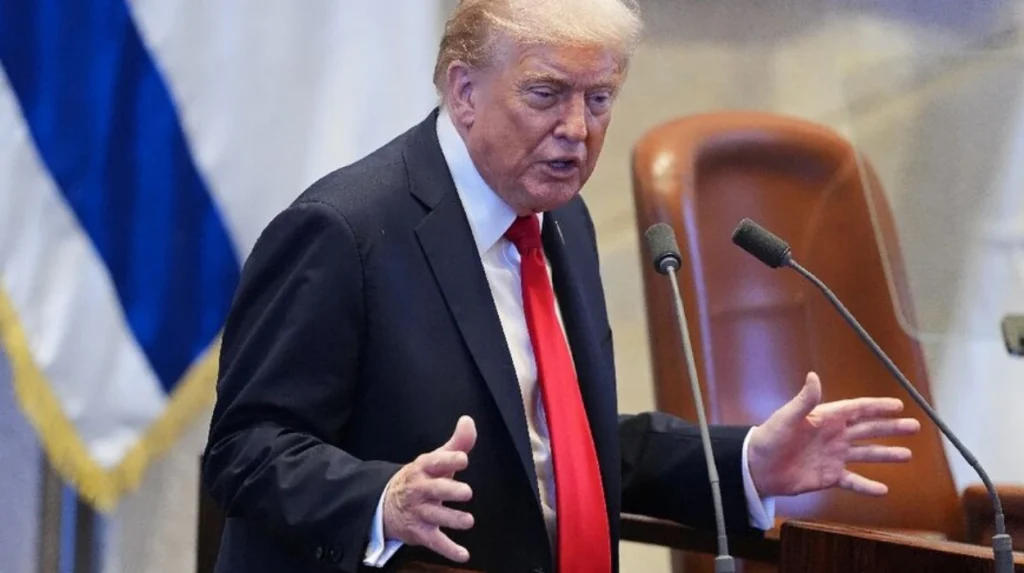
U.S. President Donald Trump established himself as the pioneer of the new period of peace in the Middle East, boasting of negotiating the Gaza ceasefire and hosting hostages after years of war. As his adherents note, the Trump Peace Agreement and direct negotiations with Israel, Egypt, and Gulf countries are the examples of highest levels of diplomatic achievements. It has been hailed by political analysts who support the Trump camp as the decisive reassertion of Americans in the region.
But the story of triumph is even being disputed. Humanitarian observers and policy experts maintain that the ceasefire is still fragile with little being done to establish a broad-based peace structure. According to reports by regional think tanks, the deal was highly biased to Israeli and Gulf security concerns with the Palestinian governance and sovereignty issues still not addressed. The lack of structural justice is lost to the appearance of peace as the Foreign Policy Journal noted in July 2025.
Power Politics And Personal Diplomacy
Such a style of diplomacy on the part of Trump still shows his inclination to personal contacts rather than institutional interaction. The example of his close relationship with Egyptian President Abdel Fattah el-Sisi and Saudi Crown Prince Mohammed bin Salman is a representation of this kind of style where swift decisions are made and it is mutually beneficial in a political sense. Critics argue that these relations strengthen authoritarian tendencies, alienate civil society and turn complicated problems into buy and sell.
Intercepted messages at the local embassies show that Trump used his back-channel messages to Riyadh and Cairo to facilitate the finalization of ceasefire conditions. However, the same reports indicate that long term oversight mechanisms were either left ambiguous or unenforceable. The problem with this approach of the interdependence of the elite is that the influence of Washington may be perceived as contingent and personality-specific and not institutional or value-driven.
Regional Power Dynamics
The 2025 peace framework has redrawn strategic alignments in the Middle East. The 2025 peace plan has re-strategized the Middle East. The normalization of the relations between Israel and Saudi Arabia and Lebanon became the first step in the history of regional relations, a continuation of the Abraham Accords launched in 2020. The Gulf states united around one common position against Iranian-supported militias, which is an indication of an intermediate geopolitical victory of U.S. interests.
However, the marginalization of the Palestinian representation has provided resentment. The local leaders in Gaza criticized the deal claiming that their political agency was left out. Analysts caution that the peace structure may end up creating instability instead of ending it with its consideration of security and economic incentives more than sovereignty and justice.
The Challenges With Implementation And Sustainability
Although the Gaza ceasefire helped in cutting short hostilities in the beginning, other months showed the ineffectiveness. Occasional rocket fire, settler expansion and localized confrontations proceeded into the end of 2025. The reconstruction process is still hampered by the conflicts between the Israeli and Egyptian leaders over the border restrictions and humanitarian access to the territories under reconstruction.
As The United Nations Relief and Works Agency (UNRWA) announced in September 2025, more than 70 per cent of Gazans were still unable to obtain a steady power supply and medical resources. The ceasefire is at risk of being another temporary truce unless it is properly reformed and monitored since the previous agreements merely could not provide attention to the major political issues.
Economic Aid And Reconstruction Delays
The Trump Peace Agreement promised billions worth of reconstruction money, where the U.S., Qatar, and the UAE were the top donors. However, disbursement has been slackened because of logistical snarls and distrust among the political authorities. The Palestinian Authority has on numerous occasions accused middlemen of going round its government, distributing funds using their personal contractors associated with Gulf players.
French President Emmanuel Macron warned at the October 2025 Sharm el-Sheikh Summit that there is no such thing as performative diplomacy, and that no structural peacebuilding can be substituted. His comments were indicative of larger European dissatisfaction with what has been termed by some as photo-op diplomacy, which places a greater emphasis on the perception of populations than on long term structures.
Public Perception And International Reactions
The U.S. Politics Trump has played Middle East diplomacy in a manner that has appealed to his political base. According to polls conducted by the Washington monitor in November 2025, 62 percent of all Republican voters give him credit in the restoration of American prestige in the foreign world. His ability to cut deals on the international stage has been used as campaign rhetoric in his current campaign and has served to confirm to the world his competence as a foreign policy maker.
Nevertheless, such achievements are questioned by independent analysts on their permanence. According to the political scientist of Georgetown University, Dr. Leila Hassan, measuring peace through short-term stability is ignoring the deprivations of the industry. In her work, she stresses that a peace brokered by Americans will be susceptible to a reversion in case Palestinians are not included in a structural manner.
Global And Regional Assessments
The international reactions are still divided. The European Union has also been pleased with the lesser aggression, although it has been worried about violations of human rights and back sliding of democracy in partner states. The United Nations has called on the inclusion of a comprehensive negotiation that will include Palestinian groups, women groups, and civil society actors that are usually sidelined when it comes to elite negotiations.
In the meantime, the response of Iran has been expectedly hostile, condemning the accords to be the work of a Zionist-American alliance. The rhetoric of Tehran highlights the existing lines of fault that might trigger endless regional conflicts especially in Lebanon and Syria where the Iranian supported militias have a strong presence.
The Broader Implications Of Transactional Diplomacy
The bilateralism and fast-track negotiating approach by Trump are a stark contrast to the multilateralism approach that the previous U.S. administrations preferred to use. By marginalizing international organizations and focusing on doing business with a few leaders, Washington stands a risk of estranging allies and undermining credibility in the long term.
By 2025, the lack of coordination between the State Department and NATO as well as the UN in relation to Middle East peace efforts has been criticized even inside the United States foreign policy establishment. Analysts are also concerned that this could weaken the sustainability of future peace arrangements as far as the leadership transitions are witnessed in Washington or major regional capitals.
Human Rights And Governance Gaps
Human rights experts observe that the emphasis on security alliances by Trump has taken over governance and accountability issues. Egypt, Saudi Arabia, and Israel, which are the primary partners in the deal, still confront the challenges on civil liberties and human rights.
Lack of democratic reform or checks and balances of post-conflict structures has raised a lot of questions whether the peace process is designed to serve the people of the region or the elite. In the absence of clear governance and fair play, peace is an elite-based form of construct and not a grounded one.
Prospects For Lasting Peace
The promise and the danger of personalized diplomacy can sum up the Trump Middle East legacy. The successes: the hostage releases, normalization accords and the lower violence are physical but not complete. They are the bouts of relief and not the beginnings of long term peace.
To continue the progress, there is a need to challenge some unpleasant realities: the continuation of occupation, inequality, and lack of reconciliation. Since climate pressures and population increase, economic stagnation escalates throughout the region, structural solutions need to incorporate justice, inclusion, and long-term governance reform.
The coming years will determine whether Trump’s Middle East victory is remembered as a fleeting illusion or the first step toward genuine transformation. The answer may lie not in summits or signatures but in the capacity of regional societies to translate fragile calm into shared coexistence and accountability, a challenge far greater than any single administration’s claim to victory.