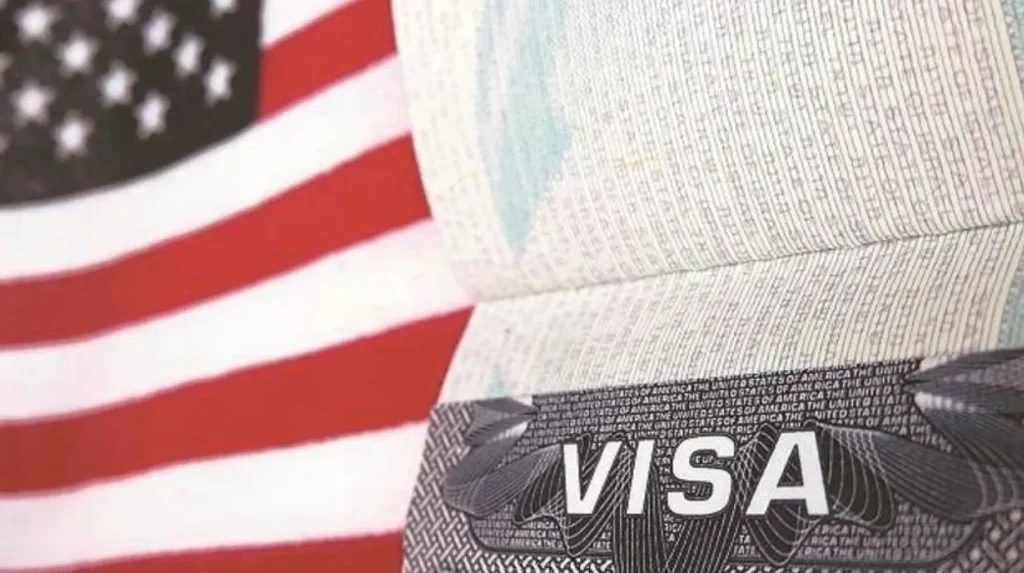
In mid-2025, the US government expanded its national security strategy by suspending interviews for F, M, and J visa categories. The suspension lasted from May 27 to June 18 and impacted thousands of students awaiting consular appointments. During this period, the State Department also revoked over 6,000 existing student visas, citing legal breaches, visa overstays, and suspected affiliations with anti-US activity.
The post-suspension visa environment has seen a marked shift. New applicants face more rigorous vetting, particularly through mandatory social media background checks. Approval rates dropped significantly. F-1 student visas, the most common for academic study, fell by 22% in May compared to 2024 and are projected to decline by as much as 80–90% for June. These changes have created widespread disruption in student mobility patterns.
Expansion of high-risk country designations
The revised security protocol initially targeted nationals from 19 countries. Nevertheless, State Department memos indicate that as many as 36 other countries can soon be included into the list of the countries with a high risk. Such names apply not only to student visas, but also to the exchange programs, research fellowships and vocational training permits. The huge source nations, like India, China, Nigeria and Pakistan, have experienced increasing reduced numbers in issuing the visa, which is raising diplomatic issues.
Economic And Institutional Fallout For US Higher Education
The American universities are at great risk of the sudden decline in international students, as it has financial consequences. As the statistics of the Institute of International Education (IIE) show, in 2024, the contribution of international students to the US economy was more than 34 billion dollars. The present suspension trend would lead to reduction of tuition, housing and auxiliary revenue by seven billion dollars.
Reductions in staffing already take place in universities that have a large number of international enrolments. Over 60,000 positions, including faculty and administrative positions, as well as support services, can be impacted. Colleges like the University of Southern California and Northeastern University have given in-house warnings regarding financial planning and enrollment realignment of Fall 2025.
Impact on research and collaborative academic networks
The continuity of research is also a Visa Suspension. The disruption of ongoing work is experienced in the universities involved in joint projects with the foreign partners, especially those in the STEM. A large number of international students and scholars are utilized as key staff in federally-funded research.
The atmosphere of collaboration in academia leads to innovation and the continued decline of this could tarnish the international image of the US as a scientific powerhouse. The exodus of talents in such countries as South Korea, Germany, and Brazil has contributed to the delay of a number of interdisciplinary research programs that require international talent.
National Security Justifications And Policy Framework
The Biden administration justifies the expanded visa screening as a preventive effort against overseas penetration in vital areas. Consular processing has now been enhanced to a level of more in-depth social media analysis, background checks and algorithmic red flags on applicants with high-risk countries.
The authorities of the Department of Homeland Security and the FBI have provided examples of visa holders who supposedly committed theft of data and/or disruptions with ideological motives. Although such instances are not common, they influence the larger argument of restricting visa regulation.
Legal ambiguities and due process concerns
According to the arguments of the human rights groups and the scholarly associations, generalized denials of visas are in breach of the due process. They express issues related to the bias of the algorithm, the absence of the appeal process, and the little transparency of the visa adjudication process.
Both parties of lawmakers have demanded that the measures of visa suspension should be reviewed. Some of the propositions are sunset provisions, periodic reviews and increased supervision of the policies to create balance between civic liberties and academic freedom and national security.
Global Ramifications And Shifting Educational Alliances
Visa laws have hastened a change in the preference of students to other destinations. Rapid enrolment programs have been introduced in Canada, Australia and the UK to students who are victims of US policies. These countries have provided easy visa processes and communication to establish themselves as the champions of open and inclusive education.
The education consultancies of several larger Indian and Nigerian education services even claimed a 40 percent rise in the application to non-US schools and colleges as of May 2025. This trend can be long term in case the US cannot restore predictability and transparency in its visa systems.
Broader economic and cultural consequences
And not only universities, but whole local economies are impacted. There is a drop in revenues in restaurants, housing providers and transportation services within college towns. Boston, Austin, and Ann Arbor, which have a large population of international students, are registering some slight but quantifiable economic shrinkages.
Internationally, the fewer international student numbers indicates less exposure to the global world by the domestic students, which is one of the indirect advantages of US education that equips the American students to live in an interconnected world.
Policy Adjustments And Technological Pathways Forward
A variety of class-action lawsuits are also being used to challenge the indiscriminate use of visa suspensions on the grounds that they are indiscriminate towards students and fail to be applied individually. University law schools and other civil liberties organizations are demanding more openness in the denial of visas.
The Senate Foreign Relations Committee is considering offering proposals of establishing clear measures of accountability of consular decision-making, especially when the applicant has had previous admissions or research grants. Such changes indicate the possibility of an increase in the legislative momentum of reconsidering the long-term effectiveness of sweeps of visa restrictions.
Enhancing screening with AI and international cooperation
New technologies such as risk assessment tools that are supported by AI are under consideration to streamline screening measures. Such systems seek to minimize cases of false positives and improve on accuracy when it comes to identifying the possible threats.
The State department has diplomatically launched bilateral negotiations with key countries that are considered partners with the aim of creating clear information sharing systems that both enable legitimate academic exchange and security. Policymakers will be more able to strike a better and more even-handed balance of stakeholder-led visa policy through the universities.
The 2025 US visa suspensions reveal how shaky the borders between national security and international academic interaction are. By closing the borders of the United States, it is closing the borders to the same scholars and students who have helped it dominate the scientific arena and cultural diversity throughout its history. The direction that it is taking will be a short-term re-adjustment or long-term change based on policy correction, legal regulation, and the possibility to balance protection and openness. The only thing that is obvious is that American higher education cannot be seen as a sector that is not decoupled in relation to its attitude towards global mobility and intellectual exchange.