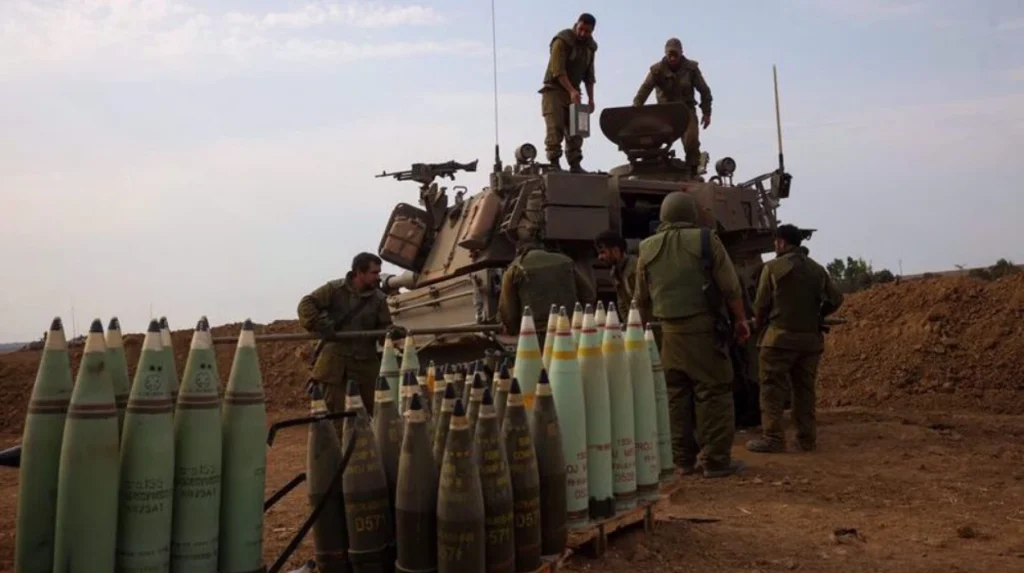
The War Reserve Stock for Allies-Israel (WRSA-I) was originally established in the 1980s as a logistical framework to enable rapid military support to Israel. Administered by the US Department of Defense, this stockpile of American-owned weaponry is physically stored in Israel and intended for emergency access by the Israeli military, with Pentagon approval. Historically, withdrawals were bound by annual caps and required Congressional notification, but the mechanism has gradually grown more opaque.
Recent legislation passed by the House Foreign Affairs Committee in 2025 removes prior constraints on the stockpile’s size and financial value. Under this new mandate, the Israeli government can access a broader array of armaments without the need for public reporting or even executive branch sign-off. Analysts note that the process effectively operates in a policy vacuum where arms are accessed first and paid for later, reducing transparency in real-time military assistance.
Legislative Intent And Context
The legislative initiative was championed by Representative Brian Mast who designed the expansion as necessary to maintain the security of Israel amidst the increasing dangers in the region. The wording of the bill focuses on responsiveness, resilience, and an unbroken supply of materiel as the factors of ensuring the Israeli Qualitative Military Edge.
However, the passage of the bill comes at a time when the global spotlight has become very critical. The continuing Israeli actions in Gaza which have been termed as possible instances of genocide by various UN experts have cost the lives of a vast number of civilians. Although the US has traditionally highlighted its national security policy that supports Israel, the loosening of control, in the backdrop of these allegations, has been the basis of a basic concern regarding the strategy and the international law.
Strategic Repercussions For US Military Readiness
This widens the implication of the increased use of WRSA-I in the transfer of arms to Israel as a major conduit to Israel, which has a wider impact on the preparedness of the US military. The Pentagon has at the same time invested heavily in Ukraine militarily and is strategizing how to deal with flashpoints in the Indo-Pacific. Holding a stockpile which is balanced among the operation theaters is very essential to keeping the US globally prepared.
With limited domestic production timelines for key weapons such as 155mm shells and precision-guided missiles, diverting substantial materiel to WRSA-I without replenishment risks degrading the US’s own strategic depth. Senior defense officials have quietly expressed concern that these pressures will only grow in the event of additional crises.
Diminished Oversight Mechanisms
The 2025 bill removes long-standing requirements for the State Department to submit detailed reports on arms transfers through WRSA-I. This development effectively sidelines both Congress and the American public from deliberating on the implications of real-time military assistance decisions.
Policy analysts such as John Ramming-Chappell argue this change erodes democratic checks and balances in one of the most sensitive areas of foreign policy. The reconfigured oversight structure reinforces the perception that security decisions are being increasingly centralized and shielded from scrutiny.
Ethical Dimensions Of Arms Transfers Amid Civilian Harm
A major development influencing public discourse has been the UN Human Rights Council’s 2025 preliminary determination that Israeli military actions in Gaza may constitute genocide. The finding has sparked fierce debate over the responsibilities of weapons suppliers and their potential complicity in international crimes.
While US officials have not accepted the genocide framing, the allegations have intensified pressure from civil society organizations demanding accountability. Human rights advocates warn that unchecked arms transfers, especially those facilitated through non-transparent systems may violate US laws prohibiting support for foreign forces engaged in serious human rights abuses.
Domestic Polarization And Political Responses
The idealism between the polity in Washington indicates even bigger tensions regarding the morality of unconditional military support. Although the House Foreign Affairs Committee has dismissed all the ideas of conditional aid there is a rising number of legislations who have advocated the need to re-introduce reporting standards and end use monitoring.
Regardless of such proposals, the bipartisan agreement of retaining close relationships with Israel has prevailed as the majority of Democrats and Republicans advocate toward the growth of the stockpile of arms. Nevertheless, the opinion polling in the middle of 2025 demonstrates a generational divide, with younger voters becoming increasingly uneasy with the US involvement in overseas conflicts that lack openness.
Broader Consequences For US Global Policy
WRSA-I is a product of a wider pattern of US policy making, in which strategic alliances warrant extraordinary support mechanisms. Nevertheless, this paradigm is becoming more and more incompatible with demands of open governance and compliance with the international standards. The security collaboration to ethical restriction is now more balancing than ever in the case of Israel.
With the international community looking into the acts of war in Gaza through the international courts such as the International criminal court, the presence of American weapons will attract more international attention. According to critics, this capacity of Washington to set examples in the world system is undermined by the fact that they can grant exemptions to close allies at the cost of transparency.
Implications For Regional And Diplomatic Stability
The 2025 increase in the stockpile of arms has not been felt in Gaza only. There is also mounting discontent in the perceived American bias in the Israel-Palestine war in the main capitals of Amman, Cairo and Ankara. The US authorities have tried to limit the diplomatic backlash by focusing on humanitarian aid to Palestinians and lobbying to seek ceasefire accords, but such efforts have been compromised by the concomitant supply of military resources.
The US encounters increased opposition to its ideas of humanitarian norms and conflict de-escalation during the multilateral forums where some states refer to WRSA-I as a sign of the two-sidedness. The US diplomatic involvement in civilian protection and peacebuilding may therefore be sinking on its own security obligation.
The ultimately perplexing question of balancing the duty of alliance and humanitarianism can be seen in the US decision to build a top-secret weapons storage to Israel amid an escalating conflict in Gaza. A mechanism initially created in case of contingency is now at center stage in enabling unmonitored movements of arms at a time when the world is also becoming more concerned. The difficulty facing policymakers in the US is to maintain strategic relations without sacrificing the accountability concept due to pressure both at the domestic constituency level and the international watchdogs. The possibility or the lack of such a balance can determine not only the course of US-Israel relations, but also the overall plausibility of American leadership in the international security process.