In September of 2025, a federal court decision ordered the Trump administration to unfreeze $11.5 billion in foreign aid Congress had already authorized. The ruling by U.S. District Judge Amir Ali is a turning point in an increasingly popular legal and constitutional argument about the separation of powers and federal budgetary authority.
This legal twist comes on the heels of growing criticism of how the administration spends the money appropriated because, critics say, going around Congress to cut off aid money is a violation of democratic principles and international obligations.
Executive discretion meets constitutional boundaries
The decision made by Judge Ali revolves around the constitutional doctrine that after Congress has passed the funding, the executive arm cannot then independently reject the funding. A “pocket rescission,” a fiscal device little used by the administration but permitting the executive to delay without congressional repeal, was found inconsistent with the Constitution and the Administrative Procedure Act.
Ali decided that any contracts and grants that existed in relation to these funds should proceed, but that suspension is only possible on specific and justifiable grounds. This also prevented the administration from providing post-facto accounts of why the money was not provided, the reasoning being that fiscal judgments ought to be made publicly and with the purpose of legislation.
Historical context and modern friction
The case renews legal concerns that were argued in the wake of the Nixon administration when the Impoundment Control Act of 1974 was enacted to limit presidential authority with regard to congressional appropriations. That the Trump administration invoked this rescission mechanism, at the end of the fiscal year, and without congressional commentary- raises new questions about executive overreach in the administration of foreign aid funds.
This conflict shows the ongoing political rivalry between arms of government as to who has the final say in deciding federal spending, and the same issue is likely to turn up soon in the Supreme Court.
Global aid programs face immediate risk
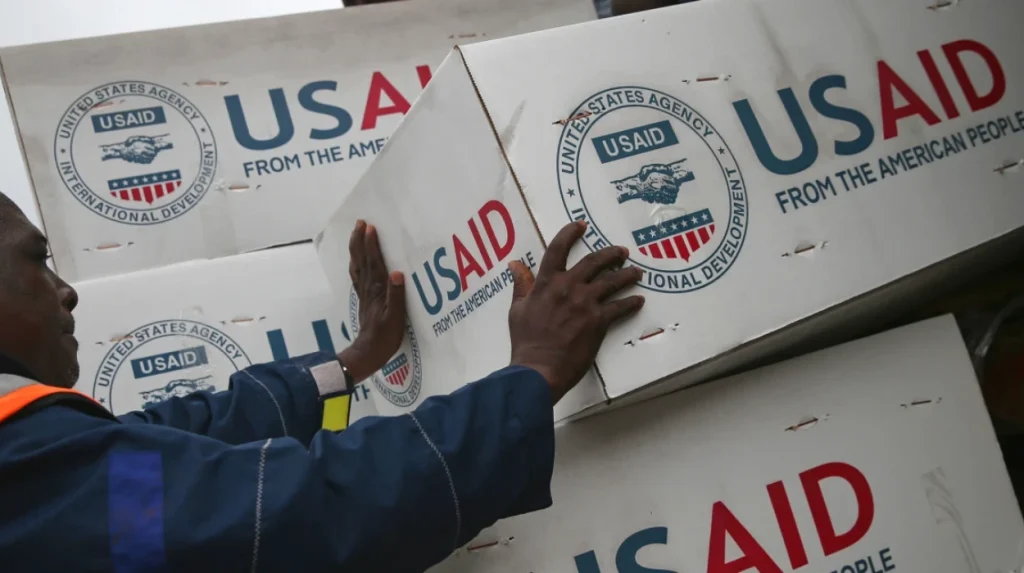
The frozen 11.5 billion consists of 3.2 billion in USAID aid, money to fund the Presidential Emergency Plan to AIDS Relief (PEPFAR), climate protection efforts and U.N. peacekeeping operations. Such programs are largely credited to save lives, stabilize weak states, as well as strengthen U.S. diplomatic authority.
The time lag in the release of aid has thrown off planning of continued humanitarian and health activities in areas already overwhelmed by conflict, displacement, and weather-related calamities. In the absence of such a response, development gains in key areas may be reversed very quickly.
Humanitarian and diplomatic consequences
According to humanitarian organizations, aid reduction or postponement will not only compromise lives on the ground, but the international confidence in the United States as a partner. Aid does two things: it promotes governance reform, disease control, and disaster response in vulnerable areas, and it is moral.
Congressional leaders contend that any attempt to block such flows will send a signal that domestic political considerations can trump international responsibilities, which in turn can damage the credibility of the U.S. in its current trade, peace, and defense politics.
Congress pushes back on executive maneuvering
Lawmakers have responded quickly and transversely. The rescission effort by the administration was chastised by Senator Susan Collins, who serves as the chair of the Senate Appropriations Committee, as an insult to the legislative powers. And calls to tighten the guardrails to executive budgetary discretion have been made by other legislators.
In the meantime, the ruling has given civil society advocates a new boost, which they see as a move to safeguard the global development gains made over time. They caution that executive authority to postpone expenditures should be made a normal practice, as it will allow future regimes to divert funding to avoid scrutiny.
Structural implications for governance
This is not just a one-funding-package legal debate. It questions the constitutional design whereby the executive is expected to perform its constitutional duties in good faith in enforcing the laws such as spending bills enacted by Congress. Once higher courts support the resolution of Judge Ali, it can considerably restrict the ability of future administrations to remake budgets without congressional help.
The Trump administration has appealed the decision on the basis that the pocket rescission is a legitimate measure to end unwarranted or politicized expenditure. The balancing of budgetary power may rest on important precedent established through the appellate process.
Strategic influence of foreign aid in U.S. policy
Foreign aid is no longer a charitable instrument, it is a strategic pillar of American foreign policy. Aid programs facilitate stability in the region, combat violent extremism, and promote democratic government in the strategically sensitive regions. Stalling or reduction would mean giving away to other superpowers around the globe, primarily China, which is steadily increasing development aid presence in the Global South.
There is also a lot of soft power capital in programs such as PEPFAR. PEPFAR has enjoyed bipartisan support since its launch and has been considered one of the most successful public health initiatives in the history of U.S. foreign policy.
Domestic oversight and international expectation
At home, citizens want accountability and transparency in the use of the state purse. Donor countries are being pressured internationally to exercise ethical stewardship and predictability in their dealings with partners. When politicized through the weaponization of foreign aid, the effect is felt not only through diplomatic instability but also through humanitarian instability.
Exposure of famine-prone areas to delays in food assistance, such as, and suspended contributions to peacekeeping missions in conflict areas, such as. The case is thus not just a domestic legal issue, but far-reaching in international terms as well.
Reinforcing institutional checks in fiscal governance
The judiciary has been playing a stabilizing role in cases where there is a blurred institutional boundary. The intervention of Judge Ali can be seen as an example of this role as he confirms that use of discretion does not encompass the ability to reclaim money already appropriated by Congress. His decision restates a historic constitutional rule: that the legislative branch has power of the purse.
The decision binds the agencies to respect grants and contracts that are in place by January 19, 2025, unless they are subject to certain exemptions. This guarantees a programmatic continuity as the legal process is ongoing.
Calls for reform and transparency
Other members of the legislature are currently working on measures to curtail executive discretion in budgetary delays, such as bills to reform the Impoundment Control Act and shorten the deadline on obligating appropriated funds. These measures are indicative of a wider concern that the current form of governance involves more than laws, but also institutional frameworks to ensure their proper implementation.
As financial analyst Rod Martin stated,
“Judge Ali’s order underscores a critical check on executive overreach, reinforcing that even fiscally charged, politically motivated decisions must operate squarely within the law.”
With global aid budgets under increasing strain and democratic institutions confronting evolving stress tests, the implications of this judicial intervention extend far beyond a single line item in the budget. The outcome of this legal contest may ultimately determine how future presidents exercise fiscal power and how resilient America’s institutional guardrails remain in the face of executive challenge.