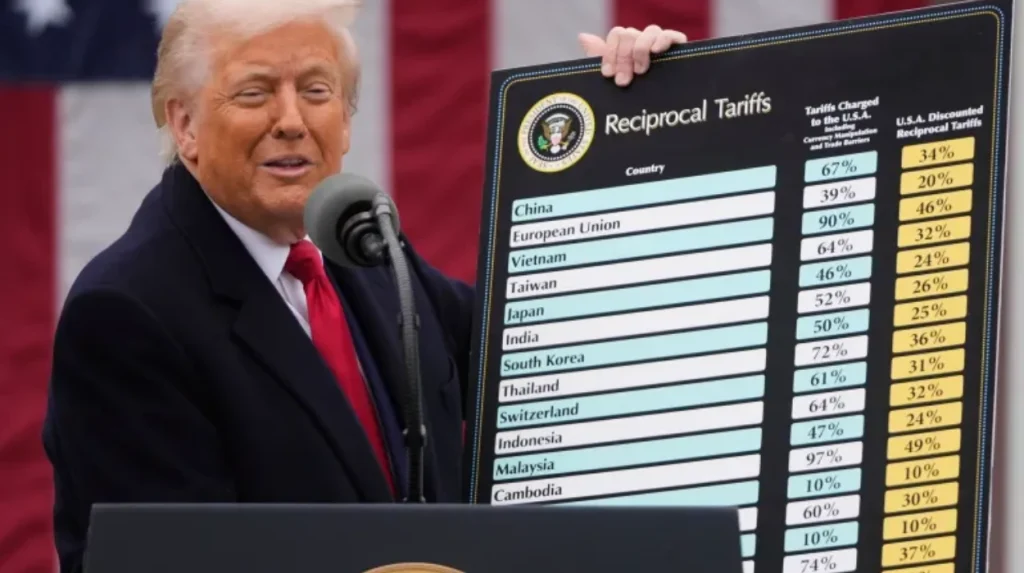
The Trump administration had significantly increased its application of tariffs as a geopolitical tool in 2025 when it levied prohibitive duty on imports of important Asian partners such as Japan, South Korea, Thailand, and Taiwan. The tariffs (24-49 percent) that were imposed were meant to deter economic collaboration with China and coordinate the local players to fit the U.S strategic goal. Among the worst affected were high-technology products, semiconductors, and auto exports.
Japan, which entered into a bilateral agreement recently, was subjected to a 15% export tax on automobiles, and the tariff schedules, in general, put jitters into the regional supply chain that had established a long-standing presence on integrated manufacturing Asia-wide. The Treasury Department rationalized the action by putting measures as a way of re-aligning the production to American soil, and lessen the reliance on Beijing-driven trade frameworks. Nonetheless, this stress caused great uncertainty destabilizing the faith of Asian economies which were on the same side of strategic interest as the U.S.
The aftermath of these policies was fast. Trade volumes in ASEAN countries with the U.S. which rose by more than 13 percent in 2024 had started going down with a fear of retaliatory tariffs. Diversification and new trade alliances became the strategy in the economies within the region as a way of reducing the impacts of a possible additional hit on tariffs with an August 1 deadline that will finalize all the exceptions or target a further escalation of tariffs.
Economic Impacts And Market Reactions
Domestic Strain From Rising Costs
The average effective U.S. tariff rate reached a peak of 20.6 percent in the new tariff regime. This change of policy brought an increase of 2.1 per cent in the total prices of consumers in the nation. To the average American family this meant a loss of an estimated 2,800 dollars a year of income increase due to increase in prices of various goods as diverse as electronics products to automobile products. The burden of inflation was left to families with lower income, and they even saw no reprieve.
Retailers and manufacturers were worried about the volatility of cost structure. Companies which depended on the just-in-time production models or imported parts bought in Asia faced fluctuating prices, issues with logistics and lowered competitiveness in global markets. U.S. industries started lobbying exemptions within their industries, but the administration was determined to pursue its more global goal of restructuring international trade.
Supply Chain Disruption In Asia
Some established plans to invest in Asia but companies were reluctant to invest because they were not sure how the tariffs would affect them. Thai, Vietnamese and Philippine firms that had previously worked up production on the basis of the earlier trade tensions between the U.S. and China were now trapped in having to be subject to disruption once again. South Korean and Taiwan semiconductor, and electronics held onto their thoughts about the U.S. market, as they considered more intra-regional demand and European options.
Meanwhile, there was also a boost in the drive towards regional trade cooperation. States of East and Southeast Asia started paying special attention to the Regional Comprehensive Economic Partnership (RCEP) as a tool to maintain the market stability and allow further trade to develop without the U.S. structures. This is an indicator of a shift towards strategy to maintain access and resilience in the face of the uncertainties created by the Trump-era trade policy.
Diplomatic And Strategic Repercussions In Asia-Pacific
Tensions With Longstanding Allies
The tariffs have made the U.S. strategic posture in the Indo Pacific difficult. The actions, although they have been set up as a broader effort to combat China, have taxed ties with key partners like Japan and South Korea. Authorities in Tokyo were complaining about what they termed as punitive treatment given its continued cooperation on regional security and building of technologies. The tariffs were labeled as nonproductive by Seoul Ministry of Trade and it has been feared that this will jeopardize their long term diplomatic goodwill.
Prime Minister Anwar Ibrahim of Malaysia came out strongly attacking the tariff policy saying that it was rather isolating than productive since pressure was the only way to achieve productive regional cooperation. His remarks are a part of the more skeptical approach of Southeast Asian countries, who are gradually coming to believe that the U.S. is erratic in terms of economic activity, retaining Chinese trade and investment relationships at the same time.
Opportunities For China Amid U.S. Retrenchment
China on its part took advantage of the fallout. In 2024, trade with the U.S. was less than a third the trade with ASEAN, which totals more than 900 billion dollars. Tighter American tariffs on regional partners led them into reconsideration in favor of economic alliances, and, in response, Beijing has upped its diplomatic offense by providing tariff quotients and infrastructure initiatives under the Belt and Road Initiative. As Washington was playing the coercive card, China appeared as a more reliable extension in terms of the economy.
According to trade analysts this unintentional realigning erodes the very alliance that the U.S. aims to consolidate to oppose the Chinese hegemony in the region. The U.S. may lose its allies instead of isolating Beijing which creates new opportunities of Chinese influence in markets and institutions already monopolized by Washington.
The Challenge Of Navigating Tariff Diplomacy
Coercion Versus Cooperation
The thin line between coercive diplomacy and economic coercion creates the issue that the Trump administration is implementing through their strategy of applying the leverage of tariffs. Allies are made to make tough decisions, either accept what is requested by the U.S. and sacrifice local trade interests with China, or adopt the middle course which is secured in angering the U.S. but maintaining the economic balance.
Bidirectional talks have not been successful in both ways. Philippines and Indonesia gained such temporary agreements as those that restrict tariffs to about 19 percent but they are temporary in nature and the outcome is uncertain. Most governments are apprehensive about wider strategic repercussions as they appreciate that trade policy changes have the potential to influence wider defense and security relationships with Washington.
Unsettled Markets And Policy Uncertainty
Investor confidence has undermined the entire Asian region owing to the unpredictability in trade. The issue that is raised by corporate leaders, especially those in industries characterized by heavy export, is their inability to strategize so as to manage accordingly in the prevailing circumstances. Reshoring and translocation of supply chains have been laborious and expensive thus making continuity and expansion plans complex.
Economic ministers of the region have demanded to conduct dialogue with Washington on new and more open conditions and have asked to use multilateral forums to resolve the contradictions instead of unilaterally imposing tariffs on each other. However, U.S. officials remain committed to the broader objectives of the “America First” agenda.
Shifts In Global Manufacturing And Supply Chains
The Search For New Manufacturing Hubs
As high tariffs destabilize traditional supply patterns, companies are reevaluating manufacturing footprints. Some firms are expanding capacity in India, Indonesia, and Vietnam to hedge against exposure to China and U.S. tariffs alike. However, energy costs, infrastructure challenges, and political uncertainty in these new locations present additional barriers to long-term investment.
Japan and South Korea have also stepped up efforts to attract reshored production. Tokyo’s industrial policy now includes subsidies to incentivize relocation of key manufacturing sectors, particularly in semiconductors and electric vehicles. Seoul has prioritized diversification in its export base, seeking new markets in Central Asia, Africa, and the Middle East.
RCEP As A Defensive Mechanism
The Regional Comprehensive Economic Partnership has gained strategic value as a buffer against global trade volatility. RCEP’s commitment to low tariffs, standardization, and inclusive access has made it a cornerstone of economic planning across ASEAN and Northeast Asia. A planned summit in late 2025 is expected to reaffirm commitments and announce sectoral integration initiatives aimed at enhancing resilience.
Policymakers view RCEP not only as a trade agreement but as a political signal of Asia’s capacity to set its own economic rules. The more that U.S. policy remains unpredictable, the more likely regional actors will lean on frameworks like RCEP to anchor their trade relationships.
Expert Views And Industry Responses
Trade economist Rnaud Bertrand commented in a recent interview that “while the tariffs seek to gain leverage over China, their backlash risks fracturing the alliance network crucial for containing Beijing.” His remarks underline the fundamental challenge of applying pressure without undermining cohesion among partners.
This is quite consequential.
— Arnaud Bertrand (@RnaudBertrand) May 5, 2025
China, Japan, South Korea and the countries of ASEAN just issued a joint statement (https://t.co/uk2upyisnt) in which they take a unified stance against "escalating trade protectionism", a clear reference to Trump's tariffs.
They write that their… pic.twitter.com/SIoV6jhCet
Industry leaders, meanwhile, report heightened caution in capital deployment and hiring plans. Major multinationals, from automotive to consumer electronics, have announced delays in North American expansions, citing policy uncertainty. Calls for stable and rules-based trade dialogue continue to grow, though the current U.S. administration appears committed to its tactical use of tariffs.
Toward A Balanced Future In U.S.-Asia Trade Relations
The trajectory of 2025’s trade tensions underscores a fundamental question in global economic diplomacy: can punitive tools like tariffs be wielded without collateral damage to allies and long-term interests? The Trump administration’s current posture may deliver leverage in some bilateral contexts but has catalyzed broader shifts in Asia’s trade architecture that will be harder to reverse.
Asia’s adaptive response—through regional integration, diversification, and investment in resilience—shows that the global economy is no longer passively shaped by Washington. The next phase of U.S.-Asia trade relations will likely hinge not only on tariffs but on the willingness to engage in shared frameworks that recognize mutual dependency.
The reshaping of alliances through trade policy continues to unfold with global implications. As new power centers emerge and old ties are tested, the balance between national interest and regional interdependence will define not just economic outcomes—but strategic alignments for years to come.