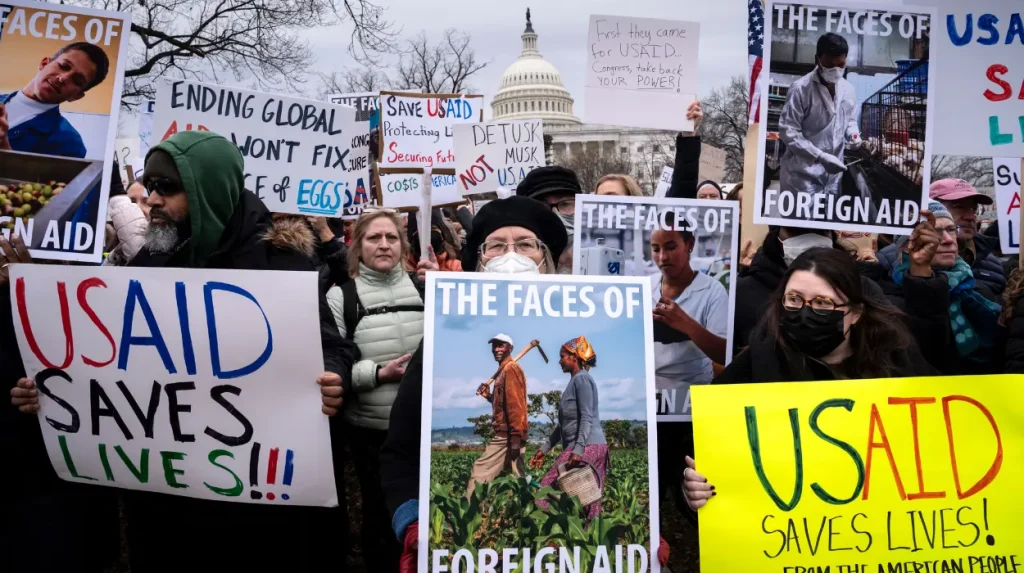
In 2025, sweeping changes in U.S. foreign aid policy have sent shockwaves through global health and development sectors. An alarming study in The Lancet projects that by 2030, more than 14 million excess deaths could occur due to cuts in aid—over 4.5 million of them young children. These figures reflect not a natural event, but deliberate policy decisions dismantling decades of progress.
A global lifeline under threat
USAID was the biggest humanitarian donor in the world for almost two decades. Its programs are credited with preventing 91 million deaths between 2001 and 2021, including 30 million children. That dramatic reversal—over 80% of USAID operations canceled by March 2025—puts vulnerable regions at risk.
From aid to “America First”
Under the Trump-era shift, USAID’s functions were merged into the State Department. Secretary Marco Rubio stated,
“As of July 1st, USAID will officially cease to implement foreign assistance…delivered with more accountability, strategy, and efficiency.”
Rubio framed the move as a rational correction:
“We will not apologize for recognizing America’s longstanding commitment… must be in furtherance of an America First foreign policy.”
The new policy links aid with American strategic and economic interests and prioritizes nations investing in themselves.
The end of a vital era
The shutdown triggered layoffs of thousands of staff, halted billions in aid, and severed critical food and medical supply chains. Key initiatives like PEPFAR—America’s flagship HIV/AIDS response—have been deeply scaled back or discontinued entirely.
Catastrophic humanitarian consequences
Modeling from The Lancet shows drastic outcomes: an additional 14 million deaths, 700,000 more child deaths annually, mainly in sub‑Saharan Africa and South Asia. Efforts funded by USAID reduced child mortality by 32% and overall mortality by 15%. The drop in funding now threatens those gains.
On-the-ground crises
In Haiti, HIV clinics report medication shortages that endanger 150,000 patients. In Yemen, aid charities are halting child malnutrition programs, closing violence shelters, and suspending cholera and TB treatment. Diala Haidar of Amnesty International warned:
“The abrupt and irresponsible cuts… jeopardizing safety, dignity, and fundamental human rights.”
A dramatic reversal of decades
USAID data underscores the impact: HIV/AIDS mortality fell by 65% in supported regions; malaria and neglected disease deaths were halved. Daniella Cavalcanti—lead author of the study—said,
“Our analysis shows that USAID funding has been an essential force… on the world’s most vulnerable regions.” That legacy now risks collapse.
The domino effect among donors
The U.S. historically funded about 38% of global humanitarian aid. With its retreat, European donors like Germany, the UK, and France have signaled cuts. ISGlobal researcher Caterina Monti warned that this shift may lead to even more deaths if other nations follow suit.
Policy choices with ethical stakes
Study authors point out this isn’t a natural disaster:
“Unlike those events, this crisis would stem from a conscious and avoidable policy choice.”
Davide Rasella of ISGlobal stated,
“These cuts could… reverse two decades of health progress… risk comparable in scale to a global pandemic.”
Local voices issue warnings
Francisco Saúte, head of Mozambique’s CISM, explained that USAID support strengthened disease response systems—support now at risk, threatening systemic collapse. Amnesty International cautioned about threats to women, children, and survivors of sexual violence across Yemen, Sudan, and Gaza.
Washington’s shift to State Department control
The restructured aid apparatus will now be tied to diplomatic initiatives and trade deals, targeting nations aligned with U.S. interests. Critics fear that sidelining USAID’s specialized expertise will cause long-term harm to aid effectiveness.
Voices from the global health community
Professor Timothy Caulfield called the findings “sickening, heartbreaking, evil.” He told a national news program,
“The evidence is overwhelming—these cuts will cost lives… we are not just talking about numbers, but… children, families, and communities.”
His interview echoes the moral urgency around this crisis.
Calls for urgent action at global forums
At the June 2025 Financing for Development conference in Seville, Davide Rasella emphasized urgency:
“If we want to achieve the SDGs, we cannot afford to dismantle funding mechanisms… Now is the time to scale up, not scale back.”
The decisions made now in Washington may reverberate worldwide—determining whether life-saving progress survives or collapses under the weight of policy shifts.