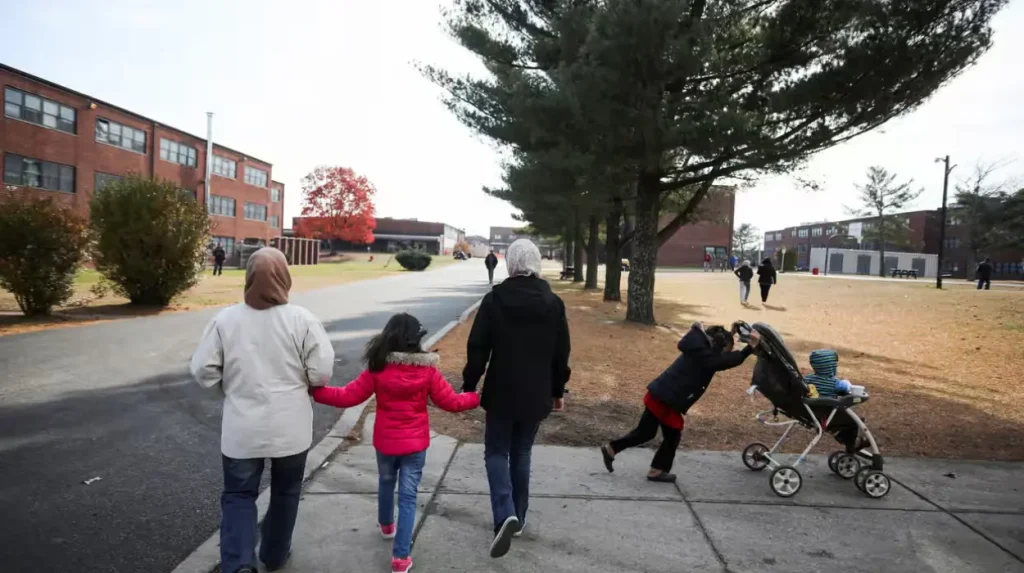
Due to the Trump administration’s anti-immigration campaign, thousands of Afghans who fled to the United States when the Taliban retook power in Afghanistan fear that they will be sent back to danger in the upcoming weeks. Many face many risks to their legal status in the United States, including individuals who helped US soldiers in Afghanistan before the military’s disastrous exit in 2021.
By removing Afghanistan from the list of nations eligible for temporary protected status (TPS), Donald Trump rescinded protections against deportation for people in the US. Shortly after, he added Afghanistan to the list of nations impacted by the revised travel ban.
How did Trump’s policies affect Afghan legal status?
Afghans are impacted by Trump’s refugee ban, which coincides with nearly daily stories about an increase in ICE arrests of people from Central and South America, portions of Africa, Asia, and other countries, both undocumented and those with legal status. Other communities are terrified as a result of these arrests.
In 2022, the US government allowed Afghans to access the US TPS after the Biden administration recognized that it was too dangerous for them to return due to the political unrest and military fighting that had driven millions of Afghans to leave the country. Their influence on American culture was uncertain even before Donald Trump’s comeback to the White House.
Regarding the termination of TPS for Afghans, the agency cited a publication in the Federal Register that said that “tourism to Afghanistan has increased, as the rates of kidnappings have reduced.” A US Institute of Peace report that assessed the situation three years after the Taliban retook power includes the sentence, but it primarily describes the terrible conditions in poor Afghanistan, where “the rule of law has been replaced by the rule of force, where justice is not administered in courts but meted out through fear and violence.”
What does the State Department say about Afghanistan?
On the other hand, the US State Department website advises US citizens not to travel to Afghanistan because of the country’s “civil unrest, crime, terrorism, risk of wrongful detention, kidnapping, and limited health facilities.”
However, Democratic politicians and immigration activists believe that Taliban-controlled Afghanistan continues to be a hazardous place for many people, particularly women, minorities, and those who helped with the foreign war effort, including humanitarian operations. This year, the Taliban have kept several foreigners in Afghanistan for weeks after they were arrested.
The regime has publicly flogged hundreds of Afghans since the Taliban took power in 2021. Without announcing a deportation plan, the US government has called on Afghans who lose their TPS status to leave the country.
Prior to the Biden administration’s creation of temporary pathways for people in limbo, bipartisan attempts to provide Afghans permanent legal status in the US had languished for three years.
Since July 2021, US Citizenship and Immigration Services has received about 22,000 asylum applications from Afghan nationals, according to official data. Nearly 20,000 of them received awards.
Due to the backlog of immigration court processes, which now stands at 3.5 million active cases with an average wait time of five to 636 days, many Afghans have not received any updates on their petitions for alternative statuses that they are eligible for. The same is true for those who came to the United States and served in the U.S. administration in Afghanistan. Many are still waiting on the US Department of State to determine that they qualify for a special immigration visa (SIV).