In the past, a full-scale diplomatic effort by the United States to defuse tensions and prevent a broader conflict would have been spurred by the deadly crises between India and Pakistan. However, the recent conflict over and beyond the disputed Muslim-majority area of Kashmir might test the Trump administration‘s limits and restricted goals for international cooperation — as well as for the globe without American leadership.
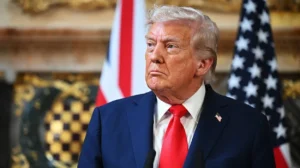
The conflict, which was sparked by a terror assault on Indian tourists that New Delhi attributes to terrorists supported by Pakistan, was met with a muted first response from President Donald Trump on Tuesday. “It’s unfortunate,” Trump remarked. “I just hope it’s over soon.” He took it a step further on Wednesday, giving his good offices but not really wanting to become engaged. Trump stated, “I know both very well, I get along with both, and I want to see them work it out.” They have a tit-for-tat relationship. Hopefully, they can now cease. I’ll be there if I may be of assistance.
The State Department claims that since India’s attacks deep within Pakistani territory on Tuesday, Secretary of State Marco Rubio has been in communication with high-ranking officials from both countries in recent weeks. However, there is currently little sign that the US is expanding its efforts to coordinate global crisis management or mediation.
Since everyone expects both parties to take multiple levels up an escalating ladder, this might be partially due to the fact that the timing is not yet right for diplomacy. Although Pakistan’s commanders have promised to retaliate against Indian military installations, their claim of having shot down five Indian jets may indicate that their honor has been upheld.
Since the second Trump administration has thrown away the US foreign policy playbook, creating a void where US global leadership traditionally functioned, the US response will be widely monitored in the days ahead.
Tim Willasey-Wilsey of the Royal United Services Institute in said that the United States may no longer be as eager to play a major role in calming tensions over Kashmir, as it did in 2000, 2008, and 2019. Willasey-Wilsey, a former British ambassador, stated, “We now have a president in the White House who says he doesn’t want to be the policeman of the world.” Additionally, it’s likely that he feels more pity for Indian Prime Minister Narendra Modi than for Pakistanis.
US has argued that it is justified to use US forces to keep the situation in Kashmir from getting worse. This occurred during the first Trump administration, six years ago, when then-Secretary of State Mike Pompeo intervened to diffuse a conflict between competing South Asian nations over Kashmir. In his biography, “Never Give an Inch,” Pompeo stated, “I don’t think the world properly knows just how close the India-Pakistan rivalry came to spilling over into a nuclear conflagration in February 2019.”
In anticipation of the next potential escalation over Kashmir, the world is currently holding its breath. After the attack on primarily Hindu tourists in Indian Kashmir last month that killed at least six people, India used the excuse that it was targeting “terrorist camps” to defend its missile attacks on Pakistan-held Kashmir and Pakistan itself.
Pakistan claims that 31 people were killed in India’s assault and has threatened to retaliate. In a nationwide speech, Prime Minister Shehbaz Sharif of Pakistan issued a warning, saying, “Maybe they believed we would withdraw, but they forgot that… This country is full of courageous individuals.”
If India feels compelled to react to further assaults from Pakistan, the likelihood of further escalation will increase. Modi is personally embarrassed by the terror attack and the loss of Indian aircraft, which increases the political incentives to do so. One French-built Indian jet was shot down, according to sources.
There are a number of reasons why previous diplomatic approaches would not be as successful in a more unstable and fragmented global order, in addition to the Trump administration’s hesitancy to assume a traditional US position of global leadership. In the meanwhile, since the US withdrew from Afghanistan and the termination of the two nations’ tense cooperation in the war on terror, the US’s ability to exert pressure on Pakistan has diminished. With Pakistan’s complete return to its long-standing political ties with China, all of the South Asian rivals now have a superpower friend.