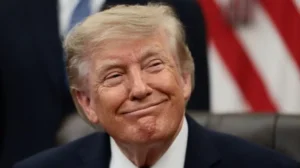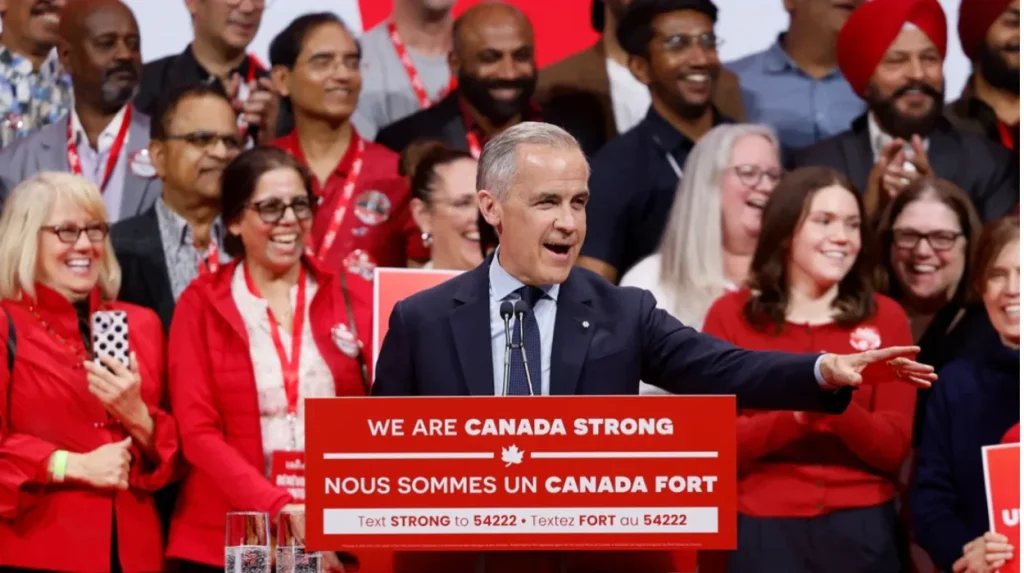
After a campaign marred by constant provocations and high trade tariffs imposed by US President Donald Trump, Canadian Prime Minister Mark Carney declared victory in federal elections early Tuesday, vowing his nation will “never” cede to the US. As he addressed a message of togetherness to a divided country, the leader of the Liberal Party delivered a striking rebuke to Trump, vowing to “represent everyone who calls Canada home.”
America wants our nation, our resources, our land, and our water, as I have been warning for months. These threats, however, are not innocuous. Carney celebrated a stunning turnabout in his party’s fortunes and declared, “President Trump is trying to break us so that America can own us.” “Never, ever will that happen.” Carney restated remarks he made during the campaign on how Canada’s relationship with the US has drastically changed.
Although we have moved over the trauma of the American treachery, we must always remember the lessons learned. We must take care of ourselves. And we must look out for one another above all else,” he remarked.
Though it is unclear if Carney has secured a majority or will require coalition partners to rule, voters have put Canada’s Liberal Party back in power for a fourth straight term.
For a party to have a majority, 172 seats are required. While sister CNN affiliate CBC thinks it is too soon to know if they can secure a majority, CNN partner CTV is forecasting a minority government. Early on Tuesday, Pierre Poilievre, the head of the Conservative opposition, admitted defeat, claiming that Carney had secured enough seats to establish a “razor thin minority government.”
Since winning his party’s leadership race by a landslide following the resignation of former prime minister Justin Trudeau last month, 60-year-old former central banker Carney has spearheaded a surge of anti-Trump populism. He has made Canada’s defense a key component of his program and mobilized the populace against the US president’s threats to annex the nation as “the 51st state.” When Trudeau resigned in January due to a severe cost of living issue, a mutiny within his cabinet, and poor polling, Poilievre was the clear favorite to win.
However, Trump’s threats to Canadian sovereignty and tariffs on Canadian exports drastically changed the election into a sort of referendum on the US president. In order to “protect Canada’s interests” and “protect our sovereignty,” Poilievre stated that his Conservatives will collaborate with Carney and other parties. He declared, “As we confront tariffs and other reckless threats from President Trump, Canada will always come first.”
Prior to becoming prime minister, Carney had never held a political position. He led governments through significant international crises and turbulent times over his decades in finance, including guiding Canada’s economy through the 2008 financial crisis. He guided the UK through Brexit as governor of the Bank of England, which he claimed mirrored what would happen to the US in the face of tariffs.
Carney has consistently emphasized that Canada should chart its own course independent of US influence since taking office.
Throughout the campaign, Carney positioned himself as a seasoned professional from the political middle who could guide Canada’s economy through a time of extreme upheaval. In October, Carney said to podcaster Nate Erskine-Smith, “I know how the world operates.” “I know people who manage some of the biggest businesses in the world, and I know how they operate. I understand the operations of financial institutions. I understand how markets function. I’m attempting to use it to Canada’s advantage.
The economic and long-term stability of Canada are seriously threatened by Trump’s tariffs on exports. In addition to threatening to impose tariffs on timber and medicines, the US president’s decision to impose a 25% penalty on Canadian steel and aluminum, automobiles, and auto parts has rocked Canadian companies and sent the nation into a recession. Carney has warned of “tough days ahead” with pressure on Canadian employment, a fact he has not sugarcoated.
To lessen Canada’s dependency on the US, the prime minister has promised to “build things in this country again,” including new industries, residences, and “clean and conventional energy” sources.
Carney has been taking steps to strengthen his relationships with more “reliable” partners, but he hasn’t ruled out more discussions with Trump. Unusually, he traveled to Europe for his first foreign trip as prime minister, where he discussed strengthening military, economic, and security connections with French and British leaders.
When Carney does meet with Trump, “it will be to discuss the future economic and security relationship between two sovereign nations,” he stated in his victory address early on Tuesday.
“And it will be fully aware that we have a lot of other options besides the United States to build prosperity for all Canadians,” he stated.
According to experts, many Canadians believe Carney is in a good position to handle a trade battle with a longstanding friend. “When a crisis strikes, it’s critical to unite and to act decisively and forcefully. As he positioned himself as the leader to challenge Trump, Carney stated earlier this month, “And that’s what we will do.”
The future of the National Democratic Party, which hasn’t gained enough seats to maintain its party status thus far, was another upset on Tuesday. In past Liberal Party minority governments, the center-left NDP has been a major player. After losing his seat, party leader Jagmeet Singh declared he would resign. Singh praised Carney, saying, “He has a big job to do, to represent all Canadians and to defend our country and its sovereignty from the threats of Donald Trump.”