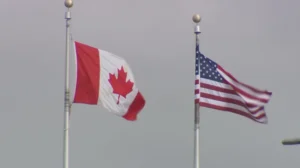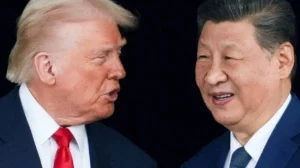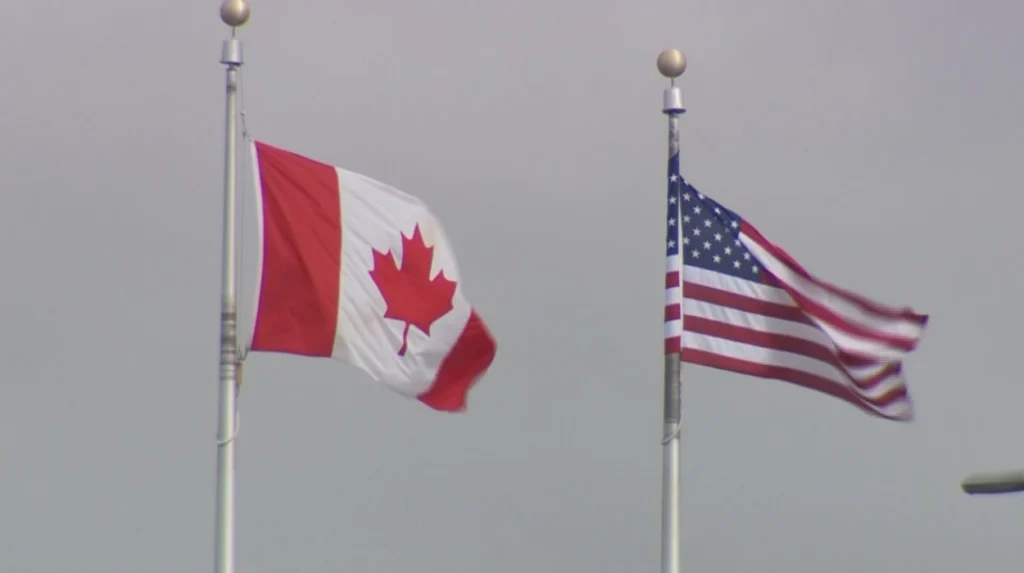
The collapse of Canada–U.S. trade talks on August 21, 2026 marks a decisive escalation in what has become the most serious bilateral trade confrontation in nearly two years. After weeks of intensive negotiations aimed at averting a fresh wave of American tariffs, Prime Minister Mark Carney announced the suspension of talks, citing last-minute U.S. demands that Ottawa deemed unacceptable. In a formal statement, Carney said
“last‑minute changes in the U.S. proposed terms were unfair, uneconomic, and called into question the reliability of any deal,”
framing the breakdown as a matter of economic sovereignty and long-term strategic trust.
The lack of a deal led directly to the imposition of 50% tariffs on about $28 billion worth of Canadian goods shipped to the United States, from midnight on August 22. These penalties, which were imposed under Section 338 of the U.S. Tariffs Act of 1930, are a penalty that has never before been used in North American trade history in recent times and are a clear indication of toughening of the American position.
In response, Carney declared that
“Canada will match those tariffs dollar for dollar to protect our workers and businesses,”
committing Ottawa to a symmetrical retaliation strategy designed to deter further escalation while shielding domestic industries.
The anatomy of the tariff regime
These new tariffs by the U.S. cover an extensive range of Canadian products, from wine, dairy items, cement, clothes, hockey gear, electronics, industrial machines, and furniture. It is no coincidence that these particular Canadian sectors have been targeted by the U.S. for increased tariffs; rather, they are politically important areas in Canada that could be used against the country in future negotiations. Most importantly, these 50% tariffs come on top of other U.S. tariffs on steel, aluminum, automobiles, and softwood lumber from Canada that were imposed in the previous phases of President Trump’s global tariff attack under Section 232 national security.
The U.S. Chamber of Commerce echoed these concerns, warning that higher tariffs would
“damage both economies, drive up costs for US families, further disrupt critical supply chains, and risk the 13 million American jobs that depend on trade under the US‑Mexico‑Canada Trade Agreement.”
This statement underscores the interconnected nature of the North American economy, where punitive measures on one side inevitably ripple across borders, affecting producers, distributors, and consumers alike.
The negotiation timeline: from brinkmanship to breakdown
However, the road that led to such a situation was littered with a sequence of intense meetings, discussions, and compromises that did not do enough in the end. From July 2026, Canada’s Trade Minister, Dominic LeBlanc, and his chief negotiator Janice Charette started having multiple rounds of talks with U.S. Trade Representative, Jamieson Greer, trying to avoid the imposition of Section 338 tariffs and at the same time negotiate the reductions of Section 232 tariffs. As the deadline loomed near in the middle of August, Carney described the talks as “delicate” and “intense.”
On August 19, an apparent breakthrough emerged when both sides announced a “deal in principle,” leading Trump to pause the 50% tariffs for three days pending final documentation. However, by August 21, after a third day of meetings in Washington, the agreement unraveled. USTR Greer stated that
“tonight, Canada declined to finalise the trade deal under the terms agreed earlier this week,”
accusing Ottawa of introducing
“new demands and walk backs… that have upended the careful balance reached in the past days.”
Carney, however, maintained that the U.S. had introduced unacceptable terms at the eleventh hour, prompting his decision to suspend talks and recall Canadian negotiators to Ottawa.
What each side wanted: the core demands
The main reason for the clash between Ottawa and Washington was the number of controversial claims neither side could give up. On one hand, Ottawa wanted to ensure free access for most Canadian companies to the American market, reductions of U.S. tariffs on key industries, protection for small and medium-sized businesses from tariffs, and maintaining of economic sovereignty. Carney stressed that the deal should ensure “real benefits for Canadian businesses and workers,” meaning that the country would not accept any unfair terms that would hinder future competitiveness or make it yield to the United States in core policy areas. On the other hand, there were several key concessions the United States needed from Canada.
It involved removal of Canadian retaliatory tariffs on American automobiles, revisions of Canadian dairy quotas to increase access to cheese for the U.S., and repeal of provincial prohibitions on selling alcoholic beverages in Canada which was done in 2025 by all Canadian provinces as a retaliatory action after the introduction of tariffs on some goods by the U.S. In addition to this, Washington was ready to lower tariffs on steel and aluminum from 50% to 25% and on automobiles from 25% to 15%, provided there would be certain concessions from Canada. Greer considered it as the best deal for “any major exporter to our market.”
The political economy of retaliation
Carney’s decision to match U.S. tariffs “dollar for dollar” is not merely a symbolic gesture; it is a calculated economic and political strategy. By committing to symmetrical retaliation, Ottawa aims to signal resolve, deter further escalation, and maintain domestic political support. Ontario Premier Doug Ford publicly endorsed this approach, stating that
“the prime minister has my full support for a strong response – tariff for tariff, dollar for dollar.”
This unified front between federal and provincial leadership is critical in a country where regional economic interests often diverge, particularly in resource-dependent provinces like Alberta and manufacturing-heavy Ontario.
The retaliation strategy also serves to protect Canadian industries from being undercut by U.S. imports that would otherwise benefit from asymmetric tariff treatment. By imposing equivalent duties on U.S. goods, Ottawa seeks to level the playing field for domestic producers while creating leverage for future negotiations. However, this approach carries risks. Retaliatory tariffs can lead to higher input costs for Canadian manufacturers, increased prices for consumers, and potential supply chain disruptions. Moreover, prolonged trade conflict could erode investor confidence and delay major infrastructure projects that Carney has touted as pillars of Canada’s economic recovery.
Public opinion and political calculus
Public sentiment in Canada appears divided on the issue of retaliation. An Abacus Data poll cited in media coverage suggested that approximately 36% of Canadians support retaliating against U.S. tariffs, while roughly 30% prefer continued negotiations. This split reflects broader anxieties about the economic impact of a prolonged trade war, particularly in sectors heavily dependent on cross-border trade. For Carney’s government, the challenge lies in balancing firmness with pragmatism—demonstrating strength without provoking unnecessary economic pain.
Politically, the collapse of talks allows Carney to frame the issue as a defence of Canadian sovereignty and economic independence. By portraying the U.S. demands as “unfair” and “uneconomic,” Ottawa can rally domestic support while positioning itself as a responsible actor seeking a fair deal. This narrative is particularly potent in a country where memories of past trade disputes, such as the softwood lumber conflict and the renegotiation of NAFTA into USMCA, remain fresh. Carney’s emphasis on diversification—citing nearly $500 billion in major infrastructure projects and plans to double non-U.S. export market access—reinforces this message of strategic autonomy.
The broader geopolitical context
The Canada–U.S. trade war cannot be viewed in isolation; it is part of a larger pattern of protectionist policies pursued by the Trump administration since its return to power in 2025. The use of Section 338 tariffs—a Depression-era statute rarely invoked in modern times—signals a willingness to deploy aggressive trade tools to achieve political and economic objectives. This approach has already strained relations with other major trading partners, including the European Union and China, and raises questions about the future of the rules-based international trading system.
For Canada, the stakes extend beyond immediate economic concerns. A prolonged trade conflict with its largest trading partner could force Ottawa to accelerate efforts to diversify its export markets, particularly in Asia and Europe. Carney has already hinted at this strategy, noting that Canada is focused on
“building our strength at home, diversifying our partnerships abroad, and striking a fair deal with the United States.”
However, diversification is a long-term project that cannot fully offset the short-term pain of losing preferential access to the U.S. market.
What comes next: scenarios and implications
The immediate future of the trade relations between the two countries is rather uncertain. There is already a risk of escalation due to the implementation of new tariffs and tough positions from both sides. According to Greer, “we’ll take action” in response to any Canadian counter-tariffs. It might turn into an escalation loop and further intensification of the economic conflict. Another possible scenario would be that tariffs will provoke negotiations again as they will bring more harm than good for both parties, and they will be able to start negotiating despite current disputes.
The warnings issued by U.S. Chamber of Commerce about lost jobs and disrupted supply chains can become a trigger for domestic companies’ demands for the cessation of the trade war. It is likely that Canadian industries which have faced high tariffs will force Ottawa to give in and come back to negotiate under unfavorable conditions. The long-term perspective of the collapse of the negotiations is much more serious – it can have consequences not only for the bilateral relations but also for the whole USMCA framework. It was believed that the deal could turn into a kind of detente and open the door to further negotiations on the renewal of the USMCA. However, the failure of the negotiations deepens a two-year-long rift since the return of Trump to office and the tariff policy on the global stage.