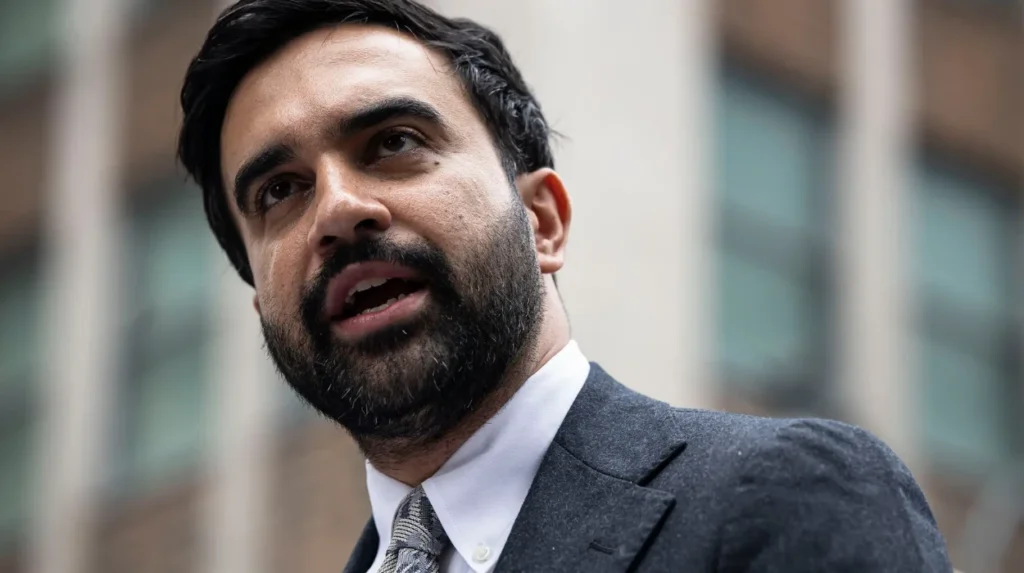
The remarks by Zohran Mamdani regarding Benjamin Netanyahu are not only politically biting but also represent an effort to coordinate the language used in New York City with that of the ICC regarding their war crimes arrest warrant for Israel’s president by putting pressure on Washington. It is reported that Mayor of New York says that the city does not have enough legal power to arrest him, but he describes Netanyahu as “war criminal.”
What Mamdani said
Mamdani’s comments were aired in a video statement on Tuesday, July 21, 2026, and immediately sparked controversy in the already charged debate about Gaza, international law, and the United States’ stance on Israel.
“New York City has looked at all the options open to it,”
Mamdani stated in the video, and it found that it was unable to implement the ICC warrant independently. Mamdani went on to make the political and legal case for why the federal government, but not the city, can implement the warrant.
As quoted in reporting on his statement, Mamdani said,
“It is clear that we do not have the independent legal authority to enforce this warrant. The federal government, however, does and I call on them to join the ICC and execute this warrant.”
He also drew a hard line on Netanyahu’s presence in the city, saying,
“Benjamin Netanyahu is not welcome in New York City, nor is any other war criminal at large.”
Why the statement matters
It is important to note the way in which Mamdani raised this issue. He did not limit himself to a mere repetition of the campaign pledge, nor was he merely offering a gesture of condemnation. Rather, Mamdani recognizes the limitations of municipal power while simultaneously demanding that the federal government step up and fill a politically charged and legally murky void. This is because there is a difference between making political pronouncements and enforcing a foreign policy through municipal law enforcement.
While New York City can make such political statements, Mamdani recognized that New York City could not enforce an international arrest warrant against the head of a foreign government on its own. It was time for the federal government to fill this gap. This context is important given that the warrant was issued by the ICC in 2024 due to war crimes allegations associated with the Gaza conflict.
ICC warrant and legal backdrop
The legal basis of the narrative refers to the arrest warrant against Netanyahu released by the ICC in 2024. Media reports reveal that the arrest warrant charges Netanyahu with committing war crimes and crimes against humanity related to the actions of Israel military forces in Gaza. Mamdani’s argument focuses on the ICC warrant. He did not represent the warrant as a political stance, but rather as a legal conclusion which in his perspective necessitates action. According to Mamdani, the warrant brings forth an obligation to those governments who recognize jurisdiction of the Court although the United States is not part of the Rome Statute.
This legal tension is where Mamdani’s argument starts. Mamdani argues that the federal government “does” have jurisdiction to act on this issue, but it should be taken into account that the United States does not recognize the jurisdiction of the ICC as other member states do.
Political tone and language
Mamdani’s language was unusually blunt. He did not soften the message with diplomatic phrasing or legal abstraction. Instead, he directly labeled Netanyahu a “war criminal” and tied that accusation to what he described as the “horrific genocide against the Palestinian people,” according to one report of the video statement.
That wording is significant because it places the mayor firmly inside a broader activist and moral framework, not merely a municipal governance debate. It also explains why the statement has drawn such intense reaction. The phrase carries a heavy charge in international politics, especially when aimed at a sitting foreign prime minister.
Still, Mamdani did not present himself as acting outside institutional boundaries. He said his administration had reviewed the issue and found no independent legal authority to enforce the warrant. That legal caveat is central to the story, because it shows he is trying to keep the argument inside a framework of law even while making an aggressively political statement.
Reactions and pushback
The statement drew immediate pushback from Israeli officials and allied commentators. Israeli ambassador to the United Nations Danny Danon said Mamdani has “no jurisdiction” to arrest Netanyahu, underscoring the view from Jerusalem and Israel’s diplomatic mission that the mayor’s remarks are legally irrelevant.
Some other coverage characterized the statement as a reversal or walking back from previous statements where Mamdani seemed to suggest he was open to considering whether Netanyahu could be arrested if he came into New York City. This is significant because it represents an evolving statement on his part where he is moving from election mode and the kind of confidence associated with it to a recognition of the limitations posed by the law while maintaining the political assault. On the other hand, the most ardent defenders of the mayor’s statements argue that this fits in well with what has been a long-standing strategy for the mayor to try and marry city politics to international human rights standards.
What this means for New York
For New York City, the issue is as much symbolic as practical. The city is a major global stage, and a statement from its mayor about a sitting Israeli leader inevitably reverberates far beyond city hall. Mamdani’s message signals that he wants New York to be seen as a place that takes international legal claims seriously, especially in relation to Gaza.
But the city’s actual authority remains limited. Mamdani himself acknowledged that limitation, which makes the statement more nuanced than a simple promise to have Netanyahu arrested. His stance is that the city can condemn, but only Washington can enforce.
That leaves the mayor in a politically difficult position: morally aligned with the ICC, publicly confrontational toward Netanyahu, but dependent on a federal government that has shown little appetite for embracing the court’s jurisdiction. That gap between rhetoric and legal reality is what makes the story newsworthy.
Bigger diplomatic stakes
The implications go beyond one mayor or one city. By calling on the U.S. to “join the ICC” and enforce the warrant, Mamdani is pushing one of the most controversial debates in global politics directly into American domestic discourse. The message challenges the longstanding U.S. refusal to place itself under the ICC’s authority.
It also intensifies the already heated conflict over the Gaza war, where legal claims, humanitarian concerns, and political loyalty to Israel all collide. Mamdani’s statement effectively places New York City on one side of that argument and the Israeli government on the other, with Washington asked to decide whether it stands with the ICC or against it.