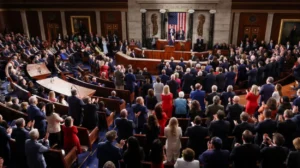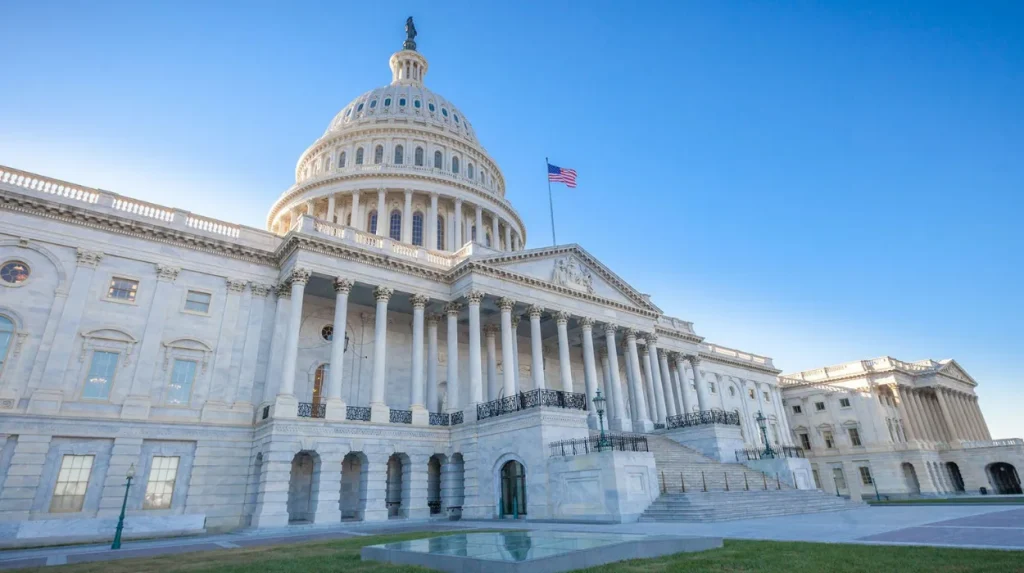
Provisions that are based on the 2025 version of the NDAA US defense priorities are the result of intense re-prioritization of the American defense priorities based on the strategic analysis presented in the 2025 National Security Strategy. The Act underlines the fact that the United States will have to adjust to a security environment that is characterized by the great-power competition that is becoming more intense, the renewed demands on resources, and the changed expectations of allies. It provides a graded set of reforms that will cut down on unnecessary international commitments and reinforce areas of long-term U.S. influence.
Realignment toward strategic stability with russia
The redefined strategy towards Russia is one of the most promising provisions. The NDAA makes strategic stability one of its key goals, when it emphasizes that the long-term security situation in Europe relies on well-managed engagement and not confrontation. Investment in arms control checking, nuclear stance talks and the reduction channels is increased which is a throwback to the well-organized diplomacy structures that have diminished over the past few years. This echoes the feelings of the U.S. policymakers in 2025 who claim that as long as Europe does not escalate, there is no need to try a maximalist approach but to ensure that the communication is dependable.
Renewed emphasis on the western hemisphere
The Act emphasizes an extended security promise to the Western Hemisphere that is based on countering drug trafficking networks and will aid in maritime domain awareness in the eastern Pacific and the Caribbean. This shift is a reaction to accelerating Congressional disquiet over illegal flows out of the region that was reported on several 2025 oversight reports. The NDAA focuses the investment on cooperative initiatives with Colombia, Mexico and Panama, with the notion that hemispheric stability is a platform that supports the expansion of national security objectives.
Shifting posture in the indo-pacific
The other key statement calls on the allies of Indo-Pacific to boost their defense budget and operational preparedness. The Act mentions Japan and South Korea, which declared new 2025 defense budgets at historic highs, as examples of burden sharing that fits the U.S. strategic planning. The act encourages projects on missile defense led by partners, autonomous platforms, and maritime security that aim to decrease direct operational pressure on the United States and still ensure deterrence of the Chinese.
Defense modernization and resource allocations
The 2025 US NDAA has the most significant provisions that enhance a long-term modernization agenda that will ensure the U.S. technological superiority. This is after Congressional testimony earlier this year, in which the officials at the Department of Defense emphasized that without immediate attention, readiness shortfalls in cyber, space, and missile defense would threaten national security.
Investments in advanced technology systems
The Act provides significant investment in hypersonic defense, artificial intelligence integration, secure communications and quantum technologies. It develops a new cross service innovation authority to help speed up the testing and deployment cycles, a step that is aimed at streamlining processes that were previously criticized due to being slow and fragmented. The focus on cyber preparedness is manifested in the enlarged training pipelines and increased public-corporate information-sharing systems, in consideration with issues of major state-sponsored cyber attacks that have been reported across 2024-2025.
Enhancing military infrastructure and workforce sustainability
Much new focus is given to infrastructure modernization, such as improvements to old facilities, and greater resilience, such as energy storage, base hardening, and climate-adaptation enhancements. These are the provisions after a number of 2025 GAO reports that revealed the vulnerabilities of critical military installations. There are also specific recruitment and retention incentives in the Act to ensure that there are no shortages of personnel as the continual problem of the workforce being skilled and balanced.
Evolving alliance structures and geopolitical implications
The major clauses of the 2025 US NDAA indicate a broader shift in alliance policy, in particular, in Europe, where the act describes a more limited role of American security. This change is after arguments in the Congress on how committed programs can be sustainable and how regional partners need to take more responsibility.
Recalibration of Europe-focused initiatives
The Act makes the United States an agent of stabilization rather than the main protector of European security. It urges allies of NATO to raise or exceed expenditure goals and to liaise more closely on acquisition of arms, resilience of supply chains and deterrence planning. This represents the criticism, which was reiterated in early 2025 congress hearings, that European defense systems are still divided in spite of the continuous threats within the region. The Act does not indicate withdrawal, but emphasizes a strategic favor of equal responsibility-sharing.
Diplomatic management of Russia-related security dynamics
The NDAA approach to Russia is notable as being rather restrained in nature, with a focus on arms control and the management of escalation being emphasized instead of portraying Moscow as an unquestioned and overt enemy.
This is a reflection of the diplomatic negotiations in the first half-year of 2025, in which U.S and Russian ambassadors discussed a revised set of risk-cutting mechanisms even as the tensions persisted. Critics, especially in the European foreign ministries have complained that such a position may actually embolden the Russian aggressiveness whilst those who support this viewpoint cite that strategic predictability is needed in the face of the weakened European security environment.
Shifting engagements in the middle east and latin america
The Act lowers the priority of large-scale deployment of the Middle East and shifts the resources to regional partnerships and specific counterterrorism cooperation. At the same time, the reinforced commitments in the Western Hemisphere are an indication of a hemispheric-first strategy, which places importance on challenges that lie geographically close to each other. This bilateral realignment is indicative of a bid to ensure U.S. posture is in accord with all budgetary considerations as well as regional dynamics.
Arms control, nuclear stability, and crisis management
The 2025 US NDAA is a renewed confirmation of the arms control as a necessary part of global stability. This is in line with greater strategic evaluations that bring nuclear escalation as the most dangerous threat globally in 2025.
Reinforcing treaty frameworks and verification measures
The Act backs up the extension as well as strengthening of present treaties including the monitoring frameworks that were initially anchored on the New START framework. Provisions focus on increased technologies of verification and collaborative regimes of monitoring. These actions are reacting to the expertise publications that were made public in mid-2025 and emphasized the necessity of the modernized verification tools in order to guarantee the credible oversight as the nuclear arsenals are modernized.
New risk-reduction initiatives
The act encourages the development of a crisis-communication pathway and exercise of scenario planning with the states with nuclear capability, which would help in the elimination of miscalculations during the times of increased geopolitical tension. This change, which a senior defense official described when testifying in June 2025, was characterized as a restoration of disciplined strategic stewardship, something that was of bipartisan concern as to why there was no dialogue in the recent years which is structured.
Future implications for us leadership and global security
The 2025 NDAA has an unmistakably different focus on clear transition to more sustainable and strategically disciplined defense posture. It is a combination of the technological aspiration and functional realignment to alliance demands and local commitments.
On the one hand, the Act will enhance the critical areas of national defense; however, on the other hand, it poses a question on how the United States will strike the right balance of deterrence, diplomacy and limited resources in an ever-evolving geopolitical environment. The question of how the introduction of these provisions will influence the security of the world will be remained under study by the observers whether the recalibrated approach can endure and show long-term strategic clarity in facing the emerging issues.