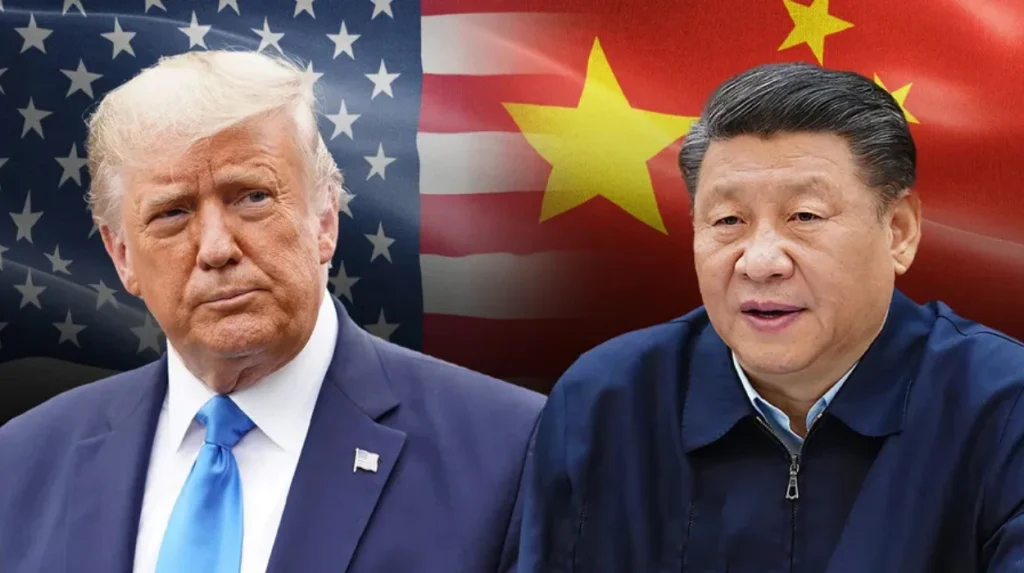
A potential diplomatic visit of President Donald Trump to Asia in October of 2025 will be one of the most impactful foreign interactions of the second term. The trip highlights a sense of urgency and complexity in dealing with a longstanding US-China rivalry that has existed in the domains of trade, technology, and strategic influence throughout the Indo-Pacific. The schedule of Trump is Malaysia, Japan and South Korea, and the last and much expected encounter with the Chinese President Xi Jinping. This meeting was the first that Trump had since regaining office and is full of symbolic and policy implications at a time when the world is filled with economic uncertainty, military flashpoints and alliances.
The visit comes at a sensitive time to Washington. At home, the government struggles with a partial government shutdown and a growing partisan-division in the congress and abroad it is dealing with the pressure to put the trade wars back on track and establish the US influence in a region that is increasingly influenced by the economic strength and assertiveness of the Chinese.
The Geopolitical And Economic Backdrop
The reelection of Trump has seen his administration trying to reposition the US-China relationship in terms of trade by a combination of tariffs and bargain. The main conflict is still pegged on exports of technology, the control of rare earth minerals and agricultural trade. The recent further limitation of rare earths exports by China, a business that is crucial in the world semiconductor and defense market, has increased the issues of insecurity in supply chains of the US.
The envoys of Trump have been advocating concessions to include more Chinese buying American farm products and access by US firms in the Chinese markets. But China has been very adamant in its position and sees such requests as not being in line with its long term China industrial policies. According to market analysts, individual stocks around the world have been moving drastically throughout the tour with investors on the balance between a prospective temporary trade detente and the potential for further escalation.
Regional Diplomacy And Economic Outreach
Although China is the most targeted, the overall strategy of the Asia trip is to strengthen US relations with the regional partners. Trump was present at the ASEAN meeting in Malaysia to facilitate diversification of supply chains and energy partnership and this indicated the transition into economic partnerships outside the sphere of Beijing.
In Japan, Trump had a meeting with Prime Minister Sanae Takaichi to discuss common manufacturing and defense investments, especially in the area of semiconductor manufacturing and green energy. His visit to South Korean President Lee Jae-ung was about strengthening military preparedness and technology collaboration that are central to overcoming the South Korean resurgent missile program and the growing Chinese regional power.
Strategic Underpinnings
The economic dialogue is still based on security concerns. The US is striving to encompass trade policies and defense policies under Indo-Pacific Strategy 2025, to tie economic resilience with strategic deterrence. Such a bilateral strategy indicates that Washington is aware that the rivalry with China has shifted to business and military spheres.
The Trump-Xi Encounter: Symbolism And Substance
The highlight of the tour is the meeting between Trump and Xi in the APEC summit in Kuala Lumpur. To both leaders, it is a chance to reset the relationship without compromising the fundamental interests. Whereas Trump is a deal-maker, Xi is more of a long-term strategic consistency than transactional diplomacy. According to the experts of the Carnegie Endowment, the unequal nature of the political systems and leadership priorities is such that they cannot make any quick compromises even though both sides are aware of the inter-dependence of their economic interests.
Core Negotiation Themes
The major concerns of the debates include trade imbalance, Intellectual Property protection and rare earth exports. The US aims at getting the long-term supply guarantees of the crucial minerals, which are vital in the process of defense production and electric vehicle manufacturing. China, on the other hand, uses its domineering position in the market as a bargaining power and urges Washington to relax its technology transfer and investment screening policies.
Another major subject is the trade of agriculture. Trump hopes to rekindle pacts of massive Chinese ones on American soybean and corn, which will resonate with US agricultural constituencies in the run-up to the 2026 midterms. However, the recent diversification of trade of Beijing towards Brazil and Russia undercuts the bargaining power of Washington in this regard.
Technology And Strategic Rivalry
The greater problem of decoupling of technology is still there. The export of advanced semiconductors by Washington and the campaign of Beijing to become technologically independent, enshrined in the Made in China 2030 program, is an indicator of structural polarization. The Trump delegation led by Commerce Secretary Linda McMahon stresses that they should have some sort of guardrails to regulate competition without completely decoupling the global innovation chains.
Domestic Pressures And Global Repercussions
The Asia trip of Trump goes through the backdrop of a domestic government shutdown which makes it difficult to project that his administration is stable on the international front. This shutdown that was instigated by a budget dispute concerning funding borders has raised the question of whether the administration is coherent enough to handle simultaneous crises that it is facing. Analysts observe that such internal tension would discredit the validity of US undertakings during the visit, especially in long-term regional investing projects.
Market And Diplomatic Reactions
The world markets are at alert. The S&P 500 and the Nikkei 225 recorded slight increases after the first meetings of Trump, which pointed to an optimistic demonstration cautiously. However, any inability to achieve practical advancements with China can turn all these trends the other way. Southeast Asian countries, in their turn, consider the tour as a possible reset button in the US involvement, the field where Washington has been viewed as irregular in comparison with the Belt and Road pledges of China.
Perceptions Among Asian Partners
There are mixed regional responses. Although Japan and South Korea are eager to see the attention of the US revived, there are some members of the ASEAN who are worried that they might get sucked into the two-polar conflict. According to Malaysian Foreign Minister Saifuddin Abdullah, regional stability is not about power polarization, but about long lasting multilateral interaction, which is an element of perception that Asia is a region that is interested in balance as opposed to alignment.
Future Implications For US-China Relations And The Indo-Pacific
The 2025 Asia tour is a probe and a threshold to US diplomacy. The objective of the administration to transform trade architecture and discourage the assertiveness of China regionally is indicative of change in the overall global order. The focus on economic strength, technological autonomy, and reinforcing alliances indicates the persistence of the competition scheme of the long-term format instead of returning to the dynamics of engagement.
Prospects For Cooperation
At the same time, there are pragmatic spheres of cooperation despite the tensions. Climate finance, global food security, and cybercrime countering are some of the vested interests of the two countries. The difficulty with this kind of shared concern is balancing that without undermining strategic deterrence and this has been an elusive challenge to the various administrations.
The Broader Regional Equation
In the case of the Asia-Pacific, the visit by Trump is a reclaim of the US presence in the region as allegiances shift. This is because as countries branch into new trade relationships and invest in defense modernization, it is up to Washington to turn diplomatic overtures into tangible regional advantages that will help it retain influence against the deep-rooted Asian economic presence.
The unfolding trajectory of US-China relations, shaped by Trump’s high-stakes diplomacy, captures the essence of modern geopolitics, a blend of rivalry, interdependence, and strategic calculation. Whether this tour marks the start of a delicate thaw or merely a pause in a long-term contest remains to be seen, but it underscores a central truth of 2025: in the Indo-Pacific, diplomacy has become the frontline of competition.