The official end of the Joint Comprehensive Plan of Action (JCPOA) in September 2025 was a breakthrough in the nuclear path of Iran as well as world diplomacy. Initially created in 2015 to restrict nuclear work of Iran in return of sanction lifting, the deal started to collapse after the withdrawal of the United States under the Trump administration in 2018. Later years of mutual non-compliance, tightening of sanctions and lessening of inspections led to the eventual collapse of the agreement.
Being left with a legacy of mistrust and strategic ambiguity, the Biden administration now has to develop a new framework to replace the old one, but not to provoke the situation of nuclear proliferation and to not start escalation of the situation using the army means. The stakes are high: the nuclear capabilities of Iran have been also developed substantially since 2019, and world opinion on the way forward is still shaky.
The State Of Nuclear Negotiations In 2025
In early 2025, the United States and Iran started again to hold indirect negotiations, mediated by Oman and Austria, and within the presence of the European Union and IAEA observers. The aim of these sessions was to build a new diplomatic base and consider the weaknesses of the JCPOA. The central issue was Iran uranium enrichment that has now reached 60 percent purity near to weapons grade. Washington insisted on the dismantling or foreign export of Iranian stockpiles of enriched uranium, but Tehran wanted to keep it to use in so-called civilized energy.
Both parties discussed a gradual plan: Iran would initially lower the enrichment rates and open up the IAEA access at the cost of gradual sanctions removal. However, the lack of agreement on the rights of inspections and the U.S. insistence on the option of long-term guarantees against unilateral withdrawal put the development at a halt. The Iranian negotiators too demanded that the secondary sanctions on banking and oil exports should be removed as they considered them key to the restoration of economic stability.
Challenges And Strategic Considerations
Diplomatic challenges are aggravated by the political situation in Iran. Supreme Leader Ayatollah Ali Khamenei manages his strategic ambiguity in favor of dialogue but it was not coupled with major concessions; President Masoud Pezeshkian supports economic normalization by means of limited compromise. This internal polarization makes the Iranian diplomatic staging difficult.
On the outside, Israeli airstrikes on Iranian nuclear centres in Isfahan and Natanz in mid 2025 have aggravated the situation. Even though these measures successfully momentarily derailed the centrifuge activities of Iran, they further emboldened Tehran on its will to push its program. In July, U.S. National Security Advisor Jake Sullivan observed that military deterrence can purchase time but only diplomacy can make long-lasting restrictions. This highlights the fact that Washington realized that pressure could never give long lasting results.
The Broader Geopolitical Context And Ramifications
The failure of the JCPOA has redefined the security situation of the Middle East. Israel sees nuclear progress and developments of Iran as a threat to its existence, and responds periodically with military actions and cyber-attacks. Gulf states and especially Saudi Arabia and UAE have regained interest in having their own nuclear energy programs, and this is raising the concerns of regional arms race.
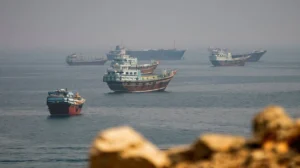
The conflict between Iran and the Western-oriented states is also spreading to the sea. The 2025 attack on commercial ships in the Strait of Hormuz and Red Sea by Iranian proxies highlights the fact that nuclear diplomacy mingles with the more extensive approaches to deterrence in the region. The U.S. has stepped up naval patrols indicating that it is determined to secure its security in important shipping routes as it works towards diplomatic involvement parallel to it.
International Reactions And Multilateral Stakes
Signatories of European JCPOA: France, Germany, and UK- have been frustrated by the little cooperation shown by Iran towards IAEA inspections but have been promoting negotiation instead of confrontation. Reinstatement of UN sanctions with the help of the system of snapback has been opposed by Russia and China who claim that the system of the snapback is not legal at all in the post U.S. exit of the deal.
The increasing economic relations between China and Iran under the 25 year cooperation agreement have also given Tehran alternative sources of finance, which has diminished the effectiveness of the western sanctions. Reaching a similar level of performance, Moscow, which is also isolated by Western sanctions against Ukraine, has increased military and energy cooperation with Tehran. These balances are indicative of an increasing multipolarity in nuclear relations where U.S. leverage is under fresh geopolitical limitations.
Prospects For A New Nuclear Framework Under Biden
The policy of President Biden is aimed at re-engaging diplomatically and deterring. The aim of the administration is to develop a verifiable, constrained nuclear system that denotes the technological advancement of Iran, but restores international supervision. The stricter inspection regimes with the IAEA Additional Protocol and a limit of 20 percent on the level of enrichment would be the best additions of the new deal.
However, political dissent within the country restrains the flexibility of Biden. Critics in congress feel that fresh diplomacy rewards Iranian infractions, and the progressive camps focus on avoiding another war in the Middle East. In Iran, nationalist hardliners do not like any compromises that can be seen as surrender. The domestic sceneries also minimize the political arena of compromise which is likely to lead to the prolonged stalemate.
Economic Leverage And Sanctions Relief
Washington enjoys a lot of economic power due to its influence on the financial systems of the world. Nevertheless, excessive application of sanctions has made them less effective as deterrents. Partial accommodation by cryptocurrency channels, barter trade as well as regional relationships has allowed Iran to have partial economic stamina. The task of the Biden administration is to get the level of sanctions relief orchestrated in a way that is motivating to co-operate without seemingly giving up on the strategic position.
Iran, in its turn, does not consider the removal of sanctions to be an option to resume any contract. The association between economical relief and absences is evidenced by the recent statements of the Foreign Minister Abbas Araghchi who wrote that the base of mutual trust is economic normalization.
Regional And Global Implications
The rise or fall of the diplomatic efforts of Biden will be felt throughout the Middle East. The new settlement would stabilize the energy markets, alleviate inflationary pressures and decrease tensions in the Gulf in terms of security. On the other hand, defeat may stimulate the spread of nuclear weapons, and encourage local forces to seek their own deterrence.
The fate of energy security in Europe, which is largely pegged on the stability of the Gulf following the war in Ukraine, is still bound to the result. In the meantime, the IAEA as a nuclear watchdog relies on regaining access to inspection in Iran. The interplay of energy, security, and diplomacy puts an unparalleled burden on the U.S. leadership in the next few months.
Navigating The Path Ahead
The termination of the JCPOA does not mark the end of diplomacy, it marks the beginning of a more complicated period in which verification, trust, and strategic patience will be the decisive elements. The international community is listening to the actions of Washington and Tehran as each tries to arrive at the next step either to de-escalate or confront each other.
The negotiation of a deal is not just the task that Biden has to overcome but rather a chance to create the structure which will not be damaged by the elections and geopolitical changes. In the case of Iran, it is a choice between remaining isolated or becoming a part of the world that is becoming more and more economically dependent and technologically transparent.
The contest over Iran’s nuclear future thus encapsulates a broader struggle of the 21st century, how states navigate security, sovereignty, and diplomacy in an era where trust is scarce but the stakes are existential.