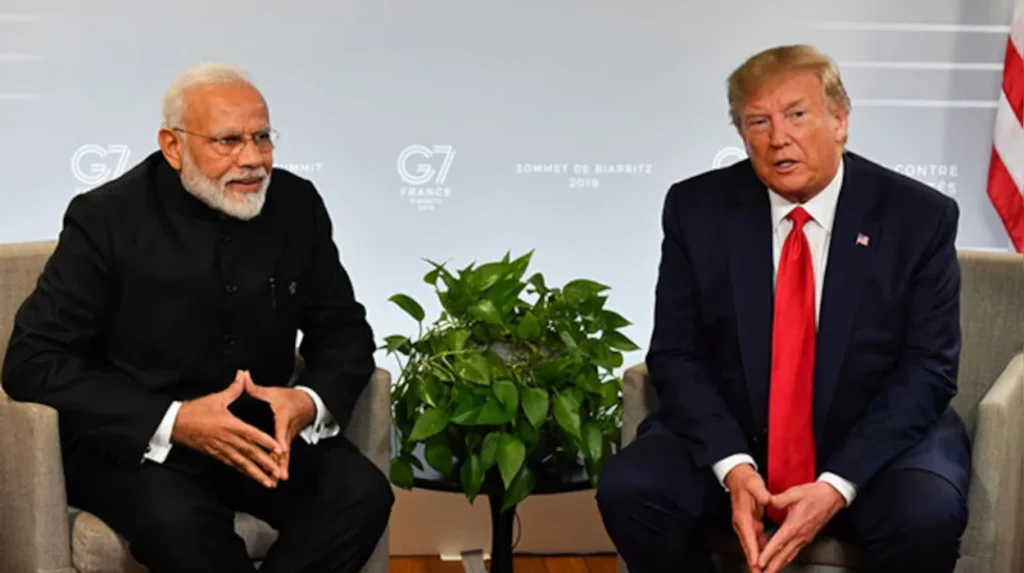
In August 2025, US president Donald Trump nearly doubled tariffs on Indian imports, imposing a 25% base rate plus a 25% surcharge, totaling 50% on many goods. The move, viewed as retaliation for India’s continued purchase of discounted Russian oil despite U.S. warnings, escalated trade tensions between Washington and New Delhi.
The Indian export of goods in the market like textile, gemstones, furniture, chemicals and footwear are impacted by the increase in tariffs. These products have been the foundation of the Indian trade surplus with the United States since more than a decade. Current policy change has contributed to the devaluation of currency in India and the fluctuations in the stock market, particularly in the economically reliant areas such as Gujarat which rely on export-oriented industries.
Economic And Geopolitical Implications
Whether to strike India during a period of increased global competitiveness with China and Russia has cast doubt on the wisdom of both economists and diplomats. Opponents believe that such a move weakens the Washington strategic alliance with one of its most critical partners in Asia.
Strategic Misalignment Amid Global Power Shifts
India has been widely seen as a centre of action in the new world order. As the relationship between China and the US gets more strained, and the war in Ukraine persists, Washington has been eager to make India a counterpoise to Chinese influence in Asia. But the intensification of tariffs by Trump brings this to a halt.
Edward Price, an analyst and professor at New York University, warned that the tariff move is “reckless and damaging to US national interests.” He emphasized that alienating India plays directly into the hands of both Moscow and Beijing, which benefit from reduced Western influence in South Asia.
India’s Diplomatic Balancing Act
Prime minister Narendra Modi has adopted the policy of strategic independence. India has also been cooperating with the US in military and technology, but has declined to suspend its Russian energy imports on the grounds of national energy security. At home, Modi has been promoting his own Made in India initiative as an insulation against the shocks of trade, pushing home producers to lessen their reliance on the global market.
Contrary to the social guarantee, the Indian government has been very unhappy with the new tariffs describing them as discriminative and politically inclined.
Diplomatic Strains And Political Backlash
Negotiations between Washington and New Delhi on trade had been slow all through the year of 2024, however, the August tariff hike has effectively put the talks on ice. The two sides are already frustrated by five collapsed trade negotiations.
Unmet Expectations And Bilateral Deadlock
Indian negotiators have pushed for tariff terms similar to those offered to Japan, South Korea, and the EU. They argue that India, as the world’s largest democracy and a long-time US partner, deserves equitable treatment. Instead, they face steeper tariffs than China, which imports more Russian oil than India.
The stalemate has revealed lapses in the strategic coherence of Washington. The price of trade normalization in terms of geopolitical accommodation has further complicated the process and derailed economic and diplomatic collaboration.
Political Reactions In Washington And New Delhi
The tariffs have been condemned by Indian trade officials as politically opportunistic, and opposition parties in the US have expressed concerns with regard to the effects they will have on bilateral ties. The harm caused to years of bipartisan work to strengthen relations between the US and India has been brought to attention by Indian-American lawmakers, especially those in the Democratic Party.
In the US, the rural and middle western states worry about the possibility of India retaliating with tariffs that could destroy agricultural exports and global supply chains. This is likely to have a political backlash on future congressional campaigns, especially in those districts that largely depend on exports.
Sectoral Impact And Broader Trade Effects
Dislocation of the major Indian industries economically and insecurity of the American investors in India have been the short-term consequences of the tariffs. This upheaval threatens to undo the US-India economic interdependence that has characterized the last 20 years of US-India relations.
Effects On Indian Exports And Domestic Employment
Indian exporters have reported order cancellations, reduced margins, and growing inventory backlogs. Sectors such as jewelry, seafood, pharmaceuticals, and IT services face reduced access to US markets. This threatens job stability, particularly in small and medium enterprises concentrated in export hubs like Surat, Mumbai, and Coimbatore.
As firms absorb the shock, economists predict a short-term decline in export revenues. Domestic unemployment could rise if orders do not recover in the next fiscal quarter.
American Businesses And Investment Risks
Policy volatility has increased the risk of major US firms with substantial operations in India such as Microsoft, Google, and JPMorgan Chase. The tariff conflict makes long-term investments more difficult and disrupts cooperation in new technologies and fintech, as well as infrastructure efforts.
The American chamber of commerce in India has already warned that political risk may discourage future US investments particularly in high growth areas such as digital services and green energy. It is now up to Washington to assure businesses that trade tension will not continue to escalate.
Policy Alternatives And Strategic Reassessment
Those who oppose the tariff plan of Trump are demanding instant de-escalation. Mutual trust and economic cooperation are currently being cited as major pillars to a stable Indo-Pacific partnership.
The Case For De-escalation
Edward Price has publicly advocated a reversal of the tariffs and a formal apology to India. He argues that restoring relations is essential for broader US goals in Asia.
“India is not merely a trade partner, it is a strategic cornerstone for American influence in the Indo-Pacific,”
he said in a televised interview.
According to Price, tying trade policy to coercive diplomacy only weakens American credibility. He recommends rebuilding bilateral relations on a foundation of mutual respect and economic complementarity.
Geopolitical Risks Of Alienation
India’s refusal to yield to US demands has opened doors for expanded economic engagement with China and Russia. New oil deals, defense procurements, and BRICS cooperation are signs that New Delhi is diversifying its partnerships in response to Western pressure.
This diplomatic drift is not yet irreversible, but it highlights the strategic cost of trade aggression. India’s alignment in global forums on digital regulation, climate policy, and South-South cooperation could shift away from Western interests if current tensions persist.
Emerging Voices On The Trade Conflict
Public commentary on the tariff war has intensified as its global implications become clearer. Analysts warn that America risks losing one of its few reliable democratic allies in a volatile region.
One such voice is Sigharth, a researcher and policy commentator, who wrote:
“Trump’s tariff war with India is not just an economic error, it’s a strategic blind spot that could realign global alliances for years to come.”
Their analysis underscores a growing belief that this conflict may serve adversarial powers more than it pressures India. The loss of goodwill and trust may outweigh any gains from temporary economic leverage.
Repercussions For The Future Of US-India Relations
The US-India relationship, once seen as a cornerstone of 21st-century global stability, is now at a crossroads. The imposition of punitive tariffs has eroded the diplomatic capital built over two decades of cooperation. While both sides remain committed to long-term partnership in principle, the tone has shifted to one of caution and recalibration.
As India moves to strengthen ties with alternative allies, US policymakers must assess whether coercive trade tools still serve American strategic objectives. Trump’s tariff war with India has opened a debate not only about economic policy, but also about the cost of misaligned diplomacy in an era of multipolar rivalry.
The next steps taken by both nations will determine whether this rift becomes a temporary disruption or the beginning of a deeper divergence in global alignments.