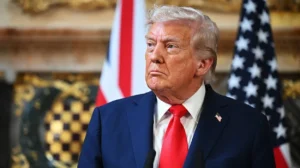
By 2025, Chicago remains central to debates over urban crime and federal power. After Labor Day weekend shootings left eight dead and 58 injured, President Trump renewed calls for National Guard deployment, framing Chicago as a “hellhole” and “the world’s most dangerous city” to justify his tough-on-crime stance.
However this impression is refuted by the statistical trends of the Chicago Police Department. Monthly data through August 2025 show that shootings and homicides decreased by 37 and 32 percent respectively in that period in 2024. Overall violent crime has fallen by over 22 percent, placing the current trend in Chicago in line with national crime trends of post-pandemic declines. These statistics highlight a lack of connection between rhetoric in politics and low level facts.
Although this quantifiable change has occurred, episodic violence and media amplification still define the crime narrative of the city, which results in an enduring loss of contact with social perception and scientific trends. The same gap is now at the core of discussions on whether militarized interventions are justified or needed.
Justifying federal intervention through public safety concerns
Those who support the use of troop deployment claim that high profile violent acts are symptomatic of other unresolved issues that require extraordinary solutions. The benefits of a federal effort to address the worst of the worst criminals, especially around communities with long-standing gang issues and illegal drug markets, are stressed by Trump administration officials, including Homeland Security Secretary Kristi Noem.
In this respect, the deployment of National Guard is painted as the last-resort measure to restore law and order when local governance is held to be insufficient. Drawing on these earlier deployments in the 1990s to Los Angeles and during the civil unrest in Washington, its proponents claim that an interim federal deployment can give a sense of stability, relief to overwhelmed police departments and assist in preventing further unrest.
This position, too, is symptomatic of a greater political formation, where urban violence is framed as a sign of structural policy inefficiency of local leadership, which can reinforce calls to have the federal police patrol the safety of the people.
Federal responsibility versus local paralysis
Those advocating intervention stress that the federal government has a constitutional obligation to act when local authorities fail to protect residents. Trump’s comments on Chicago’s leadership accuse the city of “refusing to clean up its streets,” a claim echoed by some Republican lawmakers who assert that political considerations hinder effective policing.
They argue that a sustained federal role is essential not only for immediate security but also for symbolically reasserting control in cities where violence is politicized and often racialized. Within this framework, National Guard deployment is not simply about tactical response but also about signaling resolve and control.
Local leadership rejects militarized response and questions intent
Illinois Governor JB Pritzker and Chicago Mayor Brandon Johnson have rejected Trump’s proposed deployment, citing constitutional overreach and the risk of exacerbating tensions in already vulnerable communities. Mayor Johnson’s “Protecting Chicago Initiative,” announced in early September 2025, authorizes legal and administrative action to prevent federal encroachment without municipal consent.
City officers claim that militarized reactions destroy civic trust, particularly in the Black and Latino communities that have long been affected by over-policing. They argue that historical experience of military occupation of cities has yielded few benefits and in many cases have generated unrest instead of reducing crime in a sustainable manner.
Some other legal scientists and constitutional philosophers have also presented their own opinions and have raised concerns that in cases where federal troops are deployed unilaterally, there are indeed grave fears of federalism, particularly in situations where the local governments are categorical in their rejection of federal activities. The situation is indicative of underlying conflicts between the prerogatives of national security and local democratic governance.
Community impact and alternatives
Opponents of federal intervention note that the crime issue facing Chicago is as severe as it is, but that community-based solutions are proving effective. Reductions in shootings and homicides are credited to the combined efforts of violence prevention programs, mental health services, and youth involvement opportunities that work to interrupt the factors that lead to violence.
Mayor Johnson and the city council members stress that opportunity, rather than occupation, is the source of sustainable safety. They provide the example of the new Office of Community Safety opened in the city early in 2025, which organizes intervention crews in the most dangerous zones and has so far been credited with helping to deescalate retaliatory violence in dozens of cases.
Another source of opposition to militarization is the issue of the optics and implications of federal presence. Most residents are worried that the presence of armed troops in their communities will further marginalize communities that are already struggling with social marginalization and economic precarity.
National political stakes shape public narratives
The Chicago troop scandal represents the focus of the current national discussions related to the development of presidential authority in the area of domestic law enforcement. The stance of Trump is part of a larger political game of establishing executive authority in the city territory of political adversaries, often by positioning such an area as the territory of lawlessness that needs correction on the federal level.
This stretches federal limits in the constitution and specifically the Insurrection Act that gives presidents minimal power to send their troops into the country without consent of the state. The language of the act is uncertain and whilst it has not been frequently invoked throughout the history of the United States, it may be invoked as it is understood to pose a tension between federal will and local freedom.
Opponents contend that empowering the federal police to patrol with little or no cooperation with local administrators- may create dangerous precedents. Here, there is a greater blurring of the boundary between emergencies and politics.
Public opinion and electoral implications
In mid-2025 surveys, crime is still among the three leading issues among urban voters. But national polls indicate that there is an apparent split in popular opinion. Although 81% of the people interviewed feel that urban crime is a big problem, 32% say the federal government ought to take over the local police operations. All these figures indicate complicated popular sentiments-fear of danger goes hand in hand with fear of government intrusion.
This gap is especially applicable since the midterm elections are coming in 2026. His portrayal of Chicago as a security failure by Trump is both an attack on Democratic leadership as well as a call to action to suburban and rural voters who fear the spillover of crime. On the other hand, Democratic leaders exploit the situation to raise issues of authoritarian inclinations, civil rights, and local self-determination.
Toward a balanced response rooted in community needs
Even though the recent controversy is centered on the role of federal troops, bigger discussions involve the role of integrated, neighborhood-based approaches to civil security. Experts opine that the only way to decrease crime is to invest in housing, education, healthcare, and workforce development which are all elements of a long-term plan to decrease violence.
New models that have emerged in cities such as New York and Minneapolis demonstrate that these investments can lead to a significant positive change when paired with responsible policing and community leadership. The experience of Chicago makes it possible to believe that relying on local institutions while also controlling and supporting them might be more sustainable than outside intervention.
It has been pointed out by public commentators such as SD73660 that any attempt to deal with the crime should avoid reactionary measures that compromise civil liberties or community solidarity.
Because cities throughout the United States have been wrestling with the changing definition of crime and power, the experience of Chicago becomes a test case of how to balance the interests of the federal government, city leaders, and the rights of the communities that seek to establish their own vision of what it means to be safe.