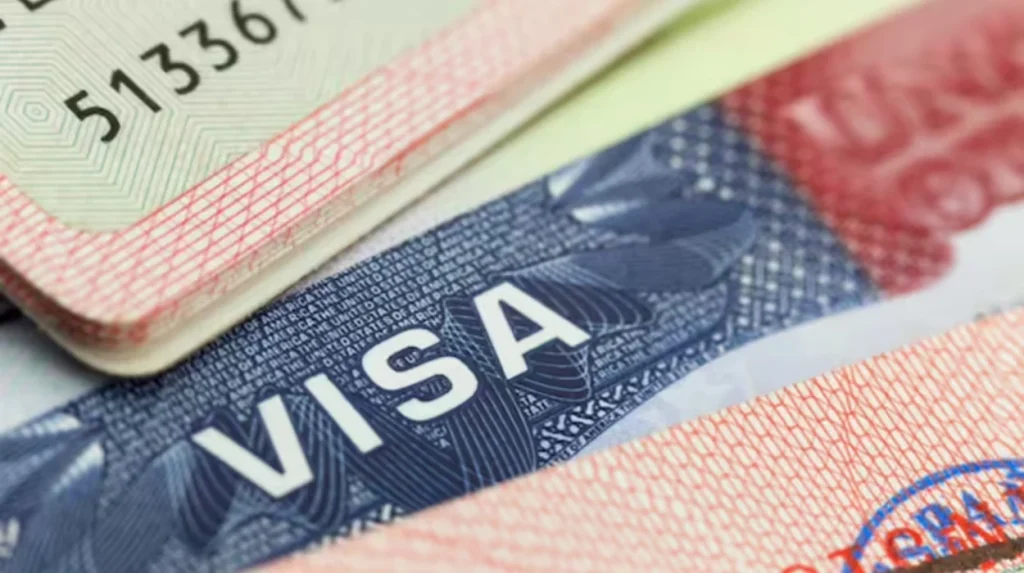
By the year 2025, enforcement of immigration by the Trump administration has taken a differentiating step of enforcing this restriction not only on legal violations but also on political articulations. This year, the rejection of over 6,000 student visas points to how swell the U.S. immigration policy has entered a more complicated nexus of law enforcement, foreign policy, and national identity. Even though most of the cancellations were served on the basis of a criminal violation and overstay, an increasing number of cancellations have been based on political activism incompatible with U.S. interests.
The renewed emphasis on visa control is in keeping with the more general emphasis of uninhibited national logics promulgated by President Trump and his rhetoric of America First, by focusing on domestic stability and ideological coherence rather than accustomed free academic and civic relations. The prevailing factor of more emphasis on international students and particularly those who get involved in political activism is a change in paradigm of academic diplomacy to securitized gatekeeping.
Legal justifications and executive authority
Based on the statistics published by the State Department in July 2025, most revocations on student visas described a particular violation of the law. These were crimes like DUI, assault and theft which took care of about 4000 of the cancellations. The Immigration and Nationality Act gives powers to removal of visas of non-citizens who indulge in criminal activity that contravenes the provisions of their entry.
Such exclusions are within the bounds of what immigration enforcement would be. However, what sets this wave of cancellations apart is the expanded use of national security provisions. Between 200 and 300 visas were revoked under INA 3B statutes addressing “support for terrorism.” This provision, traditionally reserved for individuals affiliated with proscribed groups, is now being applied to students involved in activism that the administration views as undermining U.S. strategic interests.
Political speech and national security designations
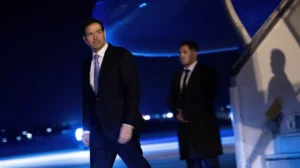
Secretary of State Marco Rubio emphasized that a visa is not a right but a conditional privilege contingent upon alignment with U.S. law and values. Within this context, conducts that are viewed to show allegiance to an organization which has been labeled as terrorist groups- including Hamas- have been employed as a reason behind the cancellation of visa. In a vivid way Rubio’s speech stood in support of the earlier assertion that any person engaging in a protest or campaign against allies of the U.S could be reviewed and weeded out.
The disposition of the administration has brought about the great expansion of the interpretation of political activism. Practically, now student engagement in protests, opinion writing, or even on social media can be interpreted as being within the purview of revocation when they are connected to counter narratives against American foreign policy. The confusion relating to these terms of designation has given rise to a great anxiety on the question of the diminishing due process rights of foreign nationals.
Scrutinizing activism and speech in the digital age
In 2025, the Trump administration implemented standards that mandate future and prospective visa applicants to state all their social media outlets utilized within the five backdated years. These platforms are filtered out to identify any communication that could be considered as an indication of an “anti-American” sentiment, or favour of a contentious political force, or affiliation to the sympathisers of extremist terrorists.
The proportionality, fairness and constitutional questions concerning the application of this social media-driven profiling system have arisen. Among the most well-known examples, is the case of a Turkish student who had been detained at Logan Airport following publication of an op-ed co-written with his peers, in which they criticized the reactions of U.S. universities to the Gaza conflict.
Challenges to academic freedom and institutional response
Higher education leaders have expressed concern that such policies are undermining the foundational principles of open inquiry. Miriam Feldblum, president of the Presidents Alliance on Higher Education and Immigration, remarked that universities have faced increasing pressure to survey and report international students for political expression. Many institutions now require faculty and student organizations to report external guest speakers or affiliated events that touch on foreign conflicts.
This internal regulation, driven in part by federal funding dependencies, has led to what some administrators describe as “pre-emptive censorship.” The implications for student discourse, especially among Middle Eastern and South Asian populations, are significant. Academic institutions now find themselves balancing compliance with federal policy and commitment to free thought, often without clear guidance or legal protections.
Policy implications beyond immigration control
The student visa revocations are not solely about immigration enforcement. They are also a form of diplomatic signaling—reinforcing America’s red lines in foreign policy through domestic immigration levers. Through its stern action-takings against students undertaking pro-palestinian or anti-Israel activism, the administration aims at discouraging actions that it deems to destabilize strategic relations especially with allies such as Israel and Egypt.
This is not only done with the student population. The March 2025 National Security Strategy calls out ideological alignment as a temporary admission entry bar to the U.S., which previably appeared in previous Trump-era policies. Practically, this means that foreign nationals coming to the U.S. on any visa should not publicly take the positions that the U.S. government considers adverse to the interests of the nation, even in the cases when that position is taken outside the U.S.
Impact on U.S. academic competitiveness
Such visa policies Jefferson coincided with the overall decrease in the numbers of foreign students. According to the institute of international education in 2025, there had been a 14 percent decline in international students’ applications to universities in the United States due to several reasons with most indicating political uncertainty as one of their major aims to defer or reject their offers. Competing countries, including Canada and Germany, have seen a proportional rise, offering more secure environments for politically active students.
The reputational impact on the U.S. education sector is already visible. Once seen as a global hub for academic freedom and critical thought, the U.S. is now viewed in some quarters as politically restrictive. This perception threatens not just enrollment figures but the long-term soft power that American education has historically provided.
Broader legal and political consequences
The Trump administration’s expansive use of visa revocation reflects a legal evolution in how non-citizen presence is managed. While courts have upheld the executive branch’s discretion in immigration matters, the scale and opacity of these revocations have reignited debates over procedural safeguards. Many of the affected students report having received no prior warning or hearing before cancellation.
This person, John Hansler, a media analyst, has spoken on the topic and summarized the situation accordingly: the surge in visa revocations reveals a growing pattern of equating political dissent with national threat, posing deep questions about immigration enforcement and the erosion of academic neutrality.
The State Department has revoked more than 6,000 student visas this year, a State Department official said Monday, as the Trump administration continues its crackdown on some international students it claims have broken the law.https://t.co/r5bpdR5rXt
— Jennifer Hansler (@jmhansler) August 18, 2025
As universities, civil liberties groups, and international observers continue to respond, the challenge lies in determining how far a nation can—or should—go in redefining activism as a threat. These decisions will shape the legal precedent and public ethos governing cross-border education, freedom of speech, and international engagement in the years to come.