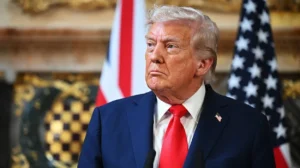
The recent statements by the U.S. President Donald Trump that he will encounter the Russian President Vladimir Putin on the territory of Alaska on the 15th of August 2025 thundered throughout the international political domain. It will be the initial face-to-face meeting between the two leaders since Trump returned to the White House in January 2025 as well as the most significant one since the full-scale invasion of Ukraine was launched by Russia in 2022.
Fashioned as a possible peace breakthrough moment on ending the war, the Trump Putin Meeting in Alaska 2025 follows over 3 years of continuous conflict, and hundreds of thousands of war casualties, and displacement of millions, and counting. However, the move to conduct negotiations without Ukrainian involvement has sparked a major backlash in Kyiv as well as in Washington raising eyebrows among close allies of the United States.
Alaska as a Strategic and Symbolic Venue
There is a lot of symbolic weight in choosing Alaska as the place where the summit is held. Having been bought off Russia in 1867, the state is geographically adjacent to the Russian territory, being only on the other side of the Bering Strait, virtually making it both geographically close but politically symbolic of the U.S.-Russian relations.
The Kremlin has termed the decision as being quite logical because the ease of accessibility to both leaders can be evidenced. Yet critics point out that holding the talks thousands of miles from the Ukrainian front effectively sidelines Kyiv both physically and diplomatically.
Arctic Geopolitics
The Arctic itself is emerging as one of the major geopolitical states of play with immense unexplored resources and strategic shipping channels becoming accessible as ice melts away. Meeting in Alaska, Trump and Putin will not only be discussing Ukraine, but implicitly accept the geo-strategic significance of Arctic influence in their more general bilateral relations.
Exclusion of Ukraine Fuels Tensions
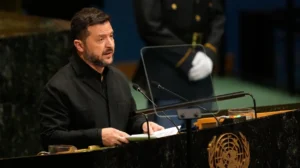
Any agreement struck without the involvement of Kyiv is as good as dead according to the President of Ukraine Volodymyr Zelenskyy. He has emphasized the fact that he will not negotiate any sovereign land by laying it on the table and surrendering it to Russia at the expense of national and international values.
“Any decisions that are without Ukraine are at the same time decisions against peace,”
Zelenskyy stated, warning that side deals would embolden Moscow’s aggression. This message resonates strongly among Ukrainians who have endured years of bombardment and occupation.
Territorial Swap Proposals Stir Alarm
One of the most contentious topics expected in Alaska is the possibility of territorial swaps. Trump has hinted at such arrangements, saying both sides are “looking to get some back” and that there could be “some swapping” of land to “the betterment of both.”
Kyiv’s reaction has been unequivocal—no land will be surrendered to Russia. Zelenskyy has called these suggestions unacceptable, insisting that any peace deal must restore full territorial integrity, including Crimea and the Donbas region.
Risk of a Kremlin Victory
Analysts warn that sidelining Ukraine while discussing territorial concessions could be perceived as a major diplomatic win for Putin. Such an agreement might not only undermine Ukraine’s sovereignty but could also set a dangerous precedent for resolving international disputes through coercion.
Stakes for Trump and Putin
For Trump, delivering on his campaign promise to resolve the Ukraine war is a defining foreign policy test of his second term. A breakthrough could bolster his global leadership image; failure could undermine both his credibility and America’s standing with NATO allies.
Putin enters the talks with battlefield leverage and control over occupied territories, but also with mounting economic strain from sanctions and a costly war effort. Both leaders face domestic and international pressures that will shape their negotiating positions.
Economic Pressures Shaping Diplomacy
Russia’s war effort has depleted fiscal reserves, pushing Moscow to seek new trade partnerships to offset sanctions. Meanwhile, Trump’s administration has escalated economic pressure by imposing tariffs on India for continuing to purchase Russian oil, signaling a willingness to penalize even strategic partners to enforce sanctions discipline.
Vice President JD Vance has held quiet consultations with European security advisers, underscoring ongoing NATO coordination ahead of the Alaska summit. While there is no expectation of an immediate breakthrough, the meeting alters the diplomatic climate and raises the possibility of a phased ceasefire.
Public and Expert Reactions
The summit announcement has divided opinion across capitals. European leaders have been cautiously optimistic over a new dialogue but extremely worrying by the omission of Ukraine. The Kremlin officials have put the meeting as a sign of thaw in relations with America.
In his interview with this news channel, this individual has provided his voice on the subject, by mentioning the significant diplomatic consequences of the summit in terms of regional stability and global conventions. He raised the risk of ignoring Ukraine in the talks about peace and cast doubt on the sustainability of any such agreement unless negotiated in accord with Ukraine.
The Trump Putin meeting in Alaska August 2025 brings up very important questions on how the peace shall be achieved in the Ukraine
In the U.S., Trump supporters believe that the summit is a radical measure in putting to rest the war, and others are worried that this can justify the Russian advantage and lose friends in NATO.
BREAKING: Next Friday, August 15th 2025 is the Trump–Putin meeting, and a lot is riding on IT, especially grain prices and more importantly, oil. The human cost goes without saying, it’s a given how horiffic this war has been. pic.twitter.com/fR7LIF04yY
— Justin Pulitzer (@JustinPulitzer) August 8, 2025
In the U.S., Trump supporters see the summit as a bold step toward ending the war, while critics fear it risks legitimizing Russian gains and alienating NATO allies.
Broader Geopolitical Implications
Meetings are likely to cover the Ukrainian desire to join NATO, Russian requests to stop further expansion of NATO and possible constraints on Ukrainian military resources. These issues have been the red lines of Moscow even prior to the invasion.
The summit will therefore be a test of the U.S. commitment towards the open-door policy followed by NATO and also the guarantor of European security. Any sort of compromise in this case would change the European security order.
Historical Parallels
The Alaska meeting also reminds me of the conferences that took place during the Cold War when great powers have discussions about what should happen to smaller states. The critics caution that these great-power politics have a risk of entrenching a world order that has sovereignty as second to the geopolitical bartering.
Humanitarian Dimensions of the Conflict
The extent of human losses in the war has been devastating. Such cities as Mariupol and Bakhmut are devastated, and millions of people feel displaced in Europe. Humanitarian agencies emphasize any plan should have a strong guarantee to the displaced persons, war crime payment and minority rights in disputed territories.
Zelenskyy has underscored that peace cannot mean rewarding aggression:
“Ukrainians will not give their land to the occupier. Peace is only possible with justice.”
Trump’s Diplomatic Calculus
Trump has been critical of Russia, and on friendlier terms sometimes. His new-found advocacy to sell more arms to Ukraine and denouncing Russian attacks indicate a tougher stance as compared to when he was first elected.
This will need to be balanced with a clear urge to enter into meaningful negotiations with Putin but that will have to be carefully choreographed. There is also the issue of domestic politics which provides an added complexity because Trump will have to satisfy the people who desire an end to the war but also show that America is strong.
Prospects and Risks Ahead
The Trump Putin meeting Alaska 2025 is a gamble and an opportunity as well. The successful result might precondition the de-escalation and open up the door to wider collusion on the global challenges such as arms control and climate security.
But also the chances are great: offending Ukraine, undermining the strength of NATO and encouraging authoritarianism in another region. The lack of the voice and presence of Kyiv at the table is the most obvious barrier to legitimate and sustainable peace.
With August 15 looming nearer the eyes of the world will be focused in Alaska not simply on what can be agreed to, but on what the talks itself portend of the emerging powers of the world. This outcome of the summit will also define the future of the Ukraine conflict, affect relations between the U.S. and Russia, and reflect the strength of the international order.
This is a critical juncture when the competition between realpolitik and principle is going to be on display with implications that may be heard well beyond the Arctic and over the years following it.