The Trump administration that began in early 2025 has redefined established foreign policy assumptions by the U.S. Adopting a position that isolates the United States relative to multilateral institutions, the administration has scaled back diplomacy by cutting deeply into such organizations as USAID and Voice of America. This retreat entails the decline of the US soft power and less capacity to influence the development of international norms.
NATO members are left increasingly uncertain with Washington reducing its commitments and asking partners to make more contributions militarily. This will weaken confidence in collective defence and will divide the long-established core of transatlantic strategic stability. This can be regarded as the most momentous of the postwar consent departures, analysts classifying it as a reversal of decades of policy consistency.
Budgetary Restructuring And Strategic Prioritization
Budget reductions are experienced by institutions in charge of diplomacy, development, and world governance. As another example, a newly established Department of Government Efficiency (DOGE) is responsible for making cuts that paralyze the State Department and intelligence agencies. This transition leads to a redistribution of resources towards unilateral actions, in effect redefining the actions of the U.S in all of its engagements.
Tensions Through Economic Nationalism And Trade Confrontations
The administration of Trump has not stopped using trade tools aggressively. Tariffs are also developed at high levels, particularly with Canada, EU, and China, which lead to continuous frictions in the global supply chain. The given approach is economically nationalistic; however, one that also increases tension with both friendly and hostile collaborators.
Retaliatory Measures And Supply Chain Disruptions
The trade partners have employed their countermeasures making it hard to cooperate multilaterally and leaving the business in uncertainty. The economic tit-for-tat demonstrates the larger dangers of unilateralism in trade protectionism and the undermining of certain predictable trade systems.
Rhetorical Escalation And Territorial Assertions
Trump’s rhetoric has amplified tension, with remarks hinting at U.S. claims to Greenland and property in Canada. These statements deepen diplomatic strains and reflect a transactional approach where national interest trumps traditional alliance management.
Realignment With Authoritarian Powers And Strategic Adversaries
In contrast to distancing from democratic allies, the administration has opened channels with adversarial regimes. Engagement with Russia includes discussions on Ukraine conflict outcomes that implicitly criticize Kyiv. Simultaneously, overtures toward authoritarian leaders such as Putin, Xi, Modi, and Erdoğan mark a departure from values-based diplomacy toward pragmatism.
Mixed Signals On Russia, Ukraine, And Middle East Strategy
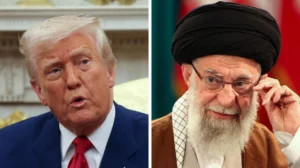
The striking of Iranian nuclear sites in mid‑2025 demonstrated military assertiveness, yet diplomatic overtures to Russia undercut allied consensus. Critics argue these actions embolden adversarial regimes and destabilize coordinated coalition efforts.
Policy Stance On China And Technological Competition
The administration has intensified restrictions on Chinese nationals, especially students, and advanced measures targeting technology transfer. However, critics argue that lacking a comprehensive framework jeopardizes strategic coherence, reducing effectiveness in balancing China’s global ambitions.
Middle East Strategy Under Transactional Objectives
In a volatile region, policy proposals have included extreme measures such as integrating Gaza into Israeli governance and creating special economic zones, even suggesting forced relocations. These moves have drawn international condemnation and offered little in the way of diplomatic forward momentum or conflict resolution.
Institutional Impacts And Domestic Political Polarization
The fundamental restructuring of U.S. institutions compels domestic political divisions to influence international diplomacy. Funding reductions under DOGE, dismantling of development agencies, and deprioritized diplomatic capacity undermine sustained global leadership.
Credibility Undermined By Domestic Polarization
Trump’s confrontational style and partisan rhetoric amplify domestic divisions that ripple into foreign relations. Allies cite inconsistency and unpredictability as reasons for doubt. Public spats with foreign leaders, such as Ukraine’s President Zelenskyy, underscore these ruptured relationships.
Risks Of Declining U.S. Prestige
Observers warn of long-term damage to America’s global stature as partners increasingly doubt U.S. commitment. A leadership vacuum may emerge in Europe and the Indo-Pacific, inviting new players to assert influence and redefine the international order.
Global Responses And Realignment Among Allies
Allied states are exploring paths to strategic autonomy in response to perceived instability from U.S. policy shifts. The European Union steps up defense and economic initiatives independently, while Indo‑Pacific partners hedge alliance choices amid uncertain Washington leadership.
Expanding Influence For China And Russia
As America abandons its conventional roles, China and Russia are seizing the chances to project their power by economic investment, diplomatic initiatives, and strategic planning to win over the nations, which are frustrated by the capricious behavior of America.
Realignment Opportunities And Policy Friction
Countries can pursue multilateral changes and develop relationships with countries outside of partnership with the U.S. Such repositioning is a part of a wider geopolitical repositioning, under which such old partnerships are being put to test, and strategic rivalry between great powers is arising.
This person has spoken on the topic and summarized the situation accordingly: Political analyst Astro Terry noted,
“Trump’s foreign policy toggles between withdrawing from old partnerships and courting new adversaries, reshaping America’s role but risking strategic isolation and diminished influence.”
Trump’s foreign policy has left the U.S. weaker, not stronger. He alienates allies, undermines international agreements, and emboldens authoritarian regimes.
— Terry Virts (@AstroTerry) August 4, 2025
America’s global influence shrinks while rivals gain ground — and we're watching the consequences unfold. pic.twitter.com/uHHqntQm3I
Where the trajectory of Trump in regards to foreign policy is headed leaves the U.S. leadership on a crossroad tagged between isolation by their long time allies and a new reorientation towards a transactional alignment between themselves and enemies. The contradiction between retrenchment and involvement will stake the preservation of alliance and the unity of international systems as well as the capacity of America to maintain world order.