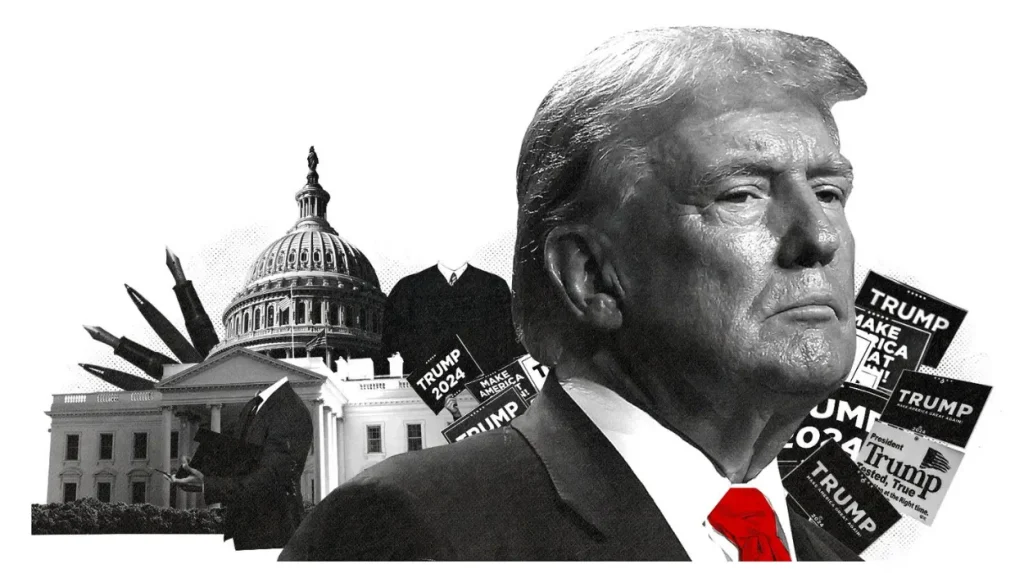
In 2025, the Trump administration reinterpreted U.S. foreign relations by requiring embassies, and consulates not to publicly speak on the legitimacy of foreign elections. This order, which was signed by the Secretary of State, Marco Rubio, introduces a new duty that all statements can be made about the integrity of foreign elections only through matching the U.S. foreign policy with the clear and compelling U.S. foreign policy interests. This policy hence severely curtails the extent of commentary that has previously been undertaken in the traditional examples of bipartisan foreign policy that the democratic values and openness in most instances dictated in formulating reactions to elections globally.
The United States of America (U.S.) had been known to assist in international election monitoring, criticize and raise voices against irregularities and overtly support free and fair electoral processes, as was the case in past governments. Even now, guidance has directed embassies to concentrate on public pronunciations in congratulating winners and strengthening bilateral ties avoiding, without direct Washington say so, any words of transparency, voter suppression or even electoral fraud. This exchange in effect centralizes democratic discourse in the hands of the top echelons of the U.S government and takes away the freedom that the embassies had in politically sensitive activities.
Strategic and Ideological Motivations
The administration poses such restraint within a wider realignment principle of the America First foreign policy approach of non-intervention and bilateralist-realist outlook rather than universal promotion. In a speech in Riyadh in May 2025, President Trump decried what he referred to as Western hypocrisy in passing judgement on the domestic political practices of other countries. Secretary Rubio supported this position when he asserted that, in his view, U.S. diplomacy has to be concerned more with achieving strategic results rather than the performance in morality.
This orientation is aimed at establishing practical coalitions with authoritarian and semi-authoritarian regimes without interfering with relationships with any regime by explicit criticism. With the administration maintaining the directive safeguards sovereignty and leads to stronger alliances, the critics perceive the directive as a backward step towards the trade in America as the North American leader in enforcing democratic norms.
Reactions and Impacts on International Democracy Promotion
Election Monitoring Organizations’ Concerns
United States After President Obama refused to criticize Zimbabwe in 2013, international monitors and civil society organizations were alarmed that United States practices its criticism of impending elections has taken a back seat. This is decreasing the influence of such organizations as the Carter Center and the OSCE which depend partially on the backing of the U.S. to increase their influence.
American embassies without any diplomatic reinforcement put these organizations in danger of being marginalised particularly in weak or developing democracies. Moreover, two organizations that previously enjoyed U.S. funding, the National Democratic Institute and International Republican Institute, are now at a disadvantage transcribing the need to ensure electoral transparency when this request is not promoted by the State Department.
Human Rights and Democracy Advocates’ Critique
The policy has threats of encouraging regimes to cheat during elections without worrying about the consequences of it, which is a threat posed by advocacy groups. In other countries whose democratic journey is already weak, silence by the U.S. can be taken as an approval. Uganda, Venezuela, Cambodia, and Belarus, all of which will hold controversial elections in 2025, point to the lack of U.S. criticism of their regimes as a morale-battering blow to all democratic activists.
Critics say such a change indicates a new priority of human rights and democratic values behind the safety and commerce agreements. By doing so, it is in danger of losing its soft power and ethical standing in parts of the world where Washington once exerted pressure to change election systems and exercise accountability.
Implications for U.S. Global Influence
Limiting Diplomatic Leverage
The directive creates new limitations on diplomatic responsiveness. Embassies are instructed not to issue statements about election outcomes, voter intimidation, or judicial independence unless pre-cleared by senior State Department officials. This often delays responses beyond the narrow window in which U.S. influence might meaningfully affect public perception or international pressure.
Diplomatic staff accustomed to proactive public engagement must now operate under narrower constraints. Analysts within the department note that delayed or absent commentary in recent cases, including elections in Nigeria and Georgia, have already weakened Washington’s standing as a reliable democracy advocate.
Selective Engagement and Credibility Risks
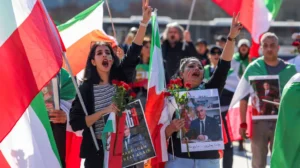
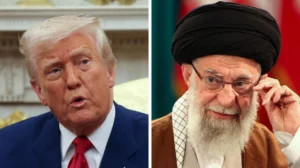
By allowing commentary only when “compelling interests” exist, the administration introduces ambiguity into U.S. global messaging. This selectivity may be perceived as geopolitical convenience rather than principle. For instance, critics note that while the administration condemned alleged fraud in Iran’s parliamentary elections, it refrained from commenting on similar abuses in allied countries like Egypt and Turkey.
This inconsistency undermines trust with opposition parties, pro-democracy groups, and even longtime partners who value principled diplomacy. Countries such as Germany and Canada have expressed quiet concerns that the United States’ muted response to democratic backsliding affects coordination in multilateral forums.
Operational and Diplomatic Considerations
Constraints on Embassy Communications
The restriction fundamentally alters operational practice across diplomatic posts. Previously, embassy public affairs officers maintained flexibility in engaging with press and civil society on local political conditions. Now, this discretion is curtailed, requiring approval from the Policy Planning Staff in Washington before discussing electoral topics.
There has been confusion about division between allowable hard commentary and forbidden political activity and this has been reported internally by embassies. Certain diplomats have feared that the restrictions minimize the capacity to underpin local reformers or to relativize election gains to U.S. companies and foreign partners facing commercial ventures in the polities riddled with subjective politics.
Balancing Sovereignty and Strategic Interests
The actors who introduced the new directive say that diplomacy needs to be adjusted to meet the existing geopolitical realities. The directive would also serve to relieve the current tensions with other states such as Saudi Arabia, Pakistan or Thailand whose criticism of the idea of democracy has found its way to inhibit the relations between their domestic economic and security efforts. The Trump administration is of the opinion that less commentary helps to shun allegations of hypocrisy and allows easier dealings to be done in trade, investments, and counter-terror conjecture.
Still, there is an inherent conflict between this realism and the American democratic forms of leadership. Allied countries like France and Sweden also insist on adherence to the normalcy of democracy by pursuing military style diplomas, including open diplomacy and observation of elections, which is becoming an unalterable inconsistency between the diplomatic conventions of the United States and Europe.
Voices from the Field and Broader Context
This person has spoken on the topic and summarized the situation accordingly: Political commentator Paul A. Szypula stated that the Trump administration’s directive “erodes one of the foundational pillars of American foreign policy.” She acknowledged the importance of respecting national sovereignty but warned that remaining silent during manipulated or fraudulent elections “does not neutralize threats—it encourages them.”
Her perspective highlights growing concern that the U.S., in attempting to recalibrate diplomacy, risks losing its moral authority during a global rise in authoritarian governance.
The change ought also to be considered against the background of the loss of American influence in the territories that once were influenced by the American philosophies of diplomacy. In Eastern Europe, Africa and sections of Southeast Asia, China and Russia have been able to make gains in the narrative, in being more consistent and less interventionist partners. U.S. restraint, done with peaceful intentions, can however, end up creating vacuums that such powers see it as an opportunity to exploit.
The Challenge Ahead for U.S. Foreign Policy Leadership
The Trump order of 2025 limiting embassy coverage of foreign elections constitutes a very significant juncture in American diplomacy. Though borne of an attempt to uphold sovereignty and minimize the interventionist rhetoric, the directive raises some very wide-spread implications about the way the United States is viewed and approached in the world.
Lynam’s advice about trying to navigate sovereignty with the sense of democratic values will be a challenge to U.S. diplomacy during the next electoral cycles. In a time when absolute opposition of the principle is the question of the complex geopolitical competition and undemocratic corruption of politics, it is not only necessary to evade offense-but also to exercise the lead in an effective strategy. The way this policy changes to withstand the pressure, under scrutiny and demands of the evolving world then will also determine the course and content of American influence going into the future years.