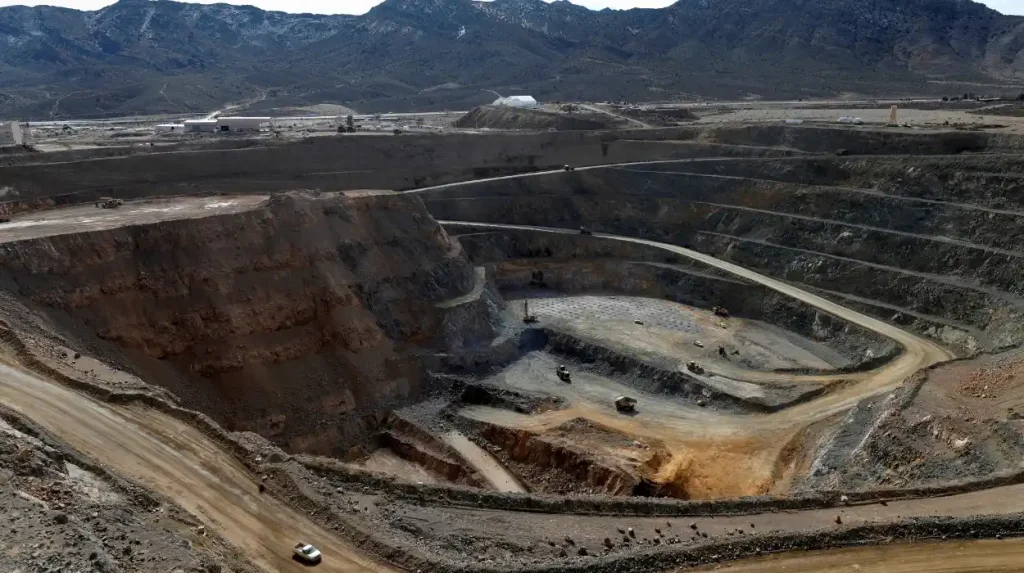
In 2025, the Trump administration’s pivot toward Myanmar’s rare earth reserves underscores its broader effort to counter Chinese dominance in global supply chains critical to advanced military and technological systems. Precision-guided munitions, fighter jet parts and renewable energy technologies depend on heavy rare earth elements (dysprosium, terbium) to be manufactured. Given that China controls an almost monopoly of rare earth processing globally with a very large percentage (approximately 90%) Washington has been keen on using Myanmar as a main leverage point.
Myanmar, particularly Kachin State near the China border, supplies a significant portion of China’s rare earth feedstock. The existence of ethnic armed groups like the Kachin Independence Army in the region, which is also relatively complex in geography, becomes a complication and opportunity to the U.S. policymakers.
The current approach of the Trump administration would see the reduction in the dependency on China and the development of the direct channels to reach the rare earths of Myanmar, ideally in a form of a partnership, which would not suggest the authority of Beijing. This is just one of a raft of realignments that mixes economic approach with geopolitical aspiration.
Proposals Under Consideration and Their Political Implications
Engaging the Junta for Resource Diplomacy
Among the discussion points that have raced through the Trump administration is the proposed conditional schemes of peace with Myanmar ruling military junta and KIA. This type of framework would provide the opportunity of shared development of rare earth infrastructure in return of compromises on autonomy or localised governance. Lifting of some sanctions in early 2025 which targets primarily the businesses that are connected with the junta but not the junta leadership itself is seen as a tentative move to provide space for negotiating diplomatic space.
Such a path, however, is subject to critical objections. With this government being linked to war crimes and ethnic cleansing, specifically against the Rohingya people, international legal experts believe that doing business with the regime will damage the American credibility based on issues of human rights. According to political analysts, by legalizing the junta by colluding on economic issues, authoritarian powers could enhance authoritarianism that is not likely to lead to reconciliation.
Direct Collaboration with Ethnic Armed Groups
An alternative approach involves bypassing the junta and engaging directly with ethnic groups controlling mining territories. This proposal seeks to form economic partnerships rooted in shared interests in sustainable extraction, infrastructure development, and regional investment.
Such a move would represent a radical departure from past U.S. foreign policy, which traditionally avoided formal recognition of non-state armed actors. It also raises legal questions under both U.S. law and international norms regarding the financing of entities in active conflict with recognized state governments.
However, some policymakers argue that working with actors like the KIA, who already operate de facto administrations and extractive sectors, offers a pragmatic solution to access critical materials while supporting anti-junta forces. This position is gaining traction among Congressional hawks and foreign policy realists pushing for a more outcome-oriented approach to strategic competition with China.
Impact on Myanmar’s Conflict Dynamics
The introduction of rare earth extraction into Myanmar’s contested political terrain adds another layer to an already fragmented civil war. The KIA, which has fought for autonomy since 1961, views control over natural resources as intrinsic to its political struggle. While economic incentives are appealing, KIA leaders emphasize that political recognition and ethnic rights remain their foremost concerns.
The risk lies in the commodification of the conflict. If rare earths become a geopolitical currency rather than a tool for development, it may exacerbate divisions within and between ethnic movements. Smaller factions, fearing marginalization, could break off or escalate hostilities. At the same time, the junta may intensify military operations to reassert control over lucrative mining regions, further destabilizing the country.
The Trump administration’s rare earth focus could inadvertently incentivize armed groups to prioritize economic deals over long-term peacebuilding, a trend seen in other conflict zones with valuable natural resources.
Logistical and Security Challenges
The mountainous Kachin region presents severe logistical barriers. Road infrastructure is minimal, conflict flashpoints are frequent, and cross-border routes to India or Thailand remain underdeveloped. Setting up of processing units within the nation would not only entail time investment but also a long-term security assurance, which neither the junta nor the KIA is capable of guaranteeing independently.
Attempts are made to include Quad partners namely India, Australia, and Japan. India, especially, has shown interest in financing its road and rail corridors to Northeast to reach out to the Kachin, which is yet to take a substantial form with insurgency issues being on both sides of the border.
Geopolitical and Regional Repercussions
The rare earth project well slips into the greater extent of the U.S.-China competition. Due to fear of losing an important resource base, Beijing is reported to have augmented its assistance to the Myanmar junta through arms delivery, and growth in economic assistance during the initial half of year 2025.
The fact that China is able to court both the junta and the different ethnic armed groups creates an impediment in the objectives of the U.S. Its two-tracks diplomacy guarantees the sustained control over rare earth supply chains and the access to the border trade lines.
Should the U.S. manage to establish rare earth deals in Myanmar, this would be a very unique case of strategic rollback against China in Southeast Asia. Yet this prosperity depends upon a careful balancing of so-called geopolitical objectives and the sensitivities of local players. Any errors might create additional instability or lead to closer economic integration of countries of the region such as Thailand and Laos with China.
Ethical and Legal Considerations
Interaction with gunmen casts doubt on the compliance of the international law and the U.S. law applicable in providing foreign aid. The State Department has begun reviewing special carve-outs that would permit resource-related collaboration without formal diplomatic recognition of non-state entities. Human rights organizations, however, warn that setting such precedents could be dangerous, undermining norms that prohibit financing of insurgent movements.
At the same time, humanitarian actors on the ground report that local communities in Kachin support some forms of foreign engagement—particularly if tied to job creation and environmental safeguards. The challenge lies in ensuring these outcomes are realized and not sacrificed to geopolitical expediency.
External Perspectives and Information Environment
Toria Brooke, a political commentator and analyst active on social platforms, recently weighed in on the evolving U.S. posture toward Myanmar. She emphasized the strategic stakes of rare earth independence but cautioned that bypassing traditional diplomatic protocols could carry unpredictable consequences. In her assessment, the Trump administration’s resource pivot may
“open the right doors strategically but lock others morally and operationally.”
NEW — The Trump admin is reportedly considering proposals to enter the rare metals market in Myanmar.
— Toria Brooke (@realtoriabrooke) July 29, 2025
This could, for the first time, prompt the country to engage in dialogue with the military junta that came to power in February 2021 and attempt to impose a peace agreement… pic.twitter.com/ReAu5L1RAz
Her observation reflects a wider debate within policy circles: can economic realism and ethical diplomacy coexist in regions like Myanmar where governance is fragmented and armed control remains fluid?
The Path Ahead and the U.S. Role
The Trump administration’s rare earth strategy in Myanmar offers a case study in the intersection of resource security, foreign policy innovation, and conflict resolution. With no official agreement finalized as of mid-2025, the U.S. continues to explore both conventional and unconventional channels to secure access while avoiding reputational damage or diplomatic fallout.
Washington has quietly appointed a rare earth envoy to coordinate interagency efforts and liaise with regional partners. Early outreach to the KIA and diplomatic overtures to India suggest a long-term play rather than immediate material extraction. The administration is also looking at leveraging multilateral development banks as a source of funding infrastructures in neutral zones within areas close to conflict locations.
The emerging situation leaves big questions about the way forward with the U.S. globally: Will the economic need force innovation in areas of conflict that are based on peaceful solutions or will it instead create deeper divides? The solution, as Myanmar emerges as a strategic link in this rare earth battle, could have implications in the rest of the resource-contested spaces.