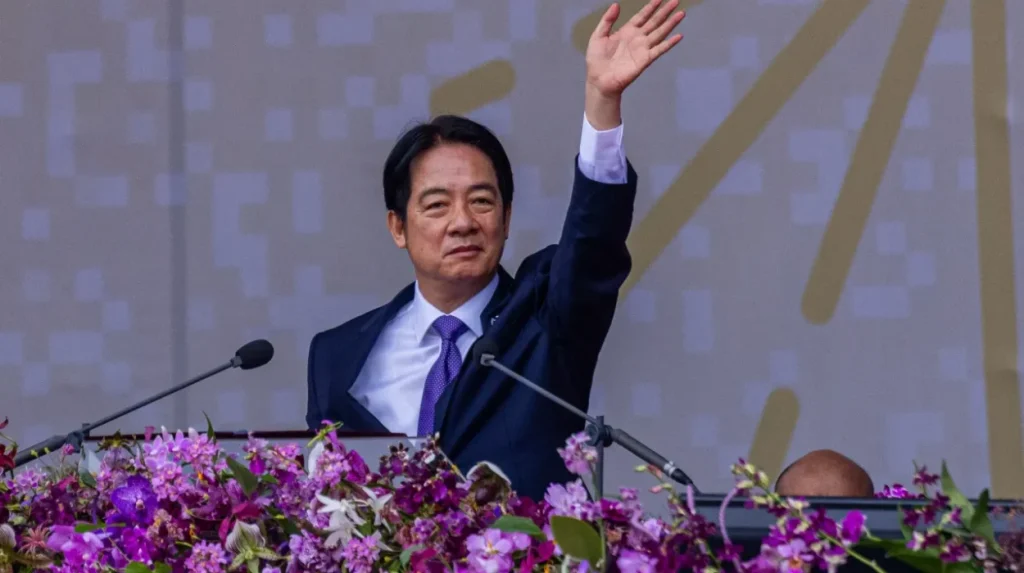
In July 2025, the Trump administration refused Taiwanese President, Lai Ching-te, the right to do what is known as a scheduled transit stop in New York, which she planned as part of a wider foreign diplomacy tour to Latin America. This sudden action occurred at a time when delicate trade talks between America and China were still going on regarding tariffs and investment systems. Lai was due to travel to Taiwan diplomatic allies, meaning Paraguay, Guatemala and Belize countries that continue to recognize Taiwan, which in the wake of Chineseг aggression continues to be an international outcast.
The aborted layover would have been the first one through an American mainland city since Trump took back the White House in January. It would have as well signified a continuation of the unofficial relationship between Washington and Taiwan that the latter lacks independent recognition as a sovereign state but is maintained with the support of Taiwan Relations Act. It was strategic as the admission by the Trump administration was made so as not to complicate the trade deal talks that were taking place in Stockholm at a time when a meeting with the Chinese President, Xi Jinping was scheduled.
The change marks a dramatic departure as compared to the pace with the Biden administration that had granted such transit to interim President Tsai Ing-wen in 2023. Investigators interpret this excursion as a larger realignment under Trump, who has returned with a more transactional frame of thinking about the international relations, and such a foreign policy pivots around economic sinews rather than any flank of ideological uniformity.
The Delicate Balance Between Diplomacy and Trade
Bilateral relations between the U.S. and Taiwan were not the only influences behind the U.S. decision; U.S. and Chinese trade negotiations as a whole were the cause. The administration had been aware of Lai since he had taken the step of releasing his own highly publicized stopover in the White House according to White House sources, calculated that it would be risking a far-weaker attempt at a détente with China in tariff talks as it had resumed in early 2025.
China has consistently pressured countries to deny Taiwan diplomatic visibility. In this case, Beijing reportedly made clear that permitting Lai’s transit would be viewed as a breach of U.S. commitments under the “One China” principle. Faced with a choice between symbolic support for Taiwan and maintaining progress in trade talks, the Trump administration chose the latter.
This person has spoken on the topic: China and Taiwan expert Bonnie Glaser observed that the block shows
“Trump is prioritizing US-China trade diplomacy over unwavering support for Taiwan, risking to embolden Beijing’s assertiveness.”
Trump blocks Taiwan’s President Lai from New York stopover https://t.co/a0ENkYvcr1 My thoughts in the @ft pic.twitter.com/uFyicFAbez
— Bonnie Glaser / 葛來儀 (@BonnieGlaser) July 28, 2025
Political and Security Implications of the Stopover Block
Impact on U.S.-Taiwan Relations
The blocked stopover was interpreted by Taiwanese leaders as a blow to the endeavors of the island to gain more international recognition. Although the Taipei authorities were adamant in public that the cancellation of the trip was based on domestic interests favouring typhoon recovery work and trade talks, behind the scene, government sources noted the direct pressure on Taipei by Washington and Beijing as the other major players.
The ministry of foreign affairs of Taiwan also carried a cautious tone, probably not to escalate the situation further but the incident has opened another round of discussions in Taiwan on whether they can trust the U.S. security guarantees. The refusal comes several years after U.S. weapons sales and numerous diplomatic trips by senior officials, making the rejection another layer of fears that American indulgence will be at the mercy of geopolitical expediency.
Beijing’s Position and Geostrategic Calculations
The stopover by Taiwan was blocked; therefore it was a strategic win in China which has been limiting the international presence of Taiwan. Beijing is still engaged in a world-wide effort of isolating Taiwan both economically and diplomatically by means of economic enticement and intimidation. The action of the Trump administration is in tandem with this aspiration as China becomes vigorous to influence international conduct concerning Taiwan.
At the same time, China has continued operations in militaristic exercises in the Taiwan Strait throughout 2025, incursions in the airspace and naval exercises. Such military movement as well as diplomacy makes a solid set of moves to exert pressure on Taiwan without directly taking on the U.S. Also, economic diplomacy used by Beijing to influence the decisions made by the foreign governments including those in Washington is a prominent development in the calculation.
Responses and Repercussions in Taipei and Washington
Reaction in Taiwan
Political groups in Taiwan have reacted with unease in spite of the low-key official response. The denial was condemned by pro-independence groups as a sign that the country is becoming increasingly vulnerable, with centrist statesmen suggesting moderation, and pointing to the necessity of long term sustenance of stable U.S. and Taiwanese relations.
The strategic assessment of President Lai that he should not publicly go after the U.S. can be attributed to his numbers game: maintaining normal business with the Trump administration could be more profitable than officially turning the incident into an international crisis. Nevertheless, the popular mood indicates that there is increased pressure on Taiwan to create more space in the global arena.
Political Backlash in the United States
It has received both Democratic and Republican political criticism in the U.S. The legislators including former speaker Nancy Pelosi and Senator Bob Menendez came up with a statement of warning that Washington was not keen in securing a position to support Taiwan which cut against long-term credibility in the Indo-Pacific. Such leaders claim that caving to the Chinese pressure diminishes the U.S. leadership and they provide confusing messages to other partners in the region.
Although the State Department underlined that on a case-by-case basis, decisions on transit are made, critics highlighted the change in previous policies and raised the possibility of the priorities of economic interests replacing prior regard to democratic solidarity.
The Broader Geopolitical Chessboard
The event highlights the geopolitical tightrope which the U.S is treading in Asia. Taiwan is a major concern in the Sino-American rivalry, but it catches both economic and strategic concerns. The strategy of Trump in 2025 makes it clear that he wanted to put trade in a separate compartment, away from political clashes, but critics have claimed that this lacks strength in deterrence and that it leaves allies at risk.
China sees the outcomes as vindication of its tough stance on Taiwan. As each diplomatic loss mounts against Taipei, Beijing continues to increase its message to the international community that Taiwan has a destiny of being under the aegis of Beijing, and to work on having a global diplomatic space is to work against this fact.
Potential Ramifications for the Future U.S. Policy
The decision taken by the Trump administration can affect the way future leaders of the United States will assume Taiwan depending on whether the aspect of economic diplomacy still dominates over the notion of ideological uniformity. Should Taiwan’s international mobility be curtailed further, the U.S. may face challenges in projecting influence across the Indo-Pacific, where credibility is increasingly tied to consistent support for democratic partners.
Taiwan is bound to take action by enhancing relationships with such middle powers as the European Union and Japan to find security and diplomatic support that is diversified. Nevertheless, without the open support of the United States, these efforts might not have enough weight to be sufficiently strategic in compensating the pressure exerted by China.
Defying even a diplomatic courtesy (the stopover) paid to President Lai Ching-te, however, is not just a matter of missing the point; but it does say a lot about the new power politics between China and Taiwan and the United States. It shows how easily practical diplomacy can turn into what would be perceived as administrative withdrawal, and it could form the next ticket of the U.S. in the Indo Pacific as world buyers still seek to maneuver through a world where trade, sovereignty and influence clash.