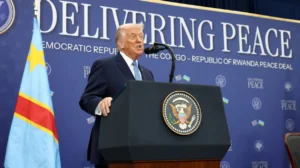
Following the restitution of Donald Trump to the presidency in January 2025, America has undertaken a significant overhaul of its human rights doctrine anchored by a self-destined restoration of basal Western liberal principles. The main story that is constantly referred to by the administration rather emphasizes civil and political rights as provided in the U.S constitution as opposed to its broad connotation which incorporates economic, social, and cultural rights.
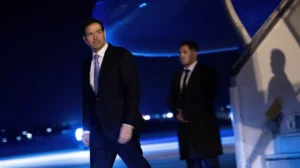
One of the major structural decisions entails the creation of the Office of Natural Rights headed by the Secretary of State, Marco Rubio. The mandate of the office is to re-establish a classical sense of individual liberty and natural law in the foreign-policy of the U.S. The trend falls in line with an overall retreat into multilateral organisations seen by the administration to be biased, including the United Nations Human Rights Council and UNESCO. The administration claims that such institutions have lost focus in the implementation of fundamental human rights through propagating a politically laden agenda.
The change represents a departure from the wider post-war consensus as given in the Universal Declaration of Human Rights. Opponents feel that by restricting civil-political rights, the universality of human dignity rights is undermined. The response by the administration is that the emphasis on natural freedoms will reclaim the validity of American lobbying, an idea that is highly disputed both elsewhere in the world and within the country.
Domestic Implications Of The Human Rights Reset
Executive Orders And Civil Liberties
On the opening day of Trump’s presidency, there was a slew of executive orders covering major areas of domestic human rights. These entailed calling back protections of asylum seekers, restricting legal immigration ways of life, and withdrawing the constitutional right of birthright citizenship to children of illegal immigrants. The Ban on transgender in the military was also reinstated and the federal guidelines on transgender recognition were repealed in government departments.
Along with this, there was a concentrated reversal of institutional equity programs as diversity, equity, and inclusion (DEI) offices were dismantled at many universities and federal agencies. The Trump administration introduces the steps by demonstrating it as restoring constitutional equality, although critics claim that they promote selective destruction of safeguards against the most vulnerable groups.
According to the Executive Director of Human Rights Watch Tirana Hassan, such policies are incredibly disturbing, with racial minorities, immigrant groups, and the LGBTQIA+ population being immensely disadvantaged. Critics say that the legalism of the administration conceals a more fundamental undermining of popular rule and civil liberties.
Shrinking Civic Space And Free Expression
In 2025, the federal grants allocated by the administration to the civil society organizations, especially those oriented on racial justice, Palestinian activism, and gender rights were cut. The independent media groups have encountered heightened scrutiny and pressure, particularly those that disseminate protests or counter-narratives regarding the U.S. foreign policy.
Groups that defend civil liberties have said this amounts to stifling civic activity and freedom of the press, and are viewed as the shrinking of the democratic public sphere. This tendency demonstrates the wider worldwide fears about the decline of the space of civil society in pressured democracies, which have come to find their treatment increasingly in discussion of the American setting as well.
Impact On America’s Global Human Rights Leadership
Multilateral Disengagement And Institutional Retreat
In February the US officially left the UNHRC and in July left UNESCO. The management rationalized the two moves based on claims that the white house was turning its back on politicized human rights arrangements, and especially those that criticized the U.S alliances. These withdrawals are indications to a shift on multilateral interaction in the direction of regional blocs and bilateral influence where U.S. diplomacy is focused.
Even though Washington continues to exert its power in behind the scenes diplomacy, especially in protecting Israel against any critical resolutions, the absence of Washington in formal institutions has caused leadership gaps. Other European partners like France and Germany have promised to contribute more funds to offset funding and policy deficits presented by the U.S.
Such disengagement makes it difficult to work together on other matters including digital rights and refugee protection. It equally undermines transatlantic unity over norm-setting, which may encourage autocracies and authoritarian regimes to adjust the discussion on human rights in more closed-minded directions.
Shifting Global Norms And Geopolitical Consequences
The bilateralism that is being pursued by the Trump administration reflects an increased cynicism about the global governance institutions. But the price of such posture is seen in a decrease in U.S credibility and unity in spreading the democratic values across the globe.
This downsizing in international forums by Washington is seen to dampen any chances against the decay of norms on freedom of speech, gender equity, and accountability in nations where democratic regression has already been witnessed. The weakening of the international monitoring of human rights, particularly in areas such as Africa and the Middle East is subject to facilitate the culture of impunity and erode established relationships.
The Ideological And Practical Tensions In The Human Rights Reset
Selective Application Of Principles
The administration’s emphasis on “natural rights” invokes a philosophical lineage centered on negative liberties—freedom from interference—but sidesteps positive rights such as access to education, healthcare, and social welfare. This selective interpretation echoes the controversial 2023 Pompeo Commission on Unalienable Rights, which critics viewed as an attempt to redefine human rights through a narrower ideological lens.
The Trump administration argues this clarity is necessary for coherent policy. Yet, human rights organizations contend it obscures systemic injustices and excludes pressing global challenges from the American agenda. For instance, the omission of reproductive rights and LGBTQ+ protections from official State Department reports in 2025 has raised concern among international allies.
This person has spoken on the topic: Lila Grace Rose, a human rights scholar, emphasized in a recent interview that
“America’s attempt to ‘return to first principles’ reopens necessary debates about the essence of human rights, but it must not come at the expense of those whose dignity depends on the broader protective frameworks established over decades”
America’s legal tradition, dating back to our founding, is that all human beings are persons – & specifically denotes unborn children as having a right to life. We haven’t always lived up to our ideals but we can change that. @joshjcraddock & I discuss:
— Lila Rose (@LilaGraceRose) June 26, 2023
pic.twitter.com/lfGEIxhtV6
Populism, Sovereignty, And Global Responsibility
Underlying the administration’s approach is a populist skepticism of globalism and a revival of sovereignty-based rhetoric. By emphasizing American exceptionalism and resisting what it calls “ideological impositions” from abroad, the administration appeals to domestic constituencies wary of international commitments.
This populist framing risks diminishing America’s global responsibility, particularly in supporting international justice and accountability mechanisms. It also complicates relationships with allies who view universal human rights as integral to shared democratic identity.
Navigating Complexities In America’s Human Rights Policy
The 2025 pivot in U.S. human rights policy signifies the opportunity and juncture of how the nation should govern itself and in the realm of international relations. In going back to a foundationalist view of liberty, the administration is reaching back to clarity and coherence, which probably comes at the cost of inclusion and the credibility of the global view.
The task of the diplomatic partners and civil society actors is to reconsider the relationship with a less expensive and readily committed United States. This new grouping might divide coalitions and put pressure on cooperation in transnationally based matters like protection of refugees, online rights, and gender equality.
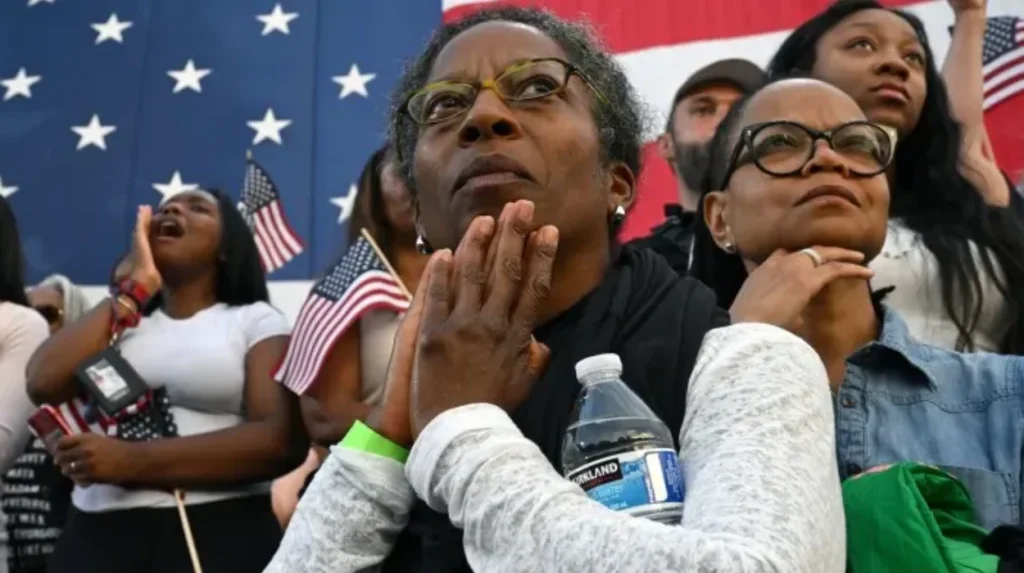
Inwardly, the human rights reset has mobilized grassroot action in terms of civil liberties, reproductive justice, and anti-racism. The relationship between local opposition and national policy will define the margins of civil liberty and institutional responsibility in the years to come.
In the end, the U.S. human rights standpoint in 2025 can be characterized only as contradictory: liberty is portrayed as a doctrinaire appeal to liberty that is bound by narrow policy decisions. Future progress depends in turn on the ability of the nation to reconcile its bete-noir devoutness to a few central notions with the present realities of human rights, and once again to take advantage of its place in creating a better world order.