Trump threatens Iran with unusually sweeping language, warning that the United States could
“completely decimate and destroy all areas of Iran”
if Tehran tries to kill him or continues hostile actions. The remarks mark one of the sharpest public escalations in the already volatile U.S.-Iran standoff, blending personal security fears, military deterrence, and political theater into a single threat that is being watched closely across the Middle East. The message was not delivered in a vacuum. It followed fresh anti-Trump chants and calls for revenge that surfaced during mourning events in Iran after the funeral of Supreme Leader Ayatollah Ali Khamenei, giving the confrontation a charged symbolic backdrop that has only deepened the sense of crisis.
The reason why this threat stands out so much is because, besides the aggressive nature of the words, the target is also very broad. Instead of threatening with military retaliation against specific sites of Iran, the President talked about destruction in general – a concept which alarmed diplomats, lawyers, and human rights activists. This threat means that he was ready to widen the confrontation to cover not just deterrence, but an entire pressure campaign against the infrastructure of Iran. What is more, it means that the US administration tries to interpret the threats made by Iran towards Trump as an attack on the President as a whole person.
How the warning unfolded
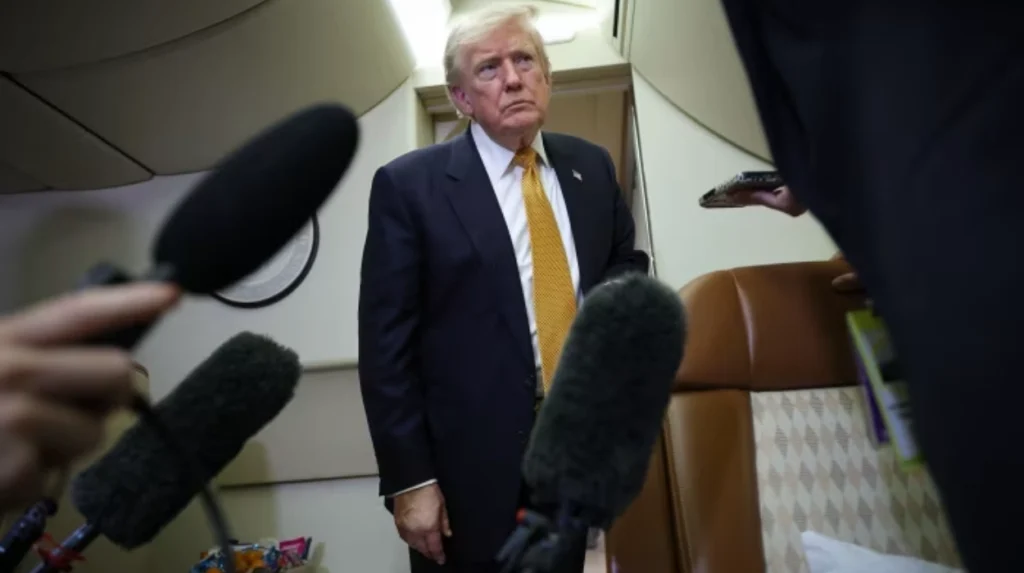
The latest warning came after Trump had already signaled a harder line, including comments that the U.S. military was “locked and loaded” and ready to strike if needed. In another report, he was quoted as saying the military was ready to
“completely decimate and destroy all areas of Iran,”
language that underlines how far the rhetoric has moved from conventional diplomatic pressure.
It is a significant development even by Trump’s standards, since the focus was not on any limited action or punishment, but on an attack which has the potential of being overwhelmingly large and capable of impacting Iran’s power grid, transportation system, and other forms of civilian infrastructure. Just a few weeks ago, Trump made a threat of a “big attack” on Iran and hinted at the possibility of imposing a naval blockade at the Strait of Hormuz, one of the most strategic energy routes in the world. Even before that, Trump talked about targeting Iranian civilian power plants and bridges and that Iran can be “taken out” in no time if a solution is not found. This threat, in particular, was noted as a threat against civilian infrastructure rather than any kind of military equipment.
Why this threat matters now
The current escalation arrives at a particularly sensitive moment because U.S.-Iran diplomacy had not fully collapsed before the latest crisis. On July 2, mediators from Qatar and Pakistan said there had been “positive progress” in talks in Doha, and they indicated further discussions were planned after the funeral events in Iran. That meant there was still at least a narrow diplomatic lane open, even amid war talk and mutual suspicion.
The latest statement from Trump may close that road off, since a threat of destruction usually tends to stiffen Iran’s stance and makes negotiating with them politically harder for the Iranian leadership. However, Pakistan, which has been playing the role of a mediator, has asked for restraint and stated that new confrontation between the U.S. and Iran is “in no one’s interest.” This is an important point since it shows the common worry of the region about the possibility of the next round of escalation which would easily lead to Gulf shipping issues, oil price issues, proxy rivalry, and military engagement. For Pakistan and other regional players, the main worry is not just another missile strike, but an escalation that will bring regional war to the fore.
The Iran factor
Iran’s response has been predictably defiant. Officials in Tehran have said they will not negotiate under threat and that pressure tactics will not force a change in policy. One report quoted Iranian Foreign Minister Abbas Araghchi as rejecting talks under intimidation, underscoring Tehran’s long-standing position that public ultimatums only weaken the prospects for diplomacy. Iran has also sought to present itself as the victim of external coercion rather than the aggressor, especially as state and pro-state narratives emphasize attacks on Iranian sovereignty and the deaths of senior figures.
The political theater around the funeral of Ayatollah Ali Khamenei also fed into the latest Trump warning. Reports said chants calling for Trump’s death were heard during the mourning period, and that imagery appears to have convinced Trump and his allies that the threat is real enough to justify maximal rhetoric. Whether those chants reflect formal state policy or public anger is a separate question, but in Washington they were enough to fuel the claim that the Iranian side is threatening the U.S. president personally. That framing matters because it lets Trump cast any retaliation as self-defense rather than escalation.
Legal and humanitarian concerns
Human rights organizations and legal experts have taken note of the early and recent threats because there seems to be more to these statements than just a typical military warning. Amnesty International stated that President Trump’s remarks last April of going to war against Iran and destroying civilian infrastructure were a cause for concern under international law. The organization warned that statements of destroying roads, bridges, and power plants, even going to desalination plants, could be considered unlawful behavior if they implied destruction indiscriminate of civilians or vital resources.
The legal implications of a threat become much more complex when it is stated as total destruction. In military conflict law, the distinction between military necessity and indiscriminate punishment is important. When a military official makes an announcement threatening to obliterate entire sections of a nation, it becomes a question of rhetoric and policy. For reporters and policymakers, the issue is less about what might happen in terms of military action and more about what is being conveyed through the rhetoric.
Strait of Hormuz pressure
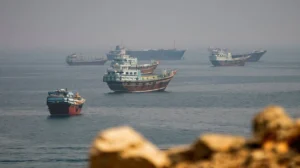
Another reason this story matters is the Strait of Hormuz. Trump has repeatedly linked his threats to possible moves around the strait, including warnings about a blockade. That waterway is one of the world’s most sensitive energy corridors, carrying roughly 20% of global oil flows, so even the hint of disruption can move markets and trigger emergency planning in energy-importing states.
This is why Trump’s threat is being read not just as a bilateral U.S.-Iran issue, but as a potential global economic shock. Any serious escalation around Hormuz can affect shipping insurance, tanker routes, fuel prices, and broader inflation expectations. The strategic logic is obvious: if Washington wants to squeeze Tehran, pressure on the strait can amplify that leverage. But the same pressure also raises the cost of miscalculation, because a regional military exchange in that corridor could rapidly draw in outside powers and push markets into turmoil.
Political stakes in Washington
Domestically, Trump’s rhetoric also serves a political purpose. It projects strength, answers critics who accuse him of weakness, and reinforces the image of a president willing to retaliate decisively against any threat to his life. The line
“I’m number one on the kill list”
was reported as part of his public framing, suggesting he is using the alleged threat to personalize the conflict and make it resonate with his political base.
Such type of messaging works on a temporary basis since it portrays foreign policy as a question of survival rather than of diplomacy. However, at the same time, this strategy poses certain risks. As soon as the president publicly links his safety to the need to destroy the country, the threshold between the threat and the act becomes lower. American experts have already expressed the idea that the use of such words can lead to the normalization of the military discourse and make de-escalation less possible in case there are fresh attacks with demands for retaliation.
The obvious question is whether this is part of a negotiating strategy or an attempt at opening a wider conflict. At this point, media reports indicate that the U.S. has already launched a series of strikes against Iranian targets, and mediators attempt to prolong negotiations. In other words, this is a very sensitive and volatile situation, which involves diplomacy, but also military and rhetorical escalation. Depending on the future development of events, there are three probable scenarios.
Firstly, Iran may respond with greater resistance and refuse to compromise. Secondly, mediators like Pakistan and Qatar may attempt to save some sort of a fragile ceasefire agreement. Finally, the conflict may be expanded to involve attacks on ships, oil platforms, and other regional actors, in case one of the parties decides that it needs to deter another party from further attacks. As for now, the point has been made by President Trump – that the United States is ready to talk its language of total power.