In what can be described as an even more pronounced effort to deal with cartel operations within Venezuela, President Donald Trump made public on Friday, June 12, 2026, that the United States military had eliminated Hector Rusthenford Guerrero Flores, who is the head of the notorious Tren de Aragua (TdA) gang in Venezuela. This move, which President Trump described as a “lethal kinetic strike,” is considered to be among the most forceful efforts ever undertaken by the United States military against a criminal syndicate in Latin America.
The operation, which was carried out by the Southern Command of the U.S., was coordinated with the Venezuelan government, with Delcy Rodríguez in charge, indicating a diplomatic operation which is rather rare due to the hostile relationship that exists between the two countries. It is reported that Flores had been running the massive criminal organization from Venezuela for years, operating a criminal network that dealt with murders, extortions, drug smuggling, and smuggling of immigrants.
The Target: Niño Guerrero and His Criminal Empire
Hector Guerrero Flores, known by his criminal alias “Niño Guerrero” (Child Guerrero), emerged as the paramount leader of Tren de Aragua, a gang that originated in the Aragua state of Venezuela but has since expanded its operations throughout the continent.
The U.S. government officially classified Tren de Aragua as a global terrorist entity and drug-trafficking cartel, recognizing the organization’s involvement in particularly brutal criminal activities that have destabilized multiple nations.
Flores’ leadership of the syndicate spanned years, during which he maintained operational control from Venezuelan soil despite international pressure and surveillance. The gang’s name, “Tren de Aragua” (Aragua Train), reflects its корни in Aragua state and its fast-moving, networked structure reminiscent of a train with multiple connected carriages operating across borders.
The group became one of the most murderous organizations in Latin America under the leadership of Flores, and the U.S. government noted many atrocities committed by its members. There are various reasons why it is essential to target Flores directly rather than any other member of the organization, such as the importance of the individual in the hierarchy. However, there is more meaning to it than just that, for, through targeting Flores, the United States government hopes to break the chain of command of the group.
Trump’s Definitive Statement on the Operation
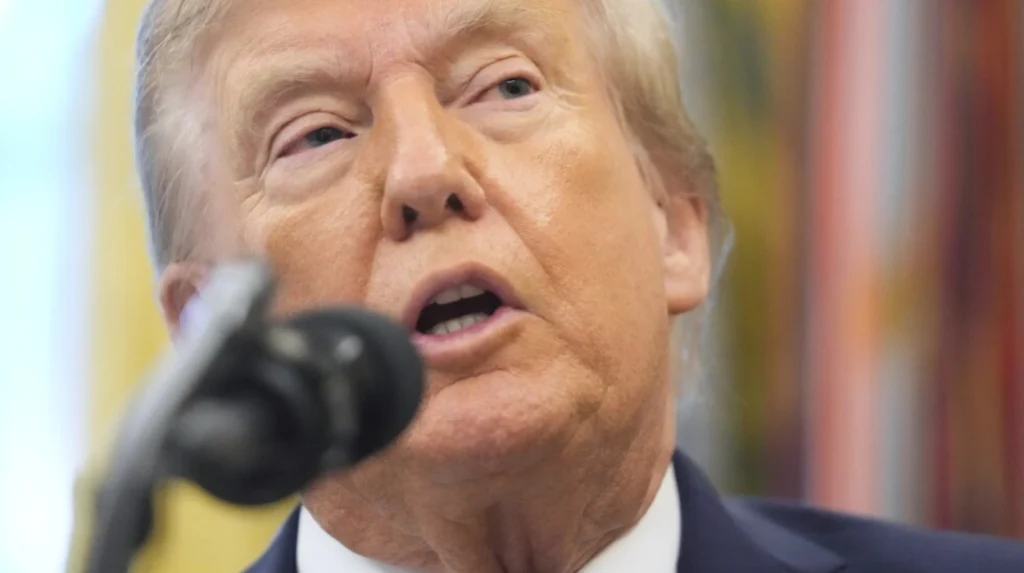
President Trump announced the operation through his Truth Social platform, delivering what he characterized as a decisive victory in the fight against international drug cartels. In his official statement, Trump declared:
“At my direction, the United States Southern Command delivered a swift and lethal kinetic strike to successfully execute Niño Guerrero, the infamous leader of Tren De Aragua, one of the most bloodthirsty Terrorist Organizations on Planet Earth”.
The words used by the President were meant to create an impression of urgency and the seriousness of the threat presented by Tren de Aragua. The use of the word “execute” instead of “kill” or “neutralize” made it seem as though the mission was an act of justified justice as opposed to a simple military engagement. This is in line with the messaging of the President concerning crime and border protection since coming back into power in January 2025.
In subsequent remarks, Trump reinforced his commitment to continuing operations against the gang:
“I would continue to track down Tren de Aragua members and ‘send them to the depths of hell where they belong'”.
This shows the commitment of the President towards continuing an ongoing effort against the organization, as opposed to considering Flores’ murder a one-off case. The use of such harsh rhetoric is also linked to President Trump’s overall tough attitude concerning immigration and crime, especially organizations operating between the US and Mexico.
The Operational Details and Venezuelan Coordination
The airstrike occurred in the southeastern Bolívar state, which is considered one of the most secluded areas of Venezuela with high strategic significance. The reason why Bolívar state is highly important is because of its geographical position, which touches Brazil and the Atlantic Ocean. This makes it one of the major passageways for transporting drugs from Colombia and Brazil to the rest of the world.
The uniqueness of this initiative lay in the collaboration that was undertaken by the Venezuelan administration under the leadership of Delcy Rodríguez, who is the Vice President of Venezuela and currently runs the country in the absence of President Nicolás Maduro, who is banned from traveling to many countries because of legal issues. The cooperation between the U.S. President’s administration and Delcy Rodríguez’s administration is quite peculiar given that the relationship between the two countries has been rather unfriendly for many years.
The Venezuelan government issued its own statement regarding Flores’ death, claiming that the gang leader was killed during “confrontations with criminal factions” rather than through a foreign military strike.
This narrative, therefore, seems like an effort by Venezuela to show the reduced involvement of American military forces within its jurisdiction, maintaining the domestic stability of the country. But many international sources, including Financial Times and the New York Post, have confirmed that the raid had been carried out by the American military working together with Venezuelan authorities.
How the two governments cooperated in this matter still remains a mystery but it could probably be done through intelligence exchange or even active participation of Venezuelan military or law enforcement on the ground. This, however, would involve much diplomacy under the table since there exist no diplomatic relations between the two countries due to sanctions by the U.S. Treasury Department.
Strategic Implications for Counter-Cartel Operations
President Trump’s justification for the strike centers on its potential to deter other criminal organizations. In remarks following the announcement, Trump stated that the operation was a
“necessary effort by the United States to send”
a message that cartels should “think twice” before engaging in drug trafficking and violent criminal activities.
This method of deterrence signals a wider trend towards an increasingly militant stance by the U.S. against cartels, involving the use of military means alongside traditional law-enforcement and diplomatic methods.
This move is also consistent with an increased presence of the U.S. Navy and military forces off the coast of Venezuela. In recent months, the United States has reinforced its naval presence near Venezuela’s shores in order to counter the threat posed by criminal groups specializing in the smuggling of narcotics in Latin America. It would seem that the airstrike against Flores was in line with this same policy.
In terms of strategy, getting rid of Flores would cause substantial disruption for Tren de Aragua. It is clear that criminal enterprises tend to have well-structured leadership and communication hierarchies, which can become dysfunctional due to the removal of senior leadership figures. Nevertheless, history has proven that those criminal enterprises manage to react fast, with lower-ranking commanders filling in those leadership gaps. In the end, the success of the operation will come down to whether there is going to be follow-up against those who took Flores’ place.
Diplomatic and Political Repercussions
There are several important diplomatic consequences of cooperation between Washington and Caracas beyond the specific mission aimed against the cartel. First of all, for Venezuela’s leadership, participation in a military mission together with the United States can be seen as an attempt to bolster its reputation internationally and negotiate some relaxation of sanctions. Second, from the perspective of the Trump administration, the cooperation is another example of pragmatism applied to national security concerns.
However, there is likely to be criticism of the operation from different parties as well. Human rights groups might point out that military action was taken against the territory of another nation without proper permission granted by Congress, and some lawmakers will probably question the legality of the entire strike operation. Moreover, Venezuelan politicians can use cooperation with the U.S. to attack the legitimacy of the leader and cause a crisis in the country which is experiencing both internal and external difficulties.
Furthermore, it seems like the release of such news on Friday was not accidental because it allows the administration to control the narrative while still communicating with the international community.
The Broader Context of U.S.-Venezuela Relations
This is all happening against the background of worsening but also pragmatically conducted relations between the United States and Venezuela. Although the United States maintains sanctions and does not recognize the legitimacy of Maduro’s rule, cooperation between the two countries on various subjects, from migration policy to energy partnership, has been observed on certain occasions. Perhaps, the strike by the Tren de Aragua is the most prominent example of military cooperation since President Obama tried to approach Venezuela diplomatically.
Additionally, the move by Trump mirrors his approach to international relations that is premised on taking matters into one’s own hands through decisive military actions as opposed to engaging in lengthy diplomatic talks. His second-term tenure was marked by such an attitude in addressing challenges presented by North Korea and Iran among others. He always preferred demonstrating the power of the US through military moves rather than through diplomacy in dealing with foreign relations.
As the international community ponders the effects of this latest military move by Trump, speculation about the possibility of future military operations against other crime syndicate leaders and Venezuela’s ability to deal with the consequences of partnering with the US will dominate. Whether Tren de Aragua will recover in the next few months will be a key determinant in whether this was just another tactical move in the battle against drug cartels.
The Trump administration’s commitment to continued operations against Tren de Aragua members suggests that Flores’ death marks the beginning of an intensified campaign rather than a concluding event. As the President stated, the United States will continue pursuing the gang’s members with unwavering determination, signaling that this airstrike represents merely the opening chapter in a broader confrontation with one of Latin America’s most dangerous criminal organizations.