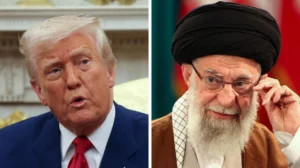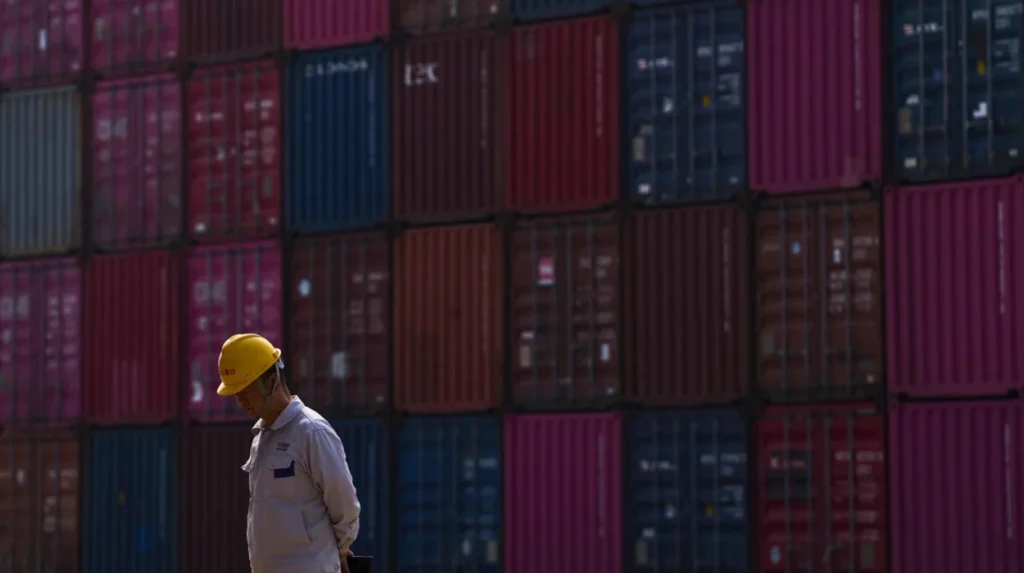
In response to US President Donald Trump’s allegations that Beijing had broken a trade ceasefire reached between the two countries last month that put a halt to their raging tariff war, China accused the US of inciting fresh economic and trade tensions.
The Chinese Commerce Ministry said in a statement Monday that China was faithfully executing the agreement reached in those trade discussions, but it also blamed the United States for actions that significantly jeopardized the deal.
According to the statement, the United States has been unilaterally creating new trade and economic tensions, which has made bilateral trade and economic ties even more unclear and unstable. China will continue to take firm and decisive action to protect its legitimate rights and interests if the United States persists in getting its way and undermining them, the statement continued.
Trump made the remarks after claiming that China had “TOTALLY VIOLATED ITS AGREEMENT WITH US” on Friday. The US president said in a post on Truth Social that he struck a quick agreement with China in order to “rescue them from what I believed was going to be a very bad situation.” “So much for being Mr. NICE GUY!” he said.
What triggered the collapse of recent trade talks?
Just weeks after the two countries struck a surprising trade ceasefire in Geneva, which dramatically reduced the high tariffs each placed on the other in April, the back and forth highlights an escalation of hostilities between the US and China.
Since one party accuses the other of acting contrary to the accord’s spirit, the 90-day window that the two parties had to hammer out a more comprehensive agreement now seems to be in jeopardy. Talks have stopped, according to US officials, who have said that Trump and Chinese leader Xi Jinping’s engagement is necessary to get things moving again.
Beijing’s export restrictions on rare earth minerals and related items, which were put in place in retaliation for Trump’s reciprocal tariffs on Chinese imports, have been a major source of disagreement. After the discussions, US officials had anticipated that China would relax export controls on those minerals, which are used in everything from expensive weaponry like F-35 fighter planes and missile systems to iPhones and electric cars.
However, the limits remain in place, which has caused much resentment inside the Trump administration and led to a current round of actions against China. After Washington cautioned businesses against utilizing AI chips manufactured by its national tech champion Huawei, Beijing accused the US last month of “undermining” the Geneva agreement.
The US then took action last week to restrict the number of Chinese students studying in the US and to block sales of crucial technology to China, further escalating tensions and demonstrating that their competition extends far beyond trade.
The US has implemented a series of discriminatory restrictive measures against China following the Geneva Economic and Trade Talks, including issuing export control guidelines for AI chips, halting the sale of chip design software to China, and announcing the cancellation of Chinese student visas, according to a statement released by China’s Commerce Ministry on Monday.
Trade tensions at home are also putting pressure on Beijing and other Asian cities. According to an official survey released on Saturday, China’s industrial activity decreased for a second consecutive month in May. Not considering any pre-existing taxes, the current tariff rate for Chinese products entering the US, its biggest export market, is 30%. These tariffs were put in place this year.