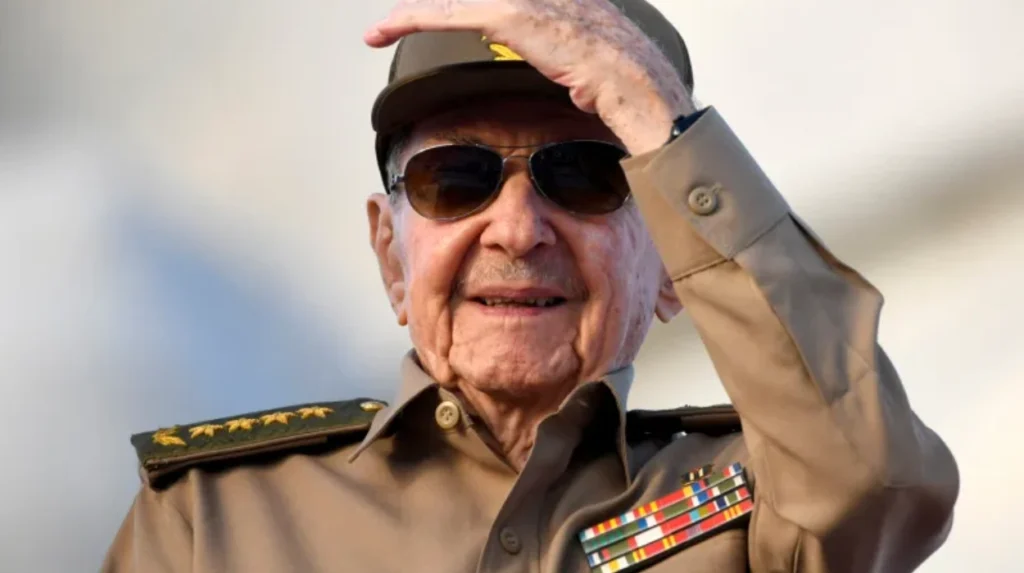
As part of an ongoing struggle with Cuba which dates back several decades, the United States has officially accused former Cuban president Raúl Castro of murder in relation to the shooting down of two airplanes belonging to the anti-Castro Cuban exile organization “Brothers to the Rescue” (Hermanos al Rescate) in 1996. Filed on May 19-20, 2026, in Miami, the superseding indictment is the first such case filed against a high-ranking Cuban official in connection with the murder of American civilians, with the aging figure of Raúl Castro now squarely placed at the center of a capital case that is viewed by the U.S. as an overdue accounting as well as a political message to the current Cuban government.
This indictment, brought before the U.S. District Court in Southern Florida, accuses Raúl Modesto Castro Ruz of committing four counts of murder, one count of conspiracy to murder citizens of the United States, and two counts of destroying aircraft in relation to the shoot-down of two civilian Cessnas on February 24, 1996, over international airspace off the coast of Cuba. According to the U.S. Justice Department, Castro, at the time a high-ranking member of the armed forces and brother of Fidel Castro, was one of the “final decision makers” that ordered the Cuban MiGs to shoot down the planes, resulting in the deaths of four individuals, including three Americans and one American-Cuban exile. This indictment relives an atrocious act from decades ago, repositions it as a key pillar of Washington’s tough stand under President Donald Trump, and reignites tensions between the two nations.
Rick Jervis, in a tweet, revealed that:
“SCOOP: US had audio recording of Raúl Castro ordering Brothers to the Rescue shootdown for 3 decades. Why is his indictment coming now? USAT’s @fran_chambers had an exclusive interview w/@MarioDB, chief architect of the case.”
What the Indictment Alleges
The central piece of evidence for the United States’ accusation against Cuba lies in what happened back in 1996. This was when Brothers to the Rescue, an organization operating out of Miami which is opposed to Castro’s regime, was flying civilian aircraft in close proximity to Cuban airspace in order to drop leaflets as well as help Cubans escaping from their country. Two days before March 1, 1996, two Cessna 337 aircraft belonging to the organization were shot down while flying in international airspace, by Cuban MiG-23s. The U.S. believes that there were no weapons on board, thus posing no real threat to Cuban national security; it was a premeditated act of aggression.
This superseding indictment is an extension of a previous case from 2003 where only one Cuban pilot, namely Mario Manuel Suarez, had been accused of his participation in the incident. At present, Raúl Castro, along with five other Cuban military pilots, has been named a co-defendant in this case. It is stated that these individuals acted under the direction of a chain of command, which was headed by the leadership of the Castro regime, and that certain decision-makers within the country’s Armed Forces had endorsed the shooting down of civilian airplanes using deadly force.
The maximum sentence for the convictions for the charges of murder and conspiracy is either capital punishment or life imprisonment, whereas the charges of destruction of aircraft have a sentence of up to five years’ imprisonment each. Raúl Castro is accused of planning and giving authorization, not firing a gun himself. This is not unusual in international crimes, as many instances can be cited where high-level officials who had no hand in the actual shooting have been punished for giving orders that resulted in murders.
U.S. Government’s Rationale and Messaging
Interim Attorney General Todd Blanche of the Department of Justice, United States and Assistant United States Attorney Jason A. Reding have commented on the indictment as a landmark in the US’ fight against repression by Cuba’s communist government over several decades. Commenting in a statement, Blanche said,
“This is the first time in almost 70 years that the senior leaders of the Cuban government have been individually held accountable in a federal court in the United States for their role in violent actions that resulted in the deaths of American citizens.”
Reding stated,
“This case highlights the US commitment to deal with the brutal repression of dissenters.”
The nature and timing of the announcement make it evident that the Raúl Castro indictment is very much part of the administration’s broader strategy towards Cuba. Following the president’s reelection campaign in 2024 and the subsequent inauguration in January 2025, Trump has gradually ramped up the pressure on Cuba with stricter economic sanctions and an isolationist travel policy. This particular announcement is more than just a judicial proceeding; it is also a political statement, indicating that Washington will not shy away from naming and targeting members of the Cuban government elite. Without outright stating their intent to bring about regime change in Cuba, the message is clear for all those who run the country: the pressure from the United States is now personal.
Moreover, the indictment also resuscitates the issue of the legacy of Brothers to the Rescue, an organization which has always been a hot button in Cuban-American politics. While the supporters of Brothers claim that the organization was doing its best in the field of promoting peace, democracy and justice through humanitarian activities, its opponents, including some experts and former American diplomats, have long suggested that the provocations were not severe enough for Cuba to resort to such a dramatic measure as the murder of the American civilians. However, in the Justice Department’s version of events, the case seems straightforward.
Cuba’s Reaction and Narrative From Havana
The Cuban government, on the other hand, has met the accusation with a defiant attitude. President Miguel Díaz-Canel has called the indictment a “political ploy” without any basis in law, aimed at providing a justification for war and regime change by the United States against Cuba. Addressing the nation in a televised statement, he described Washington’s approach as the weaponization of the justice system to fight extraterritorial vendettas, claiming that this was nothing more than a new strategy to wage a Cold War against Havana.
Cuban officials state that the actions taken in 1996 were justified because it was a necessary response to the constant violation of their air space by such organizations as Brothers to the Rescue. As stated by Cuban officials, the Cuban Air Force was already familiar with similar acts of defiance carried out by the exiles, including intrusion into Cuban air space, dissemination of leaflets and low-flying flights that put Cuban air defenses in jeopardy. The involvement of Raúl Castro into this case three decades later, in the eyes of Havana, was a political provocation.
The governments of some Latin American countries and the regional bodies in turn have supported the stance taken by Havana, calling the indictment as both selective and politically motivated. The United States is using double standards in bringing charges of atrocities against Cuba, they say, singling out only one such incidence related to Cuba while not considering other incidences of violence committed with tacit support from the United States in the region.
Symbolic and Practical Implications
In the case of Raúl Castro himself, the allegations serve as mostly a symbolic gesture for the time being. The former Cuban leader has not been removed from his country, and there is very little hope of him being extradited to the US by Cuba. Given both the constitution and long-standing political position of the regime, the possibility of having any top-ranking officials extradited is rather remote, particularly in such cases where the state believes that its very legitimacy is being threatened.
However, the symbolic significance of such actions cannot be underestimated. It puts the highest-ranking representatives of the Cuban Communist Party on trial in front of the U.S. federal court, making Castro an accused and subject to American legal system rather than the head of another state. At the same time, the willingness of the United States government to impose the capital punishment, or, at least statutory life imprisonment, on those charged reflects the degree of importance attributed by Washington to the event. According to legal experts, the indictment will be useful even if it does not go to trial, as it can be used as part of the information campaign to further isolate the Cuban leadership.
For the Trump administration, the indictment also serves as a reminder to the Cuban‑American community in Miami and other exile‑leaning constituencies that Washington has not abandoned the pursuit of accountability for historical wrongs. The case resonates particularly with families of the Brothers to the Rescue victims, many of whom have spent decades demanding justice and vowing that they would never forget the pilots killed in 1996. One family member, speaking under the condition of anonymity, said,
“We waited three decades for this. It’s not just about Raúl Castro; it’s about telling the world that killing our people will have consequences.”
Legal and Ethical Debates
The move to charge a former foreign head of state with murder following a long time out of office has raised controversy amongst legal experts and proponents of human rights law. In some opinions, this indictment constitutes the lawful application of universal jurisdiction laws, whereby states have the jurisdiction to try any serious crimes irrespective of where they occur. This is based on existing cases whereby former heads of state have faced trial for crimes committed against their people for national security reasons.
Others, however, caution that using capital‑level criminal charges against a 94‑year‑old former head of state raises serious questions about proportionality, due process, and the potential politicization of justice. Critics worry that the indictment, coming three decades after the fact, may be seen less as a genuine judicial effort and more as a tool of geopolitical pressure. They also note that the U.S. has not consistently pursued similar prosecutions for other controversial incidents involving foreign leaders or U.S. allies, which could undermine perceptions of fairness.
There is also the broader question of how such indictments affect prospects for diplomacy. Some analysts fear that aggressively criminalizing top Cuban leaders could harden Havana’s stance, making negotiations on issues like migration, security cooperation, and regional stability more difficult. Others counter that, from Washington’s perspective, cooperation with the current Cuban regime is already extremely limited, and that the symbolic value of holding individuals accountable outweighs the risk of further souring relations.
The Broader U.S.–Cuba Context
The Raúl Castro indictment cannot be understood in isolation from the wider trajectory of U.S.–Cuba relations. After a brief opening during the Obama administration, ties have tightened again under Trump, who has rolled back many of the previous thaw’s policies and intensified economic and diplomatic pressure. The indictment reinforces the image of Cuba under the Castro and Díaz‑Canel governments as a closed, repressive regime that Washington seeks to delegitimize internationally.
At the same time, the case also highlights the enduring emotional and political weight of the Cuban‑American exile community in U.S. politics. Brothers to the Rescue, though a small group, has wielded outsized symbolic power. The 1996 shoot‑down became a rallying cry for critics of the Cuban government, and the decision to revive the case now—amid a renewed hard‑line posture—suggests that U.S. officials are attuned to the sensitivities of that constituency.
In the coming months, the indictment is likely to fuel further rhetoric on both sides. The United States can use it to justify existing or expanded sanctions, while Cuba will almost certainly portray it as evidence of Washington’s imperialist tendencies. The actual legal outcome—whether the case ever reaches trial or remains a frozen indictment—may matter less than the narrative it helps to construct: of Cuba’s leadership as war criminals in the eyes of U.S. justice, and of Washington as a determined enforcer of accountability for past bloodshed.