The 6% Slash of the fiscal year 2027 National Security, State, and Related Programs bill represents a major refocusing of United States global funding priorities. The bill contains a proposed discretionary spending of $47.32 billion which is a cut of 2.69 billion in the previous fiscal year. Although it is smaller than previous proposals that proposed to cut multilateral commitments to suit specific national interests, the reduction is indicative of a long-term pattern of limiting multilateral commitments to accommodate specific national interests.
This modification is based on the trends in funding in 2025 and 2026, when consecutive cuts gradually reduced the range of international aid. The 6% Slash thus continues a policy path that focuses on fiscal disciplines, bilateral alliances, and selectivity. Its implication goes beyond budgetary numbers and it has an impact on how the United States places itself in global governance systems.
Committee approval and congressional dynamics
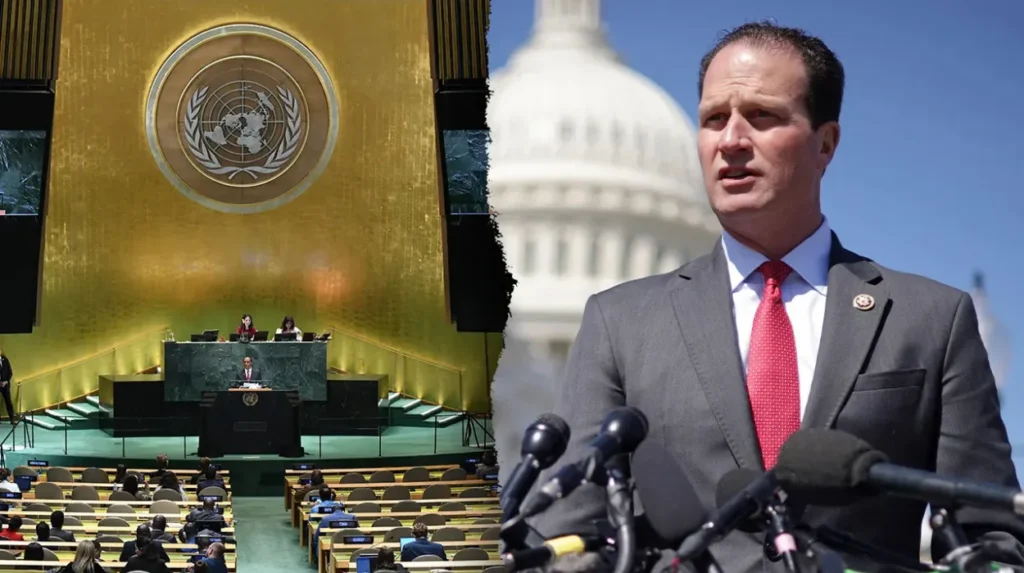
The bill was passed by large margins of 3527 in a vote that is clearly partisan on which way foreign funding should be spent. The Republicans made the cuts sound like they were needed to focus on national security investments and also to ensure resources are effectively utilized. According to one of them, representative Mario Diaz-Balart, the measure would focus on the highest-impact national security, a move to outcome-based budgeting.
Democratic legislators, nevertheless, opine that these kinds of cuts have a propensity to reduce the US influence in international bodies and the diplomatic flow of oaths. This divergence emphasizes that the fiscal choices are associated with conflicting visions of international relations.
Senate reconciliation and future adjustments
The fact that the bill has been passed to the Senate poses a challenge in determining the final version of the bill. Traditionally, House proposals have been softened in Senate discussions, especially when the reduction impacts important diplomatic or humanitarian programs. The 2026 budget of the fiscal year experienced some restoration of funds during the process of budget reconciliation thereby indicating that there could be some restoration of funds later.
The outcome is likely to be influenced by external influences such as geopolitical tensions and election-year dynamics. The legislative process therefore becomes a field where the fiscal policy and strategic priorities are met.
Multilateral funding under pressure from the 6% Slash
The 6% Slash puts a lot of pressure on multilateral institutions and indicates the transition to collective funding mechanisms. This is indicative of an increasing disbelief in large international structures and a shift towards more manageable involvement.
Cuts to United Nations contributions
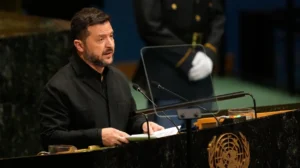
Among the most far-reaching aspects of the 6% Slash is the effect it has on the financing of the United Nations. The bill is aimed at a decrease of about 1.8 billion in the assessed contributions and in effect, removes the funding of the UN regular budget. International organization contributions are also cut drastically as compared to the levels in the fiscal year 2026.
Such reductions exacerbate an already existing funding shortfall. With no contributions in 2025, the United States has a total of over $2 billion in unpaid dues. This state of affairs questions the capacity of the country to continue influencing the decision-making process in the UN.
Peacekeeping and voluntary program reductions
Peacekeeping and voluntary accounts are also subject to The 6% Slash. UN peacekeeping operations are facing a cut of around 60 percent of the funds, and the international programs are facing elimination of voluntary contributions. Policy constraints also impair flexibility, where the funding is conditional on particular compliance.
These actions represent a more general re-assessment of engagement, in which multilateral participation is refined to better balance with the national priorities.
Health and humanitarian consequences of reduced funding
The cut in funding is not limited to diplomacy, but to vital sectors of global health and humanitarian response, where funding can often be the difference between operational capability and inability.
Global health program contractions
The 6% Slash has impacted global health initiatives more than any other. It is estimated that funding to family planning and reproductive health programs will decrease significantly as compared to fiscal year 2026. The bill also extends a ban on donations to organizations like the World Health Organization.
Such cuts come at a time when global health systems are yet to recover due to recent crises. Sustained funding is an essential component of programs addressing infectious diseases, maternal health, and vaccination and, as such, is especially vulnerable to cutbacks.
Humanitarian aid and crisis response
The humanitarian aid is also limited with the offered budget. Cuts are made in the face of unceasing conflict and displacement crises, constraining the response capabilities of agencies. Analysts believe that the risk of a higher long-term instability is associated with reduced funding, which slows or weakens intervention efforts.
The conflict between financial responsibility and humanitarian demand continues to be at the center of the debate around the 6% Slash.
Strategic priorities and bilateral focus under the 6% Slash
The cuts in funding are accompanied by the change in the direction of the focus on the strategic investments, which reflects the more selective approach in the relations with the foreign world.
Shift toward targeted alliances
Funds are also being channeled towards major partners like Israel, Jordan, Egypt and Taiwan. This is a sign that bilateral relationships are preferred which are very close in terms of US security objectives. To further support this targeted approach, national security investment programs are provided, amounting to about 6.8 billion.
This change is in line with wider policy developments that focus on quantifiable outcomes and strategic payoffs. Through resource concentration, policymakers will maximize the impact and minimize overall expenditure.
Fiscal discipline and security emphasis
The 6% Slash supporters believe that the cuts are needed to exercise fiscal discipline and yet meet domestic priorities. The focus on security expenditure indicates an assumption that focused investments will bring better outcomes than general funding.
Meanwhile, this strategy casts doubt on long-term diplomatic involvement. The prioritization of bilateral programmes can help enhance short-term alliances but not broader cooperation.
Continuity from 2025 funding trends shaping the 6% Slash
These cuts are a continuation of an extended period of budgetary changes that have transformed the US international involvement over the past few years.
Precedents in earlier budget cycles
The 6% Slash is based on previous funding cuts, such as significant cuts in fiscal year 2026. Earlier suggestions even had more drastic cuts implying an ongoing desire to redefine global expenditures. Provisions of the policy that were implemented in 2025 such as limitations on some UN agencies have been carried forward.
This continuity implies that the 6% Slash is being considered as a part of a wider strategy change, and is not just a transitional move.
Accumulating impact on global engagement
Incremental reductions over multiple years have compounded into a substantial shift in US global engagement. The cumulative effect includes reduced participation in multilateral initiatives and increased reliance on bilateral partnerships.
These developments are reshaping perceptions of US leadership and influence in global governance.
Strategic implications of the 6% Slash for global influence
The broader implications of the 6% Slash extend beyond immediate budgetary effects, influencing the balance between national priorities and international cooperation.
Erosion of multilateral leverage
Reduced funding may weaken US influence in international institutions, where financial contributions often translate into decision-making power. As contributions decline, other actors may expand their roles, altering the balance within multilateral frameworks.
The relationship between funding and influence remains significant, particularly in institutions where financial commitments shape agenda-setting.
Balancing retrenchment and engagement
The 6% Slash reflects an effort to balance fiscal restraint with strategic objectives. By reducing overall spending while maintaining targeted investments, policymakers aim to preserve core interests without sustaining extensive commitments.
As funding decisions evolve, the interplay between domestic priorities and international responsibilities will continue to shape US foreign policy. The trajectory suggests a gradual redefinition of engagement, where selectivity replaces universality and financial decisions increasingly determine the contours of global influence.
The 6% Slash ultimately illustrates how budgetary adjustments can redefine strategic posture, raising questions about whether a more selective model of engagement can sustain influence in a system that still relies on collective investment and shared responsibility.