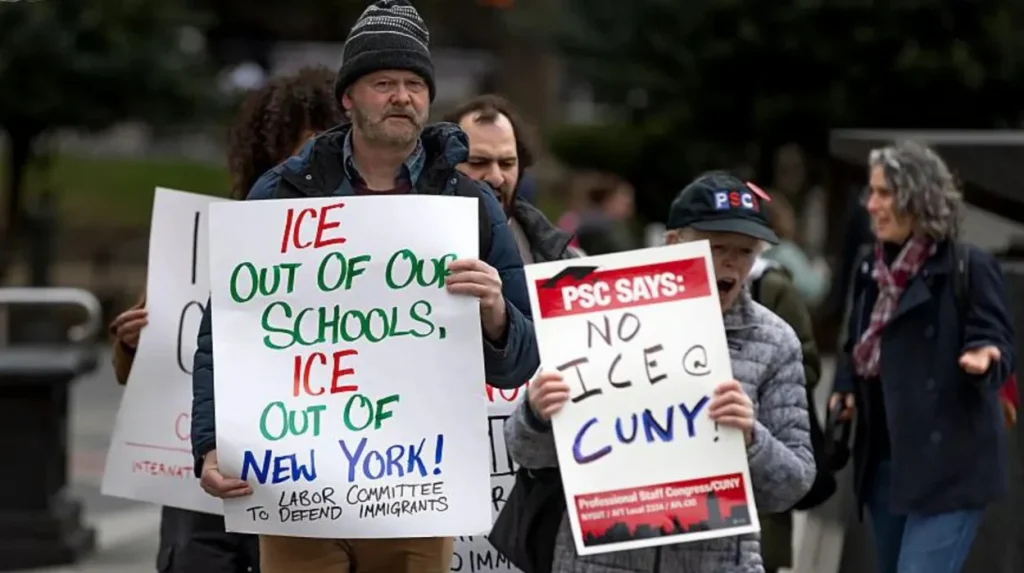
With warnings against travel abroad to advice on how to finish degrees, U.S. colleges are instructing international students on ways to survive President Donald Trump‘s crackdown on immigration.
Initially, students who took part in pro-Palestinian demonstrations were arrested by immigration agents. Subsequently, hundreds of foreign pupils were threatened with deportation for small infractions and detentions. And now, university counsellors are unofficially advising students from overseas to engage an attorney and continue to attend courses as legal appeals work their way through the system, according to more than two dozen students, immigration lawyers and college administrators.
University professors have sued in court over the constitutional validity of detentions. With 1.1 million foreign pupils in the nation, a record high, at issue is the $44 billion they brought into the U.S. economy in the previous year, the Association of American Universities, a coalition of higher education institutions, says.
It’s not solely the dollars. MIT President Sally Kornbluth referenced world talent, commenting that hers “is an American university, proudly so – but we would be gravely diminished without the students and scholars who join us from other nations.”
More than half of foreign pupils in America are Indian and Chinese, says the Institute of International Education advocacy body. U.S. Immigration and Customs Enforcement has removed more than 4,700 individuals from the Student and Exchange Visitor Information Systems register of visa holders, typically noting criminal movement, says the American Immigration Lawyers Association.
Among them, nearly half are Indian students, several of them having completed an optional practical training program called Optional Practical Training, according to an AILA survey of 327 claims. Department of Homeland Security Assistant Secretary Tricia McLaughlin encouraged pupils who had had their SEVIS withdrawn to depart. “If you are in our nation illegally, we will apprehend, we will deport you, and you will never come back,” McLaughlin declared in a report.
University administrators are instructing pupils to get an attorney. Full-time students challenging being removed from SEVIS would be permitted to stay in class, said one officer who consults foreign pupils at one top university, not wishing to talk publicly regarding the status.
“Generally, the students I’ve spoken with say their schools permit them to keep attending classes,” said New York immigration lawyer Clay Greenberg, who assists pupils with SEVIS cancellations. More than 200 students dropped from SEVIS have received court orders temporarily enjoining the management from taking measures against them.
George Mason University in Virginia instructed pupils to reach out to counsellors to make arrangements to finish coursework. The University of California is seeking alternatives for learners to resume their studies, said Rachel Zaentz, a spokesperson for the UC Office of the President. As summer break looms, Duke University recently cautioned international students against leaving the United States for fear they will not be readmitted in the fall.
Gathering up pro-Palestinian students in videos, foreign students dread deportation for getting an Indian computer science graduate student at a university in the Southwest U.S., who preferred to remain anonymous, mentioned incidents of speeding tickets or undergoing fingerprinting. Some individuals have chosen to self-deport.
Momadou Taal, who organized pro-Palestinian demonstrations at Cornell University, departed in March after being instructed to turn himself over to immigration authorities. “I’ll be able to wrap up remotely,” Taal, a dual UK-Gambian citizen, said he would finish his education in Britain.
An Indian student in Georgia reported that his legal position was cancelled after he was found in the criminal register, where he was accused of driving while intoxicated. The charge was dropped, he reported.
“My college is allowing me to stay,” reported the undergraduate computer science student, adding that he was being cautious.
“If I see anyone wearing a uniform, I turn back,”
he said, asking that he not be named.