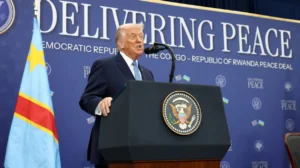
US President Donald Trump dismissed an Israeli call to bomb Iran in favour of launching negotiations, administration officials say. The officials and those briefed on the deliberations reported to the New York Times that differences had opened in the Trump camp over the strategy towards the Islamic Republic.
In the New York Times, it was reported that internal debate within the Trump administration between anti-Iran hawks and those who want a more diplomatic approach resulted in a “rough consensus” against military action for now.
The exchange underscored fault lines between traditionally hawkish American cabinet members and other aides more pessimistic that a military strike against Iran could dismantle the nation’s nuclear ambitions without sparking a wider war. It ended with a rough consensus, at least for now, against taking action militarily, with Iran showing a willingness to talk.
Israeli leaders had drawn up plans to strike Iranian nuclear facilities in May, supposedly to delay Iranian nuclear plans by at least one year. Israel would need the support of the US to attack Iran and to date it has not been available.
US and Iranian negotiators visited Oman over the weekend for talks on an agreement on Iran’s nuclear programme, with additional talks slated to be held in Italy on Saturday.
In 2018, Trump pulled out of the 2015 Joint Comprehensive Plan of Action (JCPOA) agreed by his predecessor Barack Obama, aimed at constraining Iran’s nuclear activities in return for sanctions relief, and introduced a “maximum pressure” sanctions regime against the country.
The two nations’ meeting is the first since a short effort in 2021 under former president Joe Biden.
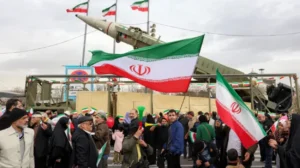
Tehran, hugely suspicious of the US administration following Trump’s withdrawal from the original nuclear agreement in 2018, has rejected direct talks with Washington. In the last month, Trump indicated that Iran would be bombed unless it signed a deal to stem its nuclear program.
“If they don’t make a deal, there will be bombing,” Trump said to NBC News. “It will be bombing the likes of which they have never seen before.”
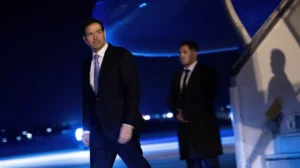
In spite of these words, the Trump administration has long been divided between more hardline allies like Secretary of State Marco Rubio and others like director of national intelligence Tulsi Gabbard who are against broader US military intervention.
At a meeting this month, Gabbard reportedly made an intelligence estimate that said the buildup of American weaponry could potentially start a wider conflict with Iran. White House chief of staff Susie Wiles, Defense Secretary Pete Hegseth, and Vice President JD Vance all expressed skepticism over the attack, the New York Times reports.
Officials informed the paper that Vance told Trump that he had a singular chance to make a deal with Iran, but that they could back an Israeli strike if negotiations broke down.
For the time being, Mr. Trump has opted for diplomacy rather than military action. During his first term, he renounced the Iran nuclear agreement negotiated by the Obama administration. But during his second term, determined not to be pulled into another Middle Eastern war, he has initiated talks with Tehran, with a deadline of a few months to negotiate an agreement on its nuclear program.